Category: Survival

  • Introduction to LoRa Technology (The “Long Range” Revolution)

    Introduction to LoRa Technology (The “Long Range” Revolution)

    LoRa, short for Long Range, is a wireless radio frequency technology designed for low-power, long-range data communication. Developed by Semtech, it serves as the physical layer that allows devices to transmit small packets of data over incredibly long distances—often up to 10 miles (15+ km) in rural areas—while consuming so little energy that a device can run on a single battery for years.

    It’s important to understand right out of the gate: LoRa is not Wi-Fi or cellular network replacement. You won’t be streaming 4K video or scrolling social media over a LoRa link. Instead, it is engineered for the Internet of Things (IoT) and decentralized, grid-down communication systems where sending small text messages, GPS coordinates, or sensor readings reliably over massive distances is the top priority.

    How LoRa Works: Under the Hood
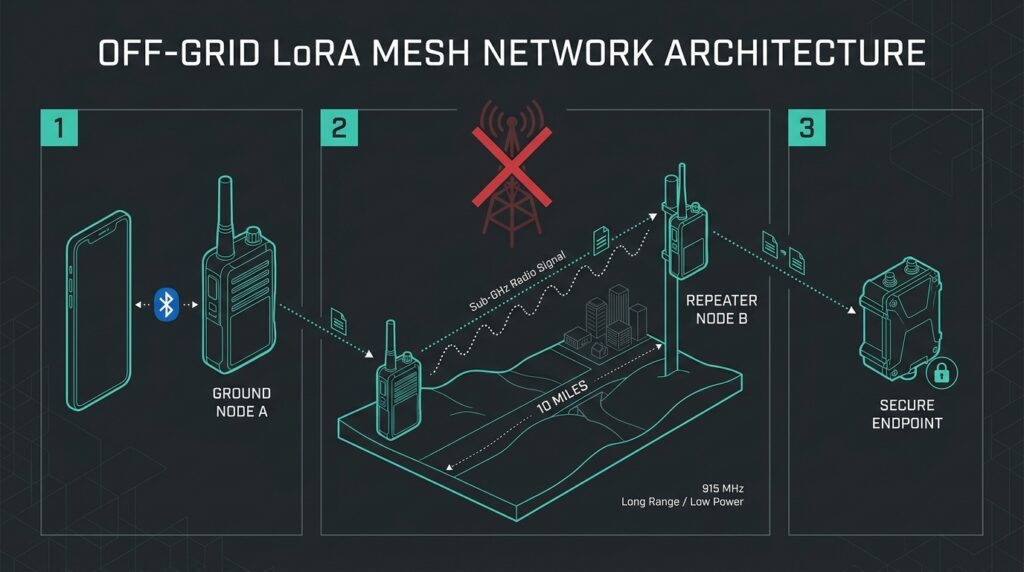
    A detailed technical layout schematic of a decentralized LoRa mesh network showing data packet hops between off-grid emergency communication nodes.
    Complete structural layout of a self-healing, grid-independent LoRa communications web.

    The magic of LoRa lies in how it manipulates radio waves. It operates on unlicensed Sub-GHz radio frequency bands, which vary by region (for example, 915 MHz in North America and 868 MHz in Europe).

    Because these lower frequencies can easily penetrate obstacles like walls, trees, and buildings, they inherently have better range than high-frequency signals like 2.4 GHz or 5 GHz Wi-Fi.

    Chirp Spread Spectrum (CSS) Modulation

    LoRa achieves its extreme range and interference resistance through a unique modulation technique called Chirp Spread Spectrum (CSS).

    The Analogy: Imagine trying to shout to a friend across a loud, crowded concert. If you just yell a steady note, your voice gets drowned out by the music. But if you use a slide whistle that sweeps cleanly from a low pitch to a high pitch (an “up-chirp”), your friend’s brain can instantly pick out that sweeping sound over the background noise.

    LoRa does exactly this with radio signals. It encodes data using “chirps”—pulses of electromagnetic energy that increase or decrease in frequency over time.

    Because the receiver knows exactly what these chirps look like, it can decode signals that are completely buried beneath background radio noise. This gives LoRa an exceptional link budget, allowing it to work even when the signal is incredibly weak.

    Key Features of LoRa Technology

    • Long Range: A single transmission can travel between 2 to 5 miles in dense urban environments and up to 15 miles or more in line-of-sight rural setups.
    • Low Power Consumption: LoRa devices spend most of their time in a deep sleep mode. They wake up for fractions of a second to send a packet of data, allowing a standard AA battery or small lithium pouch to power a node for 3 to 5 years.
    • High Immunity to Interference: The CSS modulation makes it incredibly resilient against electronic noise, multipath fading, and physical obstructions.
    • Decentralized Freedom: Because it operates on unlicensed open frequencies, anyone can buy a cheap LoRa chip and build their own private communication network without paying a cellular company a single dime in subscription fees.

    LoRa vs. LoRaWAN: What’s the Difference?

    People often use these terms interchangeably, but they represent two different parts of a network stack. Think of LoRa as the physical highway, and LoRaWAN as the traffic laws governing the cars driving on it.

    FeatureLoRaLoRaWAN
    What it isThe Physical Layer (The hardware/silicon chip).The Media Access Control (MAC) Layer (The software protocol).
    FunctionDefines how a radio frequency signal is modulated to carry bits of data through the air.Defines how devices connect to internet-facing gateways, manage security, and route data to applications.
    TopologyCan be Point-to-Point (P2P) or a decentralized Mesh Network.Structured as a Star-of-Stars topology managed by central network servers.

    Real-World Applications

    Because LoRa is highly adaptable, it has split into two massive use cases: commercial industrial monitoring and consumer-driven decentralized emergency communications.

    1. Smart Infrastructure & Agriculture

    In commercial settings, LoRa is used to track shipping containers, monitor city water meters, or check soil moisture levels across thousands of acres of farmland without needing a costly cellular data plan for every sensor.

    2. Off-Grid Emergency Messaging (Meshtastic)

    In recent years, LoRa has exploded in popularity within the emergency preparedness and outdoor enthusiast spaces via open-source projects like Meshtastic.

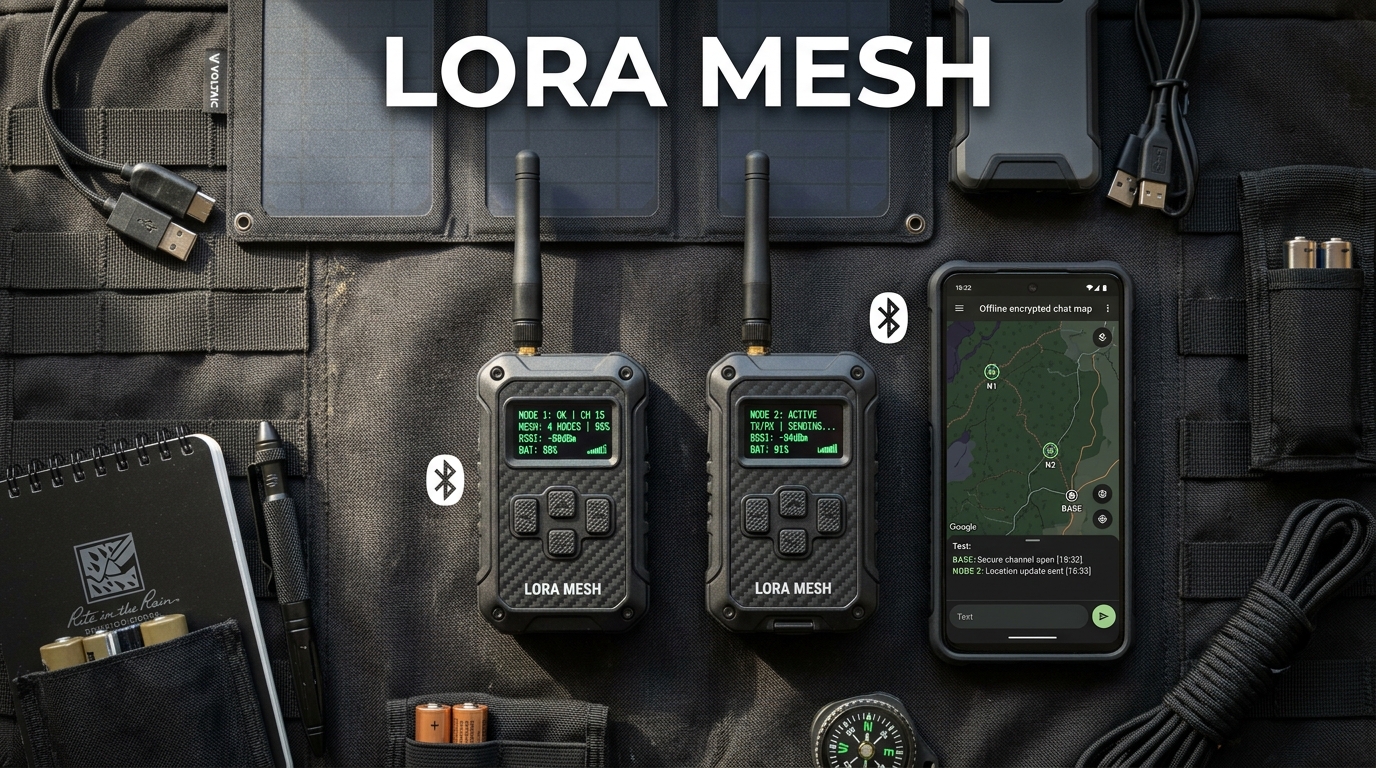
    By pairing a pocket-sized LoRa radio node with a smartphone via Bluetooth, users can send encrypted text messages and share GPS locations entirely off the grid. If cell towers fail, these devices link together automatically to create a decentralized mesh network. Every device acts as a repeater, passing messages from node to node across an entire community without any reliance on electricity, internet, or corporate infrastructure.

    LoRa Mesh Network Setup: Off-Grid Survival Communications

    Imagine a massive regional power outage hits your city. Naturally, you look down at your smartphone to check on your family. However, your screen shows the dreaded “No Service” indicator. Consequently, you are completely cut off from the people you love.

    Standard cellular networks rely completely on the commercial power grid. Therefore, local cell towers will go dark within a few short hours of a blackout. Fortunately, you can build an independent backup system today. Implementing a LoRa mesh network setup ensures your household stays connected when the traditional grid completely fails.

    Let us look at how this decentralized technology works. Additionally, we will break down how to deploy your own private communication grid without paying a single corporate subscription fee.

    Why Traditional Networks Fail and How LoRa Saves Lives

    Every modern smartphone relies on a heavily centralized chain of command. First, your phone must talk directly to a neighborhood tower. Second, that tower must route your messages through physical fiber-optic lines. If any single link in that fragile chain snaps, the entire system drops instantly. Widespread cyber-attacks, physical sabotage, and simple grid failures can isolate entire towns in minutes.

    As a result, forward-thinking families are switching to alternative tools. A LoRa mesh network setup uses small, portable radio nodes that bypass corporate infrastructure entirely.

    • No Single Point of Failure: Messages hop securely from device to device across your community until they reach the recipient.
    • Completely Free to Operate: The system uses unlicensed, open radio frequencies. Therefore, you never pay a cellular provider for data.
    • Extreme Energy Efficiency: These tiny devices spend most of their time in a deep sleep mode. Consequently, they can run for days on a tiny battery pocket pouch.

    Understanding the Magic: How LoRa Technology Works

    The name LoRa stands for “Long Range.” Specifically, this technology uses a unique trick called Chirp Spread Spectrum modulation to send data.

    The Slide Whistle Analogy: Imagine shouting to a friend across a loud, crowded room. If you just yell a single note, your voice gets drowned out by the noise. However, if you use a slide whistle that sweeps from a low pitch to a high pitch, your friend’s brain can instantly pick out that sweeping sound over the background noise.

    LoRa radios do exactly this with radio signals. They encode your text messages into sweeping “chirps” of energy. Because the receiving node knows exactly what these chirps look like, it can decode your message even if the signal is incredibly weak. Furthermore, these lower radio frequencies easily penetrate thick concrete walls, dense trees, and hilly terrain.

    Step-by-Step LoRa Mesh Network Setup for Beginners

    Transitioning your household away from cell tower dependency is simpler than most people think. Follow this structured, step-by-step checklist to systematically deploy your defensive communications layer:

    1. Secure Your Mesh Hardware

    First, purchase a multi-pack of portable, open-source LoRa nodes. Devices using the Meshtastic firmware are the modern gold standard for survivalists.

    2. Pair Your Smartphone via Bluetooth

    Next, download the free mesh networking application on your phone. Connect your phone to your pocket-sized LoRa node using Bluetooth. Your phone acts as the keyboard, while the node acts as the long-range radio antenna.

    3. Establish Private, Encrypted Channels

    Additionally, configure a secure cryptographic key inside the app. This step ensures that your family chat rooms remain completely hidden from outside scanners and nosey neighbors.

    4. Secure a Sustainable Power Hub

    An emergency radio is only useful if you can keep its internal battery charged during a prolonged blackout. Therefore, you must pair your communications gear with an independent energy source. To see how simple it is to build a lifelong power station for your devices, read our comprehensive guide on the [best off grid solar kits] on our main site.

    Ready to Outlast the Next Major Infrastructure Collapse?

    The commercial utilities we depend on everyday are displaying deeper structural fractures with each passing month. Waiting around for a catastrophic emergency to test your backup plan is a dangerous mistake. Instead, the tools to achieve total, decentralized independence are readily available right now.

    Building a private LoRa mesh network setup is the ultimate insurance policy for your family’s safety. Act today before the silence begins.
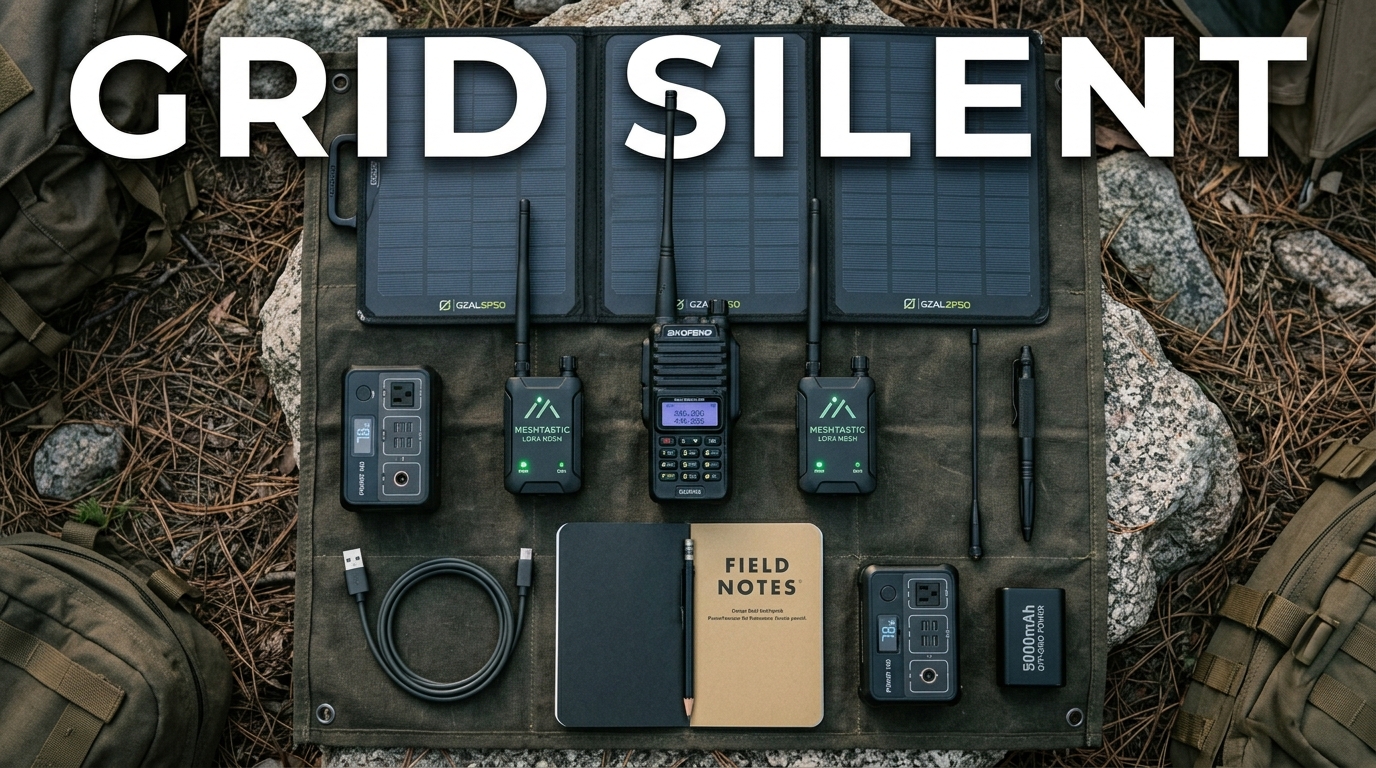
    [Click Here to Explore Our Curated Collection of Off-Grid Gear and Secure Your Emergency Communication System Before the Lines Go Dark.]

  • The Ultimate Guide to Off-Grid Survival Communication Tools: Staying Connected When Cell Towers Fail

    The Ultimate Guide to Off-Grid Survival Communication Tools: Staying Connected When Cell Towers Fail

    Imagine a widespread regional blackout hits your city. Naturally, your first instinct is to text your loved ones to check their safety. However, you look down at your screen and see the dreaded “No Service” indicator blinking back at you.

    Most Americans falsely believe that smartphones will always work during an emergency. Consequently, millions of people are completely unprepared to navigate a prolonged communications blackout. Legacy cell towers rely entirely on standard grid electricity to function. When the main power grid fails, those local towers go completely dark within a few short hours.

    True emergency preparedness means establishing your own independent network. Forward-thinking families are actively investing in decentralized off-grid survival communication tools. Let’s break down how modern infrastructure breaks down and review the smart tech you can deploy today to stay connected.

    Why Centralized Communication Networks are Unsafe

    Every modern communication method relies on a heavily centralized chain of commands. First, your phone must talk to a local neighborhood tower. Second, that tower must route data through massive fiber optic cables buried beneath public roads.

    If any single link in that fragile infrastructure snaps, the entire network drops instantly. Widespread cyber-incidents, severe weather events, and physical fiber line cuts can isolate whole communities in minutes. Therefore, relying exclusively on commercial cellular providers is a massive gamble. You must own your network nodes to ensure absolute peace of mind.

    The Rise of Emergency Mesh Network Devices

    Because centralized platforms are so vulnerable, the survival community has pioneered a brilliant alternative. Specifically, many families are switching to emergency mesh network devices powered by LoRa technology.

    [Your Phone] ---> [Your Mesh Node] ---> [Relay Node] ---> [Recipient Pager/Phone]
    

    Mesh networking takes a fundamentally different approach to off-grid communication. Instead of routing text messages through a central corporate tower, these small radios communicate directly with each other.

    • No Central Point of Failure: Messages hop securely from device to device across the neighborhood until they reach the recipient.
    • Completely Free to Operate: A LoRa mesh network setup requires no monthly subscriptions, contracts, or cellular data plans.
    • Incredible Power Efficiency: These tiny units consume very little energy. They can operate on portable batteries or solar power for days at a time.

    Critical Power Reminder: An emergency radio is only useful if you can keep its battery charged during a blackout. To ensure your off-grid survival communication tools remain fully operational when the grid drops, pair them with a sustainable backup setup. Read our comprehensive blueprint on thebest off-grid solar kitsto secure a lifelong independent power station for your household.

    How to Build Your Emergency Backup Communication Layer

    Transitioning away from cell tower dependency is simpler than most people think. Follow this structured, step-by-step checklist to systematically protect your household:

    1. Deploy Local Mesh Radios: First, secure a multi-pack of portable mesh communicators for your family members so everyone can exchange text messages locally.
    2. Program Family Scanning Channels: Next, keep a set of hand-crank emergency radios on hand to monitor regional NOAA weather updates and local emergency dispatches.
    3. Establish Clear Emergency Protocols: Furthermore, map out a concrete meeting location and communication window schedule. Ensure your family knows exactly when to switch to backup radio frequencies if the power grid goes silent.

    Ready to Outlast the Next Major Blackout?

    The commercial infrastructure we depend on everyday is displaying deeper fractures with each passing month. Waiting around for a major systemic emergency to test your communications safety net is a dangerous mistake. Instead, the blueprints to total, decentralized independence are readily available right now.

    If you are ready to shield your family from sudden blackouts and secure complete peace of mind, you must act before the network drops.

    Click Here to Explore Our Curated Collection of Off-Grid Gear and Secure Your Backup System Before the Silence Begins.

  • Survive Without 911: Emergency Medical Prepping Guide

    Survive Without 911: Emergency Medical Prepping Guide

    IImagine a severe family emergency where you must survive without 911 entirely. You pick up your phone to dial, but you hear absolute silence. Consequently, most households are completely unprepared for a sudden infrastructure failure.

    Recent data reveals a terrifying reality. Emergency response lines across multiple states are experiencing major technical blackouts. Therefore, you cannot outsource your family’s safety to a fragile network anymore. True safety requires executing a dedicated emergency medical prepping plan before the local grid drops offline.

    The modern medical system relies entirely on global stability. As a result, even a minor supply chain disruption can compromise your local hospital. You must learn to protect your household when the system goes completely dark.

    How to Survive Without 911 During a Medical Crisis

    A medical crisis during an infrastructure collapse breaks down into two distinct problems. First, our communication lines are highly vulnerable. Second, our retail drug networks are incredibly thin.

    1. Systemic 911 Vulnerabilities

    Legacy emergency dispatch centers are struggling under massive technical burdens. For instance, software glitches and cut fiber lines have repeatedly cut off voice communication to police and fire departments. If you are forced to survive without 911, your household must possess the tools to act as the primary stabilizing element.

    Critical Question: Many preppers ask, will 911 survive without BOB (Bug Out Bag) coordination networks? The hard truth is that emergency dispatch relies entirely on regional power grids. If the grid drops, the dispatch system fails. Therefore, your personal gear is your only real safety net.

    2. Deep Medical Supply Chain Shortages

    The dangers run much deeper than dead phone lines. Global trade friction has caused immediate drops in basic pharmaceutical manufacturing. Consequently, modern hospitals are actively dealing with major medical supply chain shortages. Essential goods, like basic antibiotics and surgical tools, can disappear from shelves within 48 hours.

    How to Survive a Heart Attack Without Calling 911

    When the grid goes dark, common health emergencies become life-or-death scenarios. Specifically, cardiovascular events require immediate, calculated action at home. You must know how to survive heart attack without calling 911 if emergency lines fail.

    • Recognize the Signs Immediately: First, look for critical symptoms. These include crushing chest pain, shortness of breath, and left arm discomfort.
    • Deploy Aspirin Safely: Next, have the patient chew a full-strength adult aspirin right away. Chewing the tablet speeds up entry into the bloodstream to help break up blood clots.
    • Rest and Cool Down: Furthermore, ensure the patient stops all physical movement. Keep them sitting upright in a cool room to lower the workload on the heart muscle.

    Building Your Off-Grid Medical Defense Layer

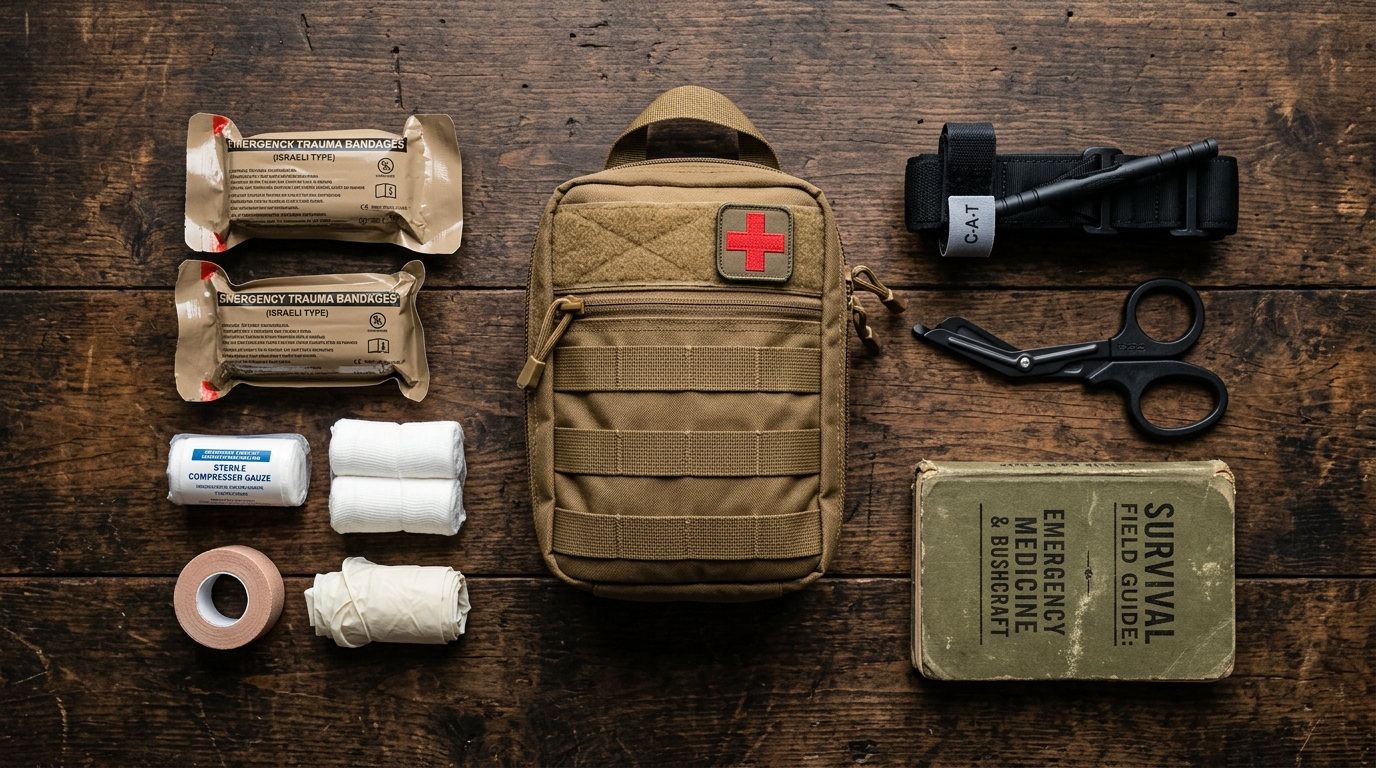
    Transitioning your household into a self-sustaining triage unit requires a shift in your gear strategy. Do not rely on cheap, store-bought first aid kits. Instead, focus on raw utility and advanced supplies.

    Master Alternative Emergency Medicine

    When commercial pharmacies close, understanding natural options becomes paramount. You must learn basic wound care and sterile techniques. Additionally, investing in a high-quality survival medical guide bridges the gap between having raw equipment and knowing how to use it.

    Secure Your Energy Independence

    Advanced medical care requires more than clean bandages. It demands an environment where tools stay sterile and critical medicines stay cold.

    Critical Power Note: Running a clean medical space during a blackout requires a steady electrical output. For example, you can use portable solar systems to maintain a self-sustaining triage zone. To see how to build an independent power hub, read our comprehensive guide on the best off-grid solar kits.

    Action Plan: Your Checklist to Survive Without 911

    1. Build a Tiered Trauma Cache: First, split your gear into immediate trauma supplies and long-term infection care items.
    2. Acquire Hands-On Skills: True off-grid medical preparedness comes down to real training. Therefore, take a local first aid or wilderness response class.
    3. Audit Long-Term Dependencies: Finally, review your family’s prescription needs. Secure a safe, rotated supply by exploring our emergency off-grid storage gear solutions to ride out long trade blackouts.

    Ready to Unlock True Self-Reliance?

    The systems built to protect us are displaying deep structural fractures. Waiting around for a major crisis to test your family’s safety net is a massive gamble. However, the blueprints to independent survival are already out there.

    Learning how to survive without 911 is the ultimate insurance policy. If you are ready to shield your household from incoming infrastructure shifts, you must look at the data they are trying to keep quiet.

    Click Here to Watch the Leaked Video Presentation and See the Hidden Warning Before It Vanishes.