A tiny home feels freeing right up until the first cold night, the first clutter pile, or the first time you realize your “simple setup” still needs to support real life. That is why a smart tiny home essentials checklist matters. In a small space, every item has to earn its place – not just by fitting, but by making daily living easier, calmer, and more self-reliant.
The mistake most people make is treating tiny living like regular living with less square footage. It is not. A well-set-up tiny home is closer to a system than a room. Your power, water, storage, cooking, and comfort all affect each other. If one area is poorly planned, the whole space starts to feel harder to live in.
What a tiny home essentials checklist should actually do
A good checklist is not a shopping spree. It is a filter. It helps you separate what looks appealing from what supports your routine, your climate, and your level of independence.
For some people, that means a weekend retreat with a compact kitchen and a comfortable bed. For others, it means a full-time home with solar support, water storage, and weather-ready insulation. Both are valid. The right setup depends on how often you use the space, where it is located, and how off-grid you want to be.
That trade-off matters. The more independent your tiny home is, the more intentional your essentials need to be. You can get away with fewer backup systems if you are parked near utilities. If you want true autonomy, the basics have to be stronger and smarter.
Start with the non-negotiables
Before you think about decor, coffee gear, or clever fold-down furniture, focus on the systems that make the space livable every day.
Power and lighting
Even a minimalist tiny home needs reliable power. At the very least, you need enough energy for lighting, charging devices, ventilation, and a few key appliances. If your setup includes solar, think beyond panel count. Battery storage, charge control, and realistic daily use matter more than ideal conditions on a sunny product page.
Lighting should be low-draw, layered, and practical. One bright overhead light makes a tiny space feel flat and harsh. A better approach is a mix of task lighting, soft ambient light, and focused reading light. It uses energy more intentionally and makes the home feel less like a utility box.
Water and sanitation
Water is one of the fastest ways to discover whether your tiny home is actually functional. You need a clear plan for fresh water, gray water, and waste. If your home is stationary, your options may be broader. If it is mobile or remote, storage and refill logistics matter much more.
A compact sink, efficient faucet, and water-conscious shower setup can go a long way. So can a simple filtration system if your source water is inconsistent. For sanitation, the right toilet depends on your lifestyle. Composting toilets appeal to many tiny home owners because they reduce dependency on hookups, but they are not maintenance-free. If you want the least daily involvement, another system may suit you better.
Climate control and ventilation
Tiny spaces heat up fast and cool down fast. That can be a benefit or a problem. Good insulation is essential, but it is only part of the picture. Ventilation matters just as much, especially if you cook indoors, shower regularly, or live in a humid climate.
A roof vent, operable windows, and an efficient heat source make a major difference in comfort. In warmer regions, airflow may matter more than heavy heating equipment. In colder regions, insulation quality, draft control, and safe heating become central to your checklist.
The kitchen should work harder than it looks
In a tiny home, the kitchen cannot be oversized, but it does need to be dependable. This is where many people either overbuild or underprepare.
You do not need every appliance from a suburban kitchen. You do need tools that match how you actually eat. If you cook often, prioritize a reliable cooktop, a durable sink, basic prep space, and smart food storage. If your tiny home is mostly for short stays, you may be better off with a simpler setup and more flexible storage.
Refrigeration deserves careful thought. A large fridge can dominate your layout and your energy use. A smaller high-efficiency unit often makes more sense, especially if you shop more frequently or use the space seasonally. Dry goods storage matters too. In a compact home, visible food clutter can make the whole room feel chaotic, so sealed containers and dedicated pantry zones are worth it.
The best tiny kitchens are not packed with gear. They are edited. One excellent pan beats three average ones. Stackable cookware, nesting bowls, and a few durable utensils are usually enough.
Sleep, seating, and storage need to work together
A tiny home essentials checklist is really a checklist for friction. Anything that creates daily friction will wear on you quickly.
Your bed is a good example. Loft beds save floor space, but they are not ideal for everyone. If you get up at night, dislike tight spaces, or plan to age in place, a main-level bed may be the better choice even if it limits other furniture. Tiny living works best when it supports your actual body and habits, not just an attractive floor plan.
Seating matters in the same way. If your only seat is your bed or a rigid bench, the space may look clean but feel limiting. A compact chair, a built-in bench with storage, or a small modular sofa can make the home more livable without overwhelming it.
Storage should be built around categories, not random empty corners. Clothes, pantry goods, tools, linens, and outdoor gear all need a home. Otherwise, they spread. Closed storage usually works better than open shelving in tiny homes because it reduces visual noise. A calm-looking room feels bigger, even when the square footage stays the same.
Your tiny home essentials checklist for daily function
Once the main systems are covered, the next layer is the gear that keeps life moving smoothly. This is where intentional living becomes tangible.
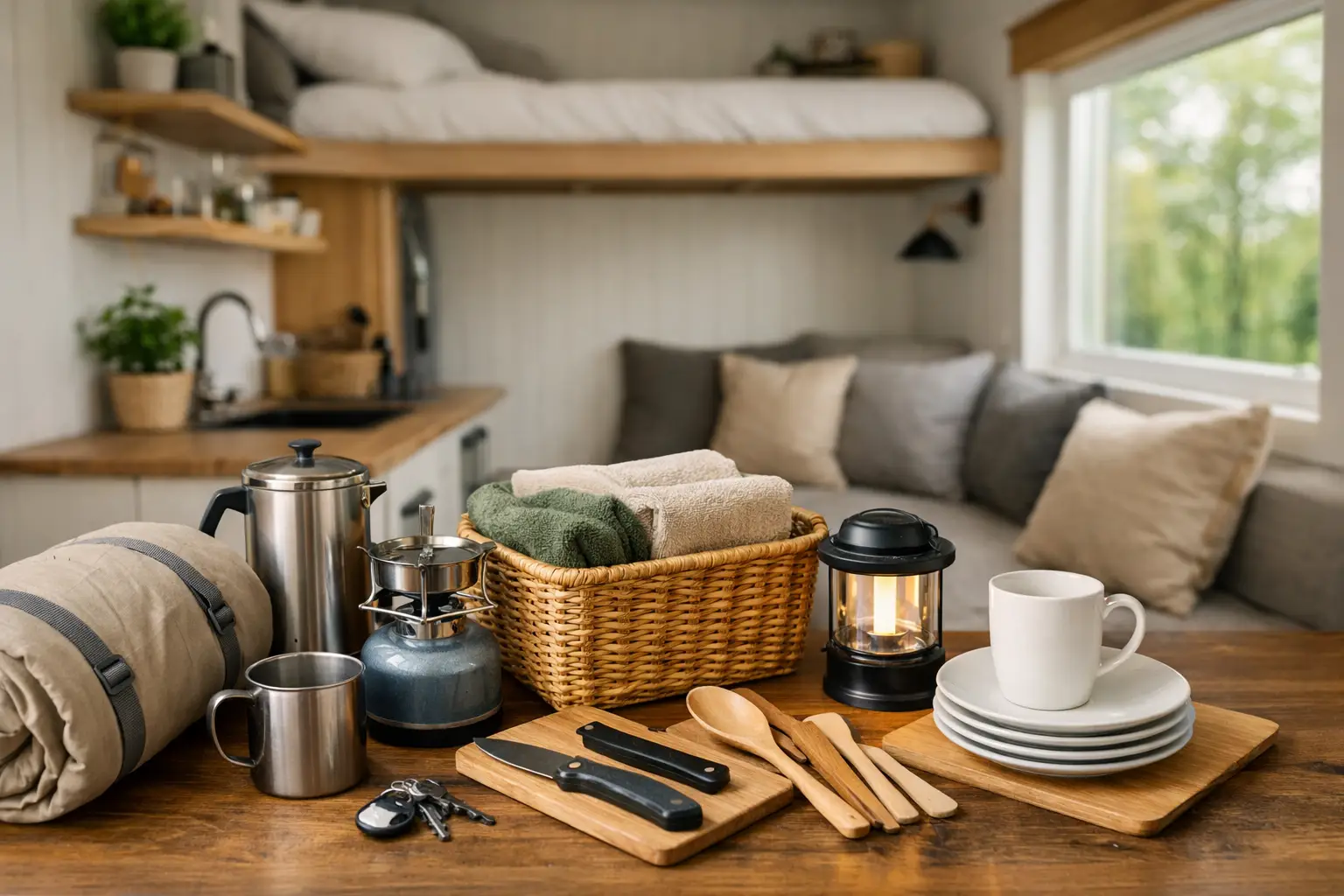
Your checklist should include core kitchen tools, everyday dishes, bedding that suits your climate, compact cleaning supplies, laundry strategy, first-aid basics, and a simple toolkit. It should also include the less glamorous items people forget until they need them, like extension cords, power strips, flashlights, backup batteries, water containers, and weatherproof mats.
If your home supports off-grid or semi-off-grid living, resilience matters too. That might mean a power backup plan, portable solar support, extra water storage, or a secondary way to cook. You do not need to prepare for every scenario. You do need enough redundancy that one small failure does not shut down your whole setup.
This is where a brand like Off The Grid Store fits naturally for many buyers. The right gear shortens the learning curve. It helps your space feel capable from the beginning instead of patched together over time.
Don’t let aesthetics outrun function
A tiny home can absolutely be beautiful. In fact, beauty matters more in a small space because you see everything, all the time. But function has to lead.
That means choosing materials that are easy to clean, finishes that hold up to daily wear, and decor that does not become clutter. It also means being honest about what creates calm for you. Some people feel best with warm wood, open light, and very little on display. Others want softness, texture, and more visible personality. Both can work, as long as your choices do not compete with usability.
There is also a cost trade-off here. Premium compact gear can save space and energy, but not every expensive item is essential. Spend more on the systems you rely on daily – sleep, climate control, water, power, and storage. Save your budget on trend-driven extras that may not matter six months from now.
How to edit your checklist before you buy
The easiest way to overfill a tiny home is to shop aspirationally. You imagine the version of yourself who bakes every weekend, journals by lantern light, and somehow needs four throw blankets. Then real life moves in.
A better approach is to build your checklist in stages. Start with what supports sleeping, eating, hygiene, power, and comfort. Live with that. Then add only what solves an actual problem or noticeably improves your routine.
When deciding on any item, ask three questions. Does it serve more than one purpose? Does it save space, time, or energy? Would you still choose it if storage were cut in half? If the answer is no across the board, it probably does not belong.
This is the quiet discipline behind a good tiny home. Not deprivation. Not minimalism for show. Just clarity.
A tiny home should feel lighter, not tighter. If your essentials support that feeling, you are building more than a checklist. You are building a space that gives something back every time you step inside.