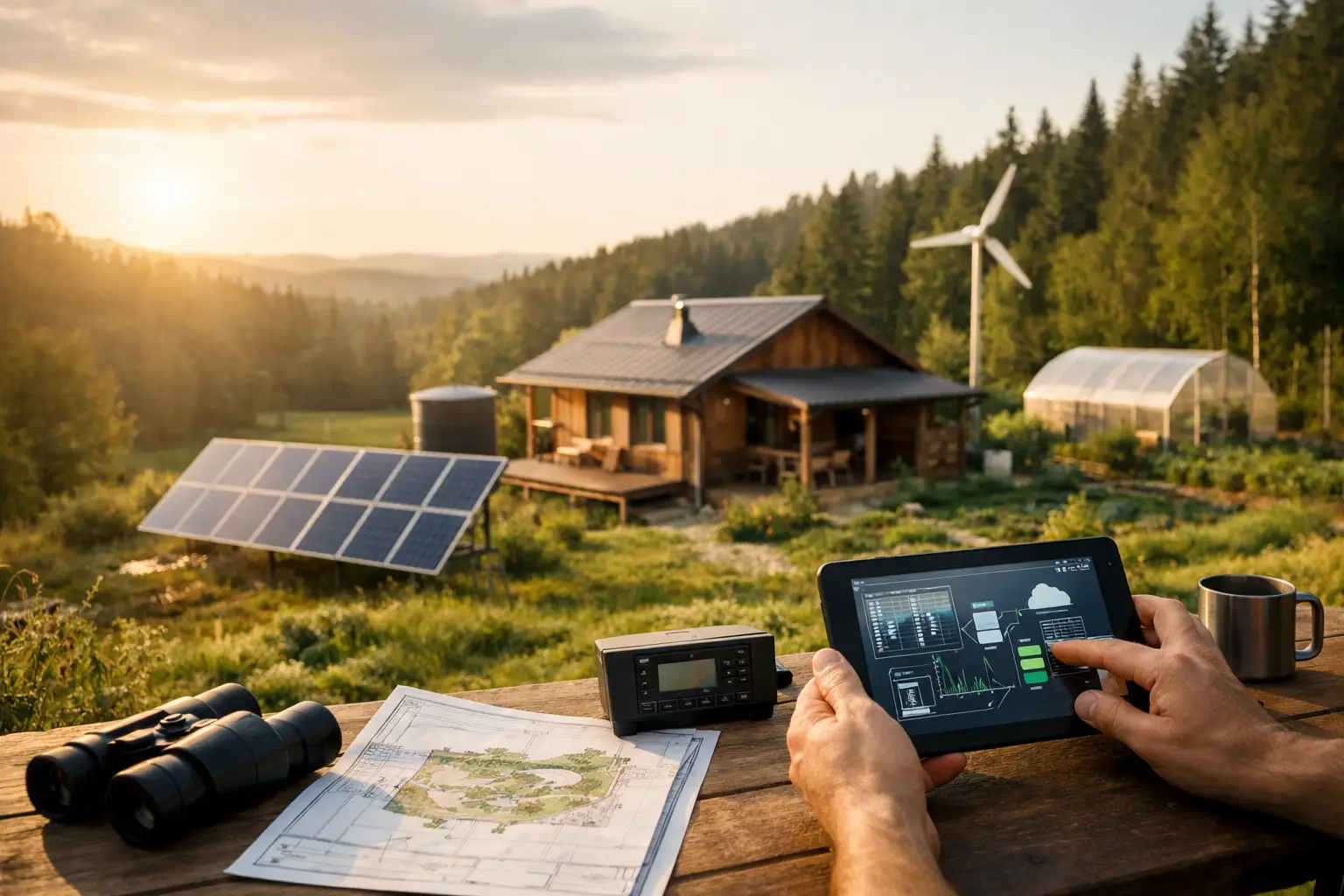
The fantasy usually starts with a cabin, a view, and no notifications. The reality of how to start off grid living is a little less cinematic and a lot more practical. That is good news. If you want more freedom, lower noise, and a home base that runs on your terms, off-grid living does not have to begin with a giant leap. It starts with clear decisions about what kind of independence you actually want.
For most people, the best path is not selling everything and disappearing into the woods next month. It is building an off-grid setup that fits your life now, then expanding it with confidence. A weekend cabin, a tiny home, a solar-ready backyard studio, or a rural property with partial self-sufficiency can all be valid starting points. The goal is not to prove something. The goal is to create a lifestyle that feels calmer, more resilient, and more intentional.
How to start off grid living without overcomplicating it
The first decision is not about gear. It is about your version of off-grid. Some people want full independence from utility lines. Others want a retreat that can run comfortably for long weekends. Some are trying to lower monthly costs, while others care more about privacy, sustainability, or digital distance.
That distinction matters because it shapes every choice after it. A family planning full-time off-grid living will need a very different power, water, and storage plan than a couple outfitting a design-forward cabin for regular escapes. If you skip this step, it is easy to overspend on systems you do not need or underestimate the basics you absolutely do.
Start by defining your baseline. How many people will use the space? Will you live there full time, seasonally, or on weekends? What comforts are non-negotiable? For some, that means a real shower, refrigeration, and climate control. For others, it means lights, charging, and a quiet place to sleep. There is no single right answer, but there is a right answer for your lifestyle.
Start with shelter, then build your systems around it
A lot of people think off-grid living begins with solar panels. In practice, shelter comes first. The structure determines your energy demand, storage needs, heating and cooling strategy, and even your water use.
If you are starting from scratch, smaller is usually smarter. A compact cabin, tiny home, trailer, or simple prefab is easier to power, easier to heat, and cheaper to maintain. It also forces you to be more intentional about what you bring into the space. That simplicity is part of the appeal.
The trade-off is comfort margin. Small spaces can overheat faster in summer, feel cramped if the layout is poor, and make storage more important than people expect. Design matters more off-grid because every square foot has a job to do. Good insulation, smart ventilation, and durable materials will often improve daily life more than flashy upgrades.
If you already have a cabin or rural property, assess what can realistically be adapted. Some structures are close to off-grid ready with only a few system upgrades. Others may look charming but require major investment in weatherproofing, plumbing, or power.
Power is where most people should begin
If you are wondering how to start off grid living in a way that feels manageable, begin with electricity. Power affects lighting, food storage, communication, work, comfort, and safety. It is also the system people tend to overestimate or underestimate the most.
For modern off-grid living, solar is the usual starting point because it is quiet, renewable, and increasingly practical. But a solar setup is only as good as the plan behind it. You need to know what you will power each day, when you will use it, and how much backup you want when weather shifts.
Think in terms of loads, not fantasies. A few LED lights, device charging, a fan, and a small fridge are one level of demand. Adding an induction cooktop, water pump, air conditioning, or electric heat changes the equation fast. Many first-time off-gridders get further by reducing demand before adding more generation. Efficient appliances, thoughtful routines, and passive heating or cooling can save you from building an oversized system.
Battery storage matters just as much as panel capacity. It is what gives you stability when the sky does not cooperate. A backup generator may still make sense, especially for full-time setups or areas with long stretches of cloud cover. That does not mean your lifestyle failed. It means your system is realistic.
Water and waste need more attention than people expect
Power gets the attention, but water determines whether a setup is truly livable. Before you commit to a property or a build, understand where water will come from, how it will be stored, and how wastewater will be handled.
Depending on your location, that could mean a well, rainwater catchment, hauled water, or a combination. Each option comes with trade-offs. Wells can be reliable but costly to drill. Rainwater systems can work beautifully in the right climate but require storage, filtration, and seasonal awareness. Hauled water is simple to start with but less convenient over time.
Then there is waste. Composting toilets, septic systems, and gray water strategies all have their place, but local rules matter. Off-grid living can feel free, but it is not lawless. County codes, land use restrictions, and health regulations can shape what is possible long before you install anything.
This is one of the least glamorous parts of the process, but it is also where confidence comes from. When your water and waste systems are dependable, everything else feels easier.
Budget for the setup you can sustain
Off-grid living can save money over time, but getting started is rarely as cheap as social media makes it look. Land, structure, solar equipment, batteries, plumbing, storage, tools, and site prep add up quickly. The smarter mindset is not cheapest possible. It is best value for the lifestyle you want to maintain.
That often means phasing your investment. Start with core systems that improve function right away, then add comfort upgrades as you learn how you actually live in the space. Maybe you begin with a modest solar setup, efficient lighting, portable water storage, and a compact fridge. Later, you add expanded battery storage, better outdoor infrastructure, or upgraded interior finishes.
Buying everything at once can feel efficient, but it also increases the odds of buying the wrong things. Off-grid life becomes more refined when it reflects your real routines, not your first burst of enthusiasm.
Learn your patterns before you go fully off-grid
One of the best ways to start is to test your setup in stages. Spend weekends in your cabin without relying on the grid. Use your tiny home systems exactly as you would if utility power disappeared. Track what drains the battery, what runs out too fast, and what you miss.
This trial period does two things. First, it exposes weak points while the stakes are low. Second, it helps you separate true needs from convenience habits. Sometimes you discover that you need more refrigeration or better lighting for work. Other times, you realize you are happier with less than you thought.
That learning curve is not a setback. It is the process. Off-grid living is not about getting everything perfect on day one. It is about building a space that supports freedom without constant friction.
Keep comfort in the plan
There is a difference between intentional simplicity and low-grade discomfort. If you want your off-grid lifestyle to last, comfort has to be part of the design. That includes warmth in winter, shade in summer, reliable cooking, clean water, and enough storage to stay organized.
Modern off-grid living works best when it feels calm and functional, not like a punishment. That is especially true if you work remotely, host family, or plan to spend long stretches in the space. A well-chosen mattress, efficient ventilation, layered lighting, and durable kitchen basics can make a bigger difference than people expect.
This is where a curated approach helps. Brands like Off The Grid Store resonate because they treat off-grid living as a real lifestyle, not a gimmick. The right essentials should support independence while still feeling well made, practical, and at home in a modern space.
Freedom comes from preparation, not improvisation
There is a version of off-grid living built on extreme self-denial and constant troubleshooting. That is not the only version, and for most people it is not the most sustainable one. The better path is clear planning, measured upgrades, and systems that match the life you want to live.
Start smaller than your imagination, but smarter than your fear. Build the setup that gives you room to breathe, enough power to stay steady, and enough simplicity to remember why you wanted this in the first place. The quiet you are after is easier to reach when your foundation is solid.