A tiny home feels spacious when every item has a clear place to land. The best tiny house storage hacks are not about cramming more into every corner. They create an easier rhythm: less visual noise, fewer duplicate supplies, and a home that can support quiet mornings, road trips, remote work, and fully off-grid weekends without feeling crowded.
The most effective systems begin with honest habits. Store what you use often where you can reach it without moving three other things. Keep seasonal and backup gear higher, lower, or deeper. Then choose storage that earns its footprint by doing more than one job.
Best Tiny House Storage Hacks for Everyday Freedom
1. Build storage into the places you already sit
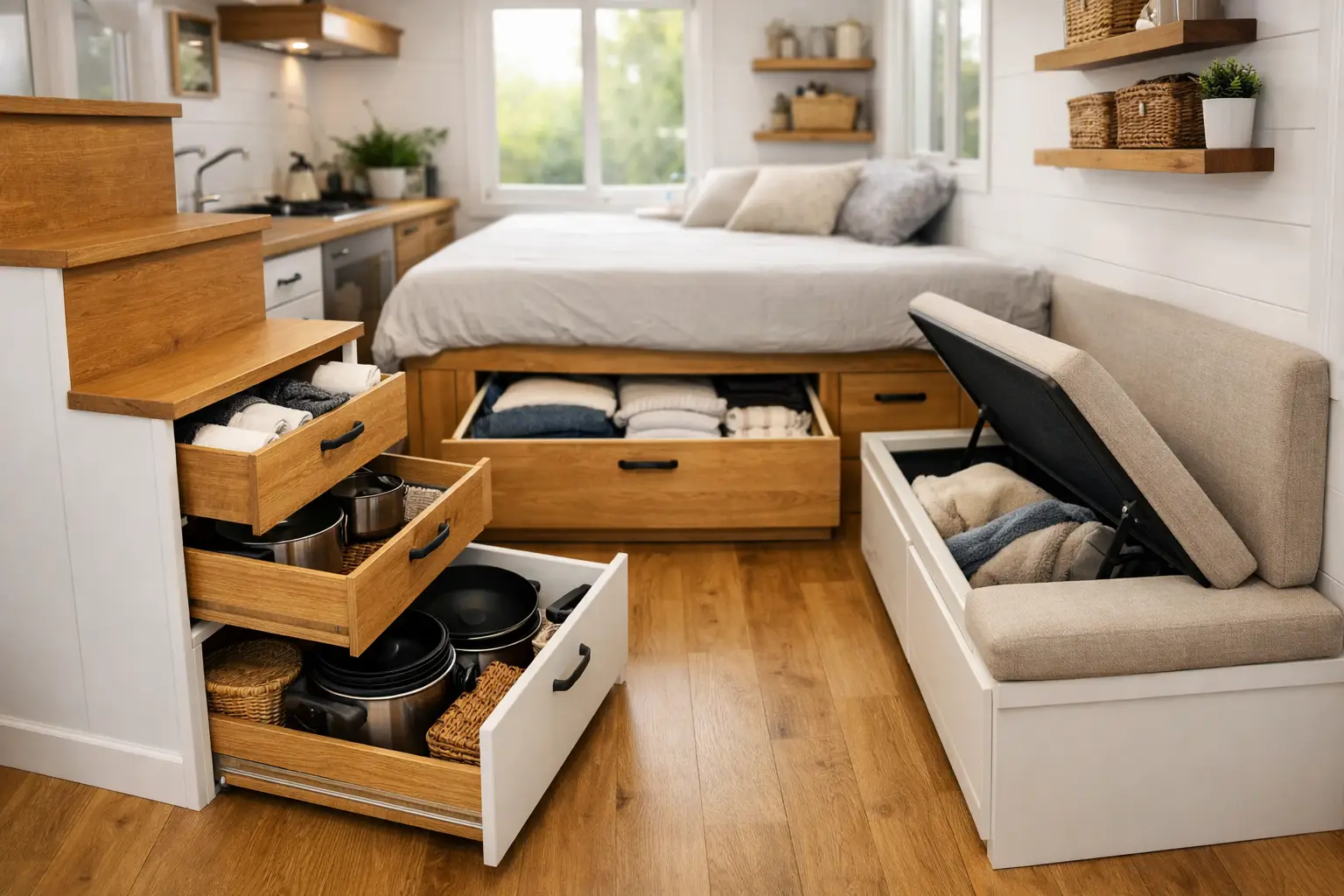
A bench is not just seating in a tiny house. It can hold blankets, board games, extra pantry staples, dog gear, or a compact emergency kit. A lift-top bench along a wall creates generous hidden storage without adding visual clutter, while drawers below a built-in dinette are easier to access than one deep box.
Choose the opening style based on your layout. Lift tops are excellent for bulky, less-frequent items, but they need clear space above them. Drawers cost a little more and use more hardware, yet they make daily access far more practical.
2. Turn the bed platform into a real storage zone
The area under a bed is one of the largest storage opportunities in a small home. Instead of treating it as a dark catchall, divide it by purpose. Use pullout drawers or labeled bins for clothing, linens, outdoor layers, and spare towels. If your bed is fixed, include access from the side as well as the foot whenever possible.
For off-grid setups, reserve part of this zone for essentials that need protection: water filters, battery-powered lighting, cold-weather bedding, and backup charging gear. Keep moisture-sensitive equipment in sealed containers, especially if the tiny house is used seasonally or travels through humid climates.
3. Use vertical space, but keep it visually calm
Walls carry more potential than most tiny-home plans allow. Shallow shelves above doorways, a rail system in the kitchen, and slim cabinets that reach toward the ceiling can reclaim square footage without narrowing the walkway.
The key is restraint. Open shelving makes a home feel personal, but too many mismatched objects can make it feel busy fast. Keep open shelves for a limited set of good-looking, frequently used items. Use closed storage for cables, packaged food, toiletries, and everything else that does not improve the room at a glance.
4. Create a drop zone by the door
Tiny homes get messy at the entrance because every trip outside brings back shoes, jackets, keys, tools, and trail dust. A narrow entry zone with wall hooks, a shoe drawer, and one small tray for keys prevents the rest of the home from becoming the landing spot.
If your tiny house supports weekend escapes, add a dedicated place for headlamps, a compact first-aid kit, and rechargeable lanterns. This is one of those small systems that feels almost invisible until you no longer have to search for basics when daylight is fading.
5. Make kitchen drawers work harder than cabinets
Deep cabinets invite clutter because items disappear behind one another. Drawers, pullout shelves, and vertical dividers make small kitchens more functional because every item stays visible. Store plates and bowls in a deep drawer near the dining area, pans near the cooktop, and food prep tools close to the main counter.
Use narrow vertical slots for cutting boards, baking sheets, and collapsible drying racks. A simple drawer divider can keep utensils, lighters, spice packets, and tea supplies from becoming one tangled category. In a small kitchen, reaching for one thing should not require reorganizing five.
6. Add a slim pantry where a standard cabinet will not fit
A pullout pantry can fit in a surprisingly narrow gap beside a refrigerator, beside a wall, or at the end of a cabinet run. It is ideal for dry goods, jars, coffee, and compact cooking supplies. Because both sides are accessible, it prevents the forgotten-food problem common in deep cupboards.
For a cabin or solar-supported retreat, organize food in layers: everyday meals at hand height, backup staples lower down, and lighter supplies above. Keep your inventory modest. Bulk buying can make sense far from town, but only if the storage stays dry, secure, and easy to rotate.
7. Put doors to work
Cabinet and closet doors are useful real estate for shallow storage. Mount racks for cleaning supplies, wrap organizers, spices, toiletries, or small tools. The best use depends on the door depth and what sits behind it, so measure before committing.
Avoid overloading lightweight doors. A few well-chosen items are better than a crowded organizer that rattles while traveling or strains the hinges. This is especially true in mobile tiny homes, where storage needs to stay secure on the road.
8. Choose furniture with a second purpose
A storage ottoman can be a footrest, guest seat, and blanket bin. Nesting tables can expand when friends visit and tuck away afterward. A fold-down desk can support focused work without permanently claiming your living area.
Multipurpose furniture works best when its second function matches your real routine. If you rarely host overnight guests, a complicated convertible sofa may not be worth the daily effort. A comfortable fixed lounge with hidden storage may serve your life better.
9. Use ceiling-height cabinets for low-frequency items
High cabinets are perfect for seasonal clothing, extra paper goods, holiday items, and gear you only need for particular conditions. They are less useful for objects you need every day, so do not put your coffee, cookware, or charging cords up there just because there is room.
Use identical labeled containers to make this storage feel intentional instead of forgotten. A compact folding step stool is worth having, but it should have its own home too. The goal is convenient access, not a new obstacle course.
10. Divide utility storage from living storage
A tiny house needs room for the practical side of independence: hoses, tools, power accessories, filters, leveling blocks, and maintenance supplies. These items deserve a distinct utility zone rather than being mixed with clothes or kitchen gear.
A lockable exterior compartment is ideal for dirty or weather-exposed equipment. Inside, use one contained cabinet or bench compartment for clean utility items. Keeping these categories separate protects your living space from grit and makes pre-trip preparation much faster.
11. Store gear by the moment you use it
Organization becomes easier when it follows behavior, not room labels. Keep hiking layers, sunscreen, and water bottles near the door. Store coffee tools together, even if one item might technically belong in a different drawer. Place night reading, charging cables, and a flashlight near the bed.
This approach reduces the number of steps required to use your home. It also reveals what you do not need. If an item never earns a place near a real activity, it may not deserve valuable square footage.
12. Protect empty space on purpose
Not every available inch should become storage. A clear counter, an open patch of floor, and a shelf with breathing room make a small home feel more restful. They also give you space to unpack groceries, repair gear, or simply sit with a cup of coffee without moving things around first.
This is the trade-off behind every smart storage decision. More containers and cabinets can hold more, but they can also make a tiny home feel heavy. Aim for enough capacity to support your lifestyle, not enough capacity to avoid choosing what matters.
Make Storage Part of Your Tiny Home Design
The strongest storage plan is built before the house is full. Map your daily routines, identify the gear your location requires, and decide which items need immediate access. If you are building or remodeling, prioritize drawers over deep lower cabinets, include charging access where devices actually live, and plan dedicated space for water, power, and maintenance equipment from the start.
For existing homes, improve one friction point at a time. Begin with the entry, kitchen, or bed platform – the areas that tend to carry the most daily traffic. Thoughtful organizers, modular bins, and compact multipurpose pieces can make a major difference without a full renovation.
At Off The Grid Store, we see storage as part of self-reliance, not a decorative afterthought. When your home supports the way you cook, rest, travel, and recharge, living with less starts to feel less like compromise and more like room to breathe.
The best system is the one that lets you come home, put everything down with ease, and get back to the life you chose the tiny house for in the first place.
Leave a Reply