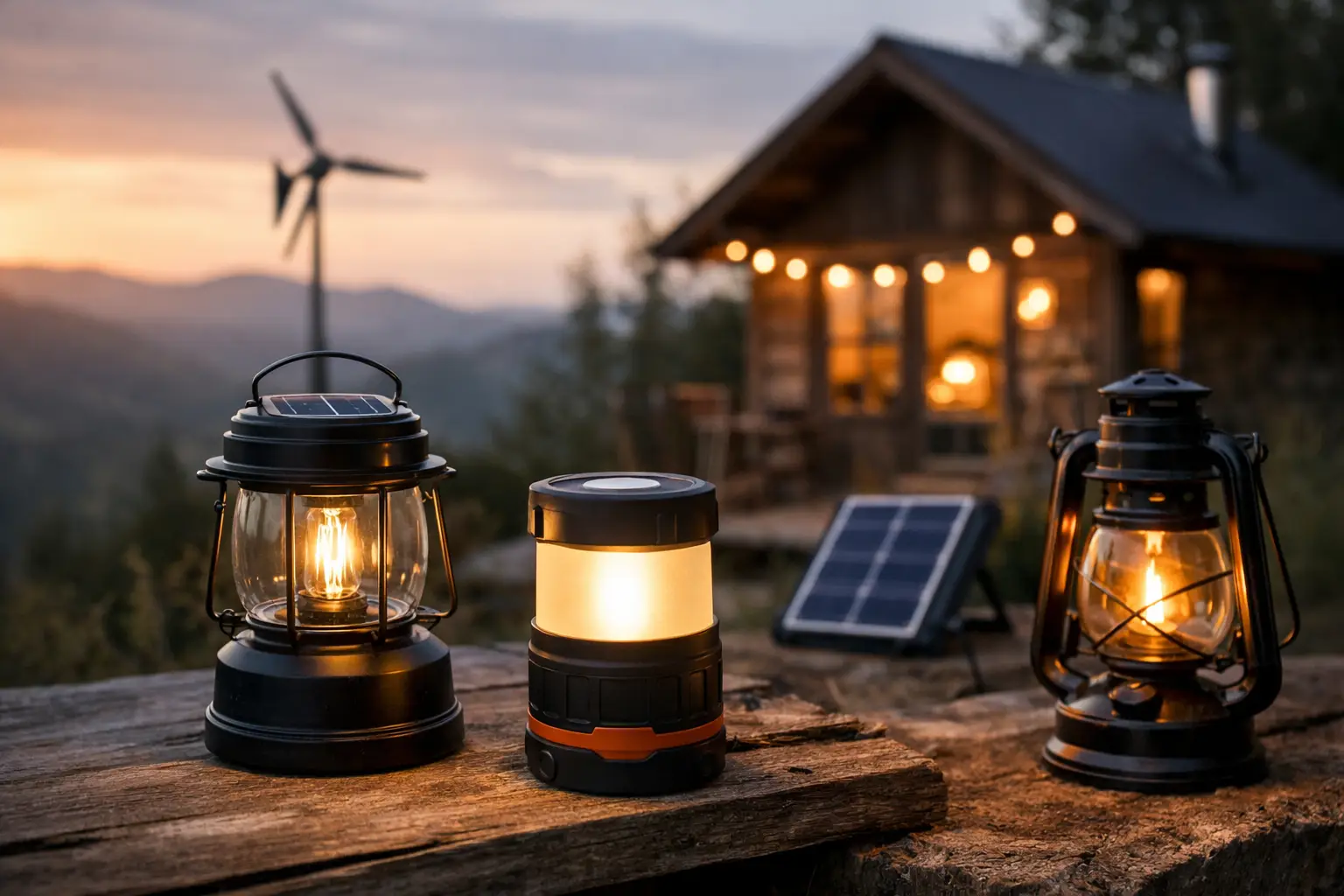
A dark cabin should feel like a retreat, not a compromise. The best off grid lighting solutions create the kind of warm, useful light that lets you cook dinner, read late, find the trailhead before sunrise, and settle into a quieter rhythm without relying on the grid.
For a tiny home, backcountry cabin, van, or solar-supported weekend escape, lighting is one of the fastest ways to make self-powered living feel considered and comfortable. The right setup is rarely one product. It is a layered system that pairs efficient task lighting with soft ambient light, dependable battery storage, and enough portable backup to keep your plans moving when weather changes.
Start With How You Want to Use the Space
Lighting decisions become easier when they begin with real life rather than a catalog. A one-room cabin used on weekends needs a different approach than a full-time tiny home, and a campsite has different demands than a remote workshop. Think about the moments that matter most: preparing food after sundown, working at a table, walking safely to an outdoor shower, or winding down without a harsh ceiling light overhead.
A good off-grid setup usually has three layers. Ambient lighting fills a room gently. Task lighting puts clear brightness where you need it, such as over a counter or beside a bed. Accent lighting adds warmth and orientation, whether that is a small lamp in the corner or low-level path lights outside.
This approach keeps you from overbuilding the system. Instead of installing powerful lights everywhere, you place efficient light where it earns its energy use. That is a more comfortable choice and a smarter one for your battery bank.
Why LEDs Are the Foundation of Off-Grid Light
LED lighting is the clear starting point for nearly every independent power setup. LEDs use far less power than incandescent or halogen bulbs, run cooler, and last substantially longer. Those benefits matter when every watt comes from a solar panel, a portable power station, or a carefully managed battery bank.
For interior spaces, choose LED bulbs and fixtures in the 2700K to 3000K color temperature range. This produces a warm white glow that feels relaxed in a cabin, bedroom, or living area. Cooler light around 4000K can work well over a utility bench, in a gear room, or near a bathroom mirror where visibility matters more than atmosphere.
Brightness matters too. Lumens measure light output, while watts tell you how much power a bulb consumes. A modern 800-lumen LED bulb can provide the familiar brightness of an old 60-watt incandescent while drawing only a fraction of the energy. In a compact space, that efficiency compounds quickly.
Choose DC Fixtures When Building a Permanent System
If your cabin or tiny home already runs on a 12V or 24V battery system, dedicated DC lighting can be a strong choice. These fixtures connect directly to the battery power and avoid the energy loss that comes from converting DC battery power into household AC power through an inverter.
DC lights are particularly practical for ceiling fixtures, reading lights, and under-cabinet strips that will be used often. The trade-off is that they are more specialized than standard household lamps and may require more planning during installation. For a simple retreat or a rental-friendly setup, AC LED lamps powered by a quality inverter may offer more flexibility.
Solar-Powered Lights for the Places Beyond the Wall
Outdoor lighting should make an off-grid property easier to navigate without turning it into a floodlit compound. Solar path lights, motion-activated security lights, and portable lanterns each have a role, but they perform best when matched to their purpose.
Solar path lights are ideal for marking a short route from a parking area to the cabin, outlining steps, or defining a deck edge. Look for models with replaceable batteries, weather-resistant construction, and warm light rather than the blue-white glare found in cheaper units. They are not designed to illuminate a large yard, but they make movement after dark feel safer and more intuitive.
Motion-activated solar lights are better near an entry, wood shed, outdoor storage area, or parking spot. Choose a model with adjustable sensitivity and duration so wildlife does not keep it running all night. Placement matters as much as output. Mount the panel where it receives dependable sun, even if that means positioning the light separately with a connecting cable.
For evenings outside, a rechargeable lantern often beats fixed lighting. It can move from picnic table to tent to bedside, requires no installation, and gives you useful backup during a power issue. A lantern with dimming controls and a warm-light mode is especially valuable because it can handle both practical chores and a low-key evening on the porch.
Portable Power Stations Make Lighting More Flexible
A portable power station can make a small off-grid lighting system feel much less rigid. It can run LED lamps, recharge lanterns and headlamps, and support phone charging or a small fan without requiring a permanent battery installation. Paired with a folding solar panel, it is an accessible option for weekend cabins, camping setups, and people building toward a larger system over time.
The key is to calculate the loads you actually expect. Lighting is generally a modest demand. For example, four 8-watt LED bulbs used for five hours consume about 160 watt-hours. Add a lantern, a few USB charges, and some reserve capacity, and a compact power station may be more than enough for a short stay.
Full-time tiny homes and larger cabins may call for a dedicated solar array and battery bank instead. In that case, lighting should be considered alongside refrigeration, water pumps, internet equipment, and other daily loads. Efficient lighting leaves more stored energy for the systems that cannot wait until tomorrow’s sun.
The Best Off Grid Lighting Solutions by Use Case
There is no single best setup for every property. The most effective choice follows the scale and rhythm of your space.
For a tiny home
Use warm LED ceiling fixtures for general light, focused under-cabinet strips for cooking, and a pair of adjustable reading lights near the bed or seating area. A 12V system is often worth considering if the home is designed around solar from the beginning. Add one rechargeable lantern for backup and outdoor use.
For a weekend cabin
Keep the system simple and durable. A few efficient LED lamps, solar path lights near the entrance, and motion lighting at key exterior points can cover most needs. A portable power station gives you flexibility without committing to a major electrical build before you understand how you use the property.
For a campsite or vehicle-based escape
Prioritize portability. Rechargeable lanterns, headlamps with red-light modes, magnetic LED bars, and a small solar panel create a lightweight system that adapts to changing conditions. Avoid relying only on headlamps. They are useful for setup and night walks, but shared ambient light makes camp more comfortable and less tiring.
For a workshop or gear shed
Put function first. Bright, neutral-white LED task fixtures help with repairs, tool organization, and early-morning preparation. Motion activation can prevent lights from being left on, while a separate warm light near the entrance keeps the space welcoming rather than purely utilitarian.
Plan for Weather, Maintenance, and Dark Weeks
Solar lighting is only as reliable as its exposure to sunlight and its ability to store energy. Panels placed beneath tree cover, under eaves, or facing the wrong direction will disappoint no matter how attractive the fixture looks. Before buying, observe where direct sun reaches your property during the seasons you expect to use it.
Cold temperatures can reduce battery performance, while cloudy stretches can leave small integrated solar lights undercharged. This does not make solar a poor option. It simply means a resilient setup includes backup. Keep a few rechargeable lanterns, a headlamp for each regular guest, and a way to recharge them from your main battery system or power station.
Maintenance is modest but real. Wipe dust, pollen, and snow from solar panels. Replace rechargeable cells when runtimes noticeably decline. Check seals and mounting hardware before a wet season. These small habits protect the reliability that off-grid living depends on.
Create Light That Supports the Life You Came For
The goal is not to recreate a brightly lit suburban house in the woods. It is to create enough light for comfort, safety, and connection while preserving the calm that drew you off the grid in the first place. Use brighter light where work happens, warm pools of light where people gather, and darkness as part of the experience rather than a problem to erase.
A thoughtful lighting plan gives your space a sense of ease from the first evening onward. Start with efficient LEDs and a dependable power source, then add portable and solar options as your routines become clear. Off The Grid Store believes independence should feel inviting, and the right light is one of the simplest ways to make that freedom visible.