
A tiny home does not need a giant utility bill to feel comfortable. With a thoughtfully designed rainwater system, the water falling on your roof can support a quieter, more independent way of living – whether you are building a full-time off-grid home, outfitting a cabin, or making weekend escapes easier.
Rainwater collection for tiny homes is not simply a matter of placing a barrel under a gutter. The right setup accounts for your local rainfall, roof material, water use, storage space, filtration needs, and local rules. Get those pieces right, and rain becomes a dependable part of a well-designed small-space lifestyle.
Start With Your Water Reality
Before choosing tanks, pumps, or filters, consider how you actually live. A couple using a tiny home on occasional weekends has very different water needs than a family living there year-round. Conservation matters, but comfort matters too. The goal is not to make every shower feel like a survival exercise. It is to make your system match your habits.
For a simple baseline, many people estimate 20 to 50 gallons per person per day in a tiny home. The lower end is realistic when you use efficient fixtures, take shorter showers, run a compact washer sparingly, and treat water as a resource rather than an endless utility. Drinking, cooking, washing dishes, bathing, laundry, and toilet use all belong in the calculation.
A composting toilet can significantly reduce demand, since conventional flushing often accounts for a surprising share of household water use. Low-flow showerheads, faucet aerators, and a dishpan for hand-washing dishes can also stretch stored water without making the home feel restrictive.
It helps to separate your water into two categories from the start: potable water for drinking and food preparation, and utility water for uses such as toilet flushing, laundry, or outdoor cleaning. You may decide that collecting rainwater for non-potable use is the right first step. A potable system can offer greater independence, but it requires more rigorous treatment and maintenance.
How Much Rain Can a Tiny Roof Catch?
Small homes have small roofs, which is both the appeal and the constraint. Your catchment area is usually the footprint of the roof, not the total interior square footage. Roof pitch does not dramatically increase the collection calculation because rainfall is measured as it falls vertically.
A practical formula is:
Roof area in square feet × annual rainfall in inches × 0.623 = annual gallons collected
Then reduce that result by roughly 10 to 20 percent to account for first-flush diversion, evaporation, overflow, and imperfect capture. For example, a 300-square-foot roof in an area with 30 inches of annual rainfall can collect about 5,600 gallons before those losses. That can be meaningful support for a conservation-minded tiny home, but it will not cover every household need in every climate.
Rainfall timing matters as much as the annual total. A region with regular summer storms is easier to manage than one that receives most of its rain in a short winter season followed by months of dry weather. In dry or highly seasonal areas, a rainwater system often works best alongside a backup plan, such as hauled water, a legal well connection, or a nearby approved fill source.
The Essential Parts of a Rainwater Collection System
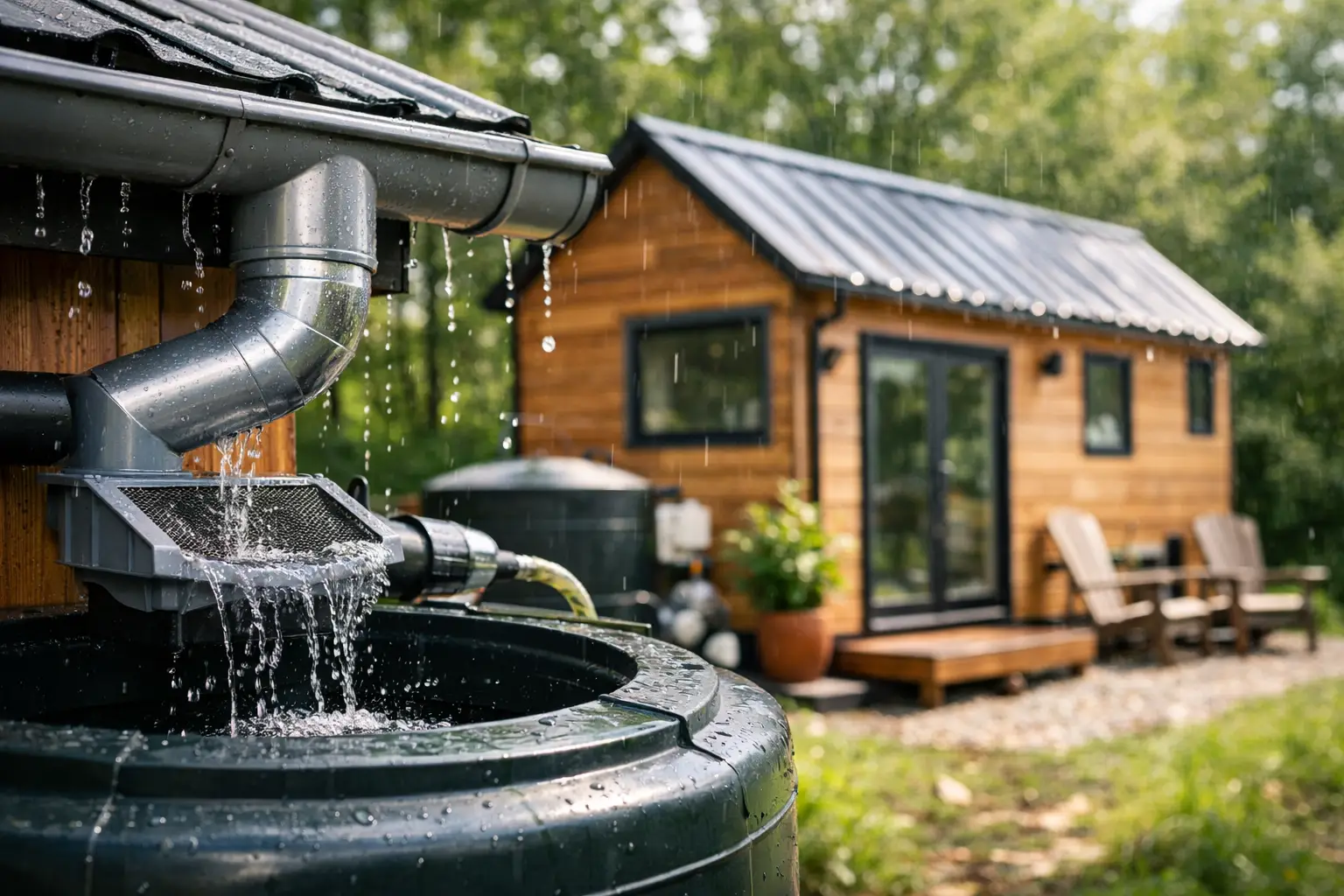
The most reliable systems are simple in concept and deliberate in detail. Water lands on a clean roof, moves through gutters, passes debris screening and a first-flush diverter, enters a covered tank, and then travels through filtration and a pump before reaching a fixture.
Your roof is the first surface in the system. Metal roofing is a popular choice for rainwater harvesting because it is smooth, durable, and easy to rinse clean. Some asphalt shingles can be used for non-potable collection, but they may shed grit and chemical residues, especially as they age. Avoid roofs with materials that can introduce harmful contaminants when you plan to drink the water.
Gutters should be sized for local downpours, securely fastened, and kept clear. Leaf screens help, but they are not a substitute for occasional cleaning. A first-flush diverter is equally valuable. It sends the first portion of a rainfall event away from the tank, carrying dust, pollen, bird droppings, and other roof debris with it.
Storage is where tiny-home planning becomes personal. A compact 55-gallon barrel may be useful for gardening or emergency water, but it will not carry a household through much dry weather. For more meaningful resilience, many tiny-home owners use one or more opaque polyethylene tanks ranging from 250 to 1,500 gallons. Slimline tanks fit along a wall. Low-profile tanks can work beneath a deck. Larger tanks may be placed beside the home, underneath an elevated structure, or partly buried where climate and local conditions allow.
Choose opaque, food-grade storage with a tight-fitting lid, screened vents, an overflow outlet, and a drain or sediment cleanout. Sunlight encourages algae. Open access invites insects and debris. Small design decisions protect water quality before the filter ever has to work.
Rainwater Collection for Tiny Homes: Filtration That Fits the Use
If collected rainwater will only serve landscaping or basic utility needs, a sediment filter may be enough. If it will supply showers, sinks, and laundry, use staged filtration that catches progressively finer particles. For drinking water, treatment needs to address sediment, bacteria, viruses, and other possible contaminants.
A common potable setup uses a washable sediment pre-filter, followed by finer filtration and a disinfection method such as UV treatment. Some systems also use activated carbon to improve taste and reduce certain chemicals. The exact combination depends on your source water, roof material, tank condition, and local health requirements.
Do not assume that clear water is safe water. Rainwater can pick up contaminants from the roof, wildlife, airborne particles, and the plumbing itself. If you intend to drink it, test the water periodically through a qualified laboratory, particularly after installing the system, changing components, or experiencing severe weather. Follow local and state guidance for potable rainwater systems, as rules vary widely across the US.
A pressure pump makes rainwater feel like regular plumbing, but it should be chosen for your actual fixtures and pipe runs. An oversized pump can be loud and wasteful in a compact home. A small variable-speed or demand pump paired with an accumulator tank often creates steadier pressure and fewer short cycling starts. Insulate exposed pipes and protect tanks, filters, and pumps from freezing temperatures if your tiny home sees winter weather.
Design for Maintenance, Not Just Installation
The best system is one you will actually care for. A tank tucked into an impossible crawl space may look clean in a floor plan, but it becomes frustrating when a filter needs changing or a valve needs repair. Leave room to inspect fittings, clean screens, drain sediment, and service the pump.
A simple seasonal routine keeps the system dependable:
- Check gutters, roof debris, screens, and overflow paths before the rainy season.
- Empty and rinse the first-flush diverter as needed, especially after long dry spells.
- Replace or clean filters according to their rated use and visible condition.
- Inspect tank lids, vents, seals, and mosquito screens for damage.
- Test potable water on a schedule that matches your use, local guidance, and any changes in water quality.
Pay attention to overflow, too. A full tank should send excess water safely away from the home foundation, neighboring property, and any area that could become muddy or icy. A swale, rain garden, or properly routed drainage line can turn heavy rain into a landscape asset rather than a maintenance problem.
Build Independence With a Backup Plan
Rainwater can increase your freedom, but self-reliance is not the same as pretending weather is predictable. A well-planned tiny-home system includes an honest backup strategy for drought, frozen lines, extended travel, or a failed pump. Keeping a reserve of treated drinking water, carrying spare filters, and having a manual way to access stored water are practical forms of resilience.
This is also where a hybrid setup can shine. Rainwater may handle washing, showers, and non-potable needs while a separate drinking-water supply provides peace of mind. Or a larger tank may be filled by rain whenever possible and topped up from an approved source during dry periods. There is no prize for making the system more complicated than your location requires.
For a permanent installation, check county, city, HOA, and building-code requirements before buying equipment. Some places encourage rainwater harvesting. Others regulate tank placement, plumbing connections, backflow protection, or potable use. A little research early on prevents expensive changes later.
A rainwater system is more than a utility feature. It is a daily reminder that a smaller home can still support a rich, capable life. Start with the rainfall you have, the comfort you want, and a system you can maintain with confidence. The result is not just stored water. It is more room to live on your own terms.
Leave a Reply