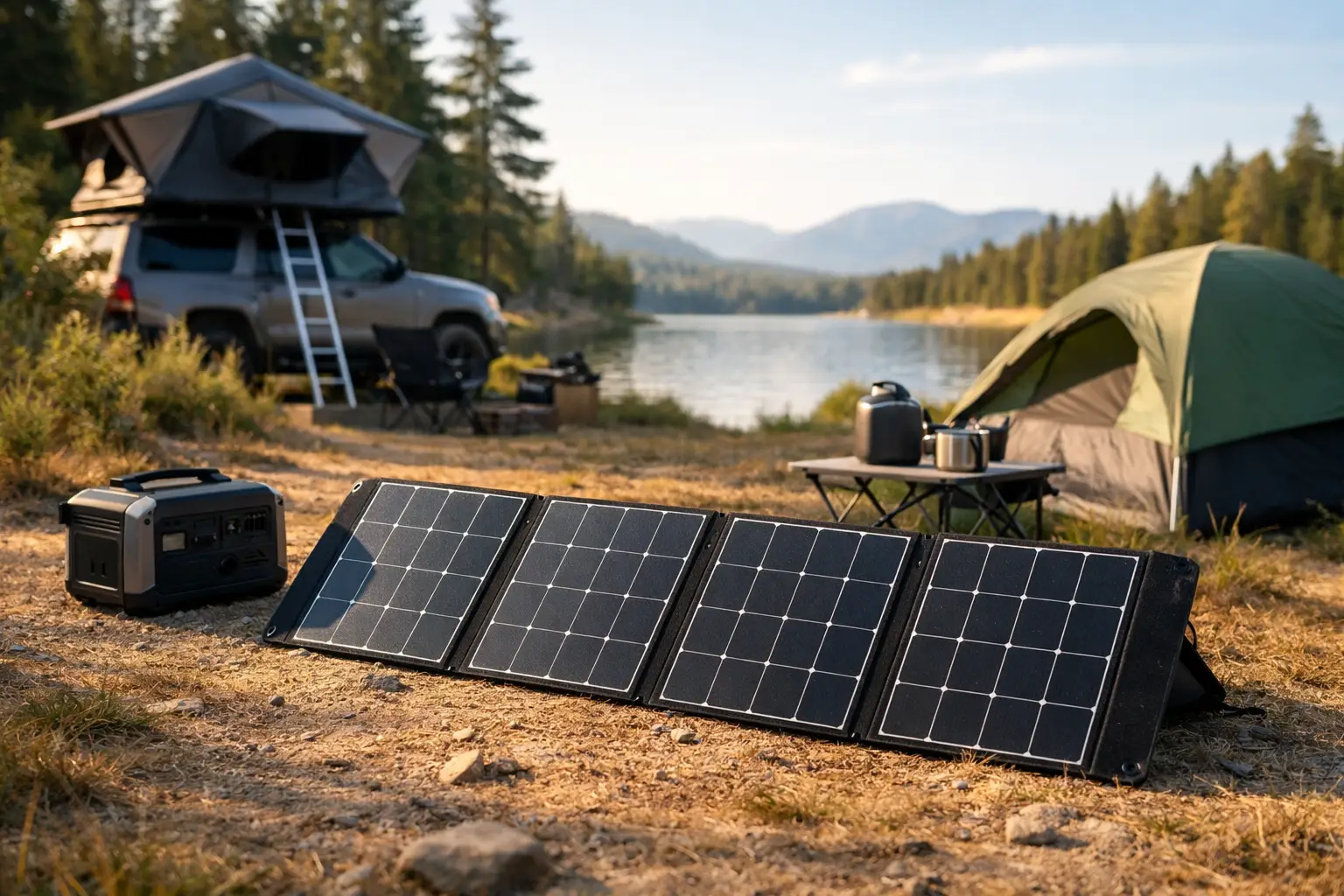
A folding solar panel earns its place when it removes friction from getting outside or living with less dependence on the grid. This folding solar panel review focuses on what actually matters after the unboxing: how much power reaches your battery, how easily the panel fits into your routine, and where portable solar has real limits.
For a cabin weekend, a converted van, or a quiet campsite where you still want lights, refrigeration, and a charged phone, portability is more than a convenience. It is the difference between a system you use often and one that stays in storage. The best folding panels make self-powered living feel straightforward without asking you to turn every trip into a technical project.
What a Folding Solar Panel Does Well
A folding solar panel is a portable array of photovoltaic cells that opens like a briefcase or fabric-backed mat. Most connect directly to a compatible portable power station or to a battery through a solar charge controller. When it is time to leave, it folds down for the trunk, gear closet, or under-seat storage.
Its greatest strength is flexibility. A fixed roof panel can produce power all day, but its angle and location are permanent. A folding panel can move with the sun. You can place it beyond the shade of your cabin porch, turn it toward the morning light, or keep it beside the vehicle while the vehicle remains cool under trees.
That freedom comes with a trade-off. Portable panels need to be carried out, positioned, adjusted, and packed away. They can also be vulnerable to wind, passing weather, and theft if left unattended. For a full-time tiny home with dependable sun exposure, roof-mounted solar is often the better foundation. For weekend use, backup power, seasonal cabins, and travel, folding panels can be the more useful first purchase.
Folding Solar Panel Review: The Specs That Matter
The wattage printed on a panel is useful, but it is not a promise of daily production. A 200-watt folding panel only reaches that peak in strong, direct sunlight under ideal test conditions. In normal use, output shifts with cloud cover, heat, season, panel angle, cable losses, and battery state of charge.
A better question is: what do you need to run, and how long do you have to recharge? If your goal is keeping phones, headlamps, a fan, and a compact power station ready for the evening, a 100-watt panel may be enough in favorable weather. If you need to replenish a larger battery that supports a cooler, CPAP machine, laptop work, or a small refrigerator, 200 watts or more is a more realistic starting point.
Rated wattage and real-world output
Expect a panel to produce less than its nameplate rating much of the time. A practical planning range is often 60 to 80 percent of rated output during a strong solar window, though conditions can fall well below that. This is not a flaw unique to folding panels. It is simply how solar works outside a laboratory.
The useful comparison is watt-hours, not watts alone. A 200-watt panel producing an average of 140 watts for five good hours delivers roughly 700 watt-hours. That could substantially refill a modest power station, but it may not cover both a refrigerator’s daily draw and a full evening of high-consumption appliances. Build around your actual loads, then leave room for weather.
Battery and connector compatibility
Before buying, check the input limits of your power station or charge controller. A panel can have the right wattage yet still be incompatible because its voltage, connector type, or amperage falls outside what your equipment accepts.
Common connectors include MC4, Anderson, DC barrel plugs, and proprietary inputs. Adapters can be useful, but they should not be an afterthought. A tidy, purpose-built connection is safer and easier to troubleshoot than a chain of adapters at the campsite. If you are connecting to a bare battery rather than an all-in-one power station, use a properly sized solar charge controller. Never connect a panel directly to a battery.
Weight, folded size, and setup design
A larger panel usually captures more energy, but it also demands more from your storage and your back. A rigid 200-watt suitcase panel may weigh 35 to 50 pounds. Flexible fabric-style panels can weigh much less, although they may sacrifice durability, stand stability, or performance in less-than-perfect light.
Look closely at the legs, hinges, handles, cable length, and case. A panel that takes two minutes to deploy is more likely to be aimed well and used every day. A short cable can force you to park your power station in the sun, which is not ideal for battery longevity. A long cable offers better placement, but should be thick enough to minimize voltage drop.
The Best Size for Your Setup
There is no single best folding panel. The right choice depends on whether solar is supporting a few essential comforts or carrying a larger share of your energy independence.
For a day trip or emergency kit, a compact 60- to 100-watt panel pairs well with a small battery pack. It handles communication, lighting, camera batteries, and modest device charging without adding much bulk. This is a practical option for people who want a calm, reliable backup rather than a full mobile power system.
For weekend camping, car travel, and light cabin use, 100 to 200 watts offers a strong balance of portability and capability. It can keep a medium portable power station topped up when the weather cooperates, especially if you prioritize efficient appliances and charge during daylight.
For extended stays at a remote cabin, a tiny home build, or regular work from the road, consider 200 to 400 watts of portable solar alongside a battery sized for overnight use. At this point, folding panels may be part of a hybrid approach: portable panels for adjustable sun exposure and fixed panels for consistent baseline generation.
Conditions That Change the Result
Solar panels are simple, but their environment is not. A panel laid flat on the ground will still collect energy, yet tilting it toward the sun can make a meaningful difference, particularly in spring, fall, and winter when the sun sits lower.
Shade is the bigger issue. Even partial shade across part of a panel can cut output sharply. Avoid positioning beneath thin branches, beside a tall vehicle, or near a roofline that casts moving shadows. Clear morning and afternoon exposure often matters more than chasing a perfect angle every hour.
Heat also affects production. Panels need sunlight, not excessive heat. A panel with airflow behind it can perform better than one pressed against hot ground or a dark vehicle hood. Keep the surface clean as well. Dust, pollen, salt spray, and bird droppings are small things that quietly reduce the power you expected.
What We Would Look for Before Buying
A premium folding solar panel should feel like a dependable piece of travel gear, not a fragile gadget. Prioritize a weather-resistant construction, reinforced corners, secure kickstands, and a protective case that will survive repeated loading and unloading. Water resistance is valuable, but it does not mean the panel, connectors, and power station should sit outside in heavy rain.
Also consider the brand’s stated warranty and whether replacement cables and adapters are available. Portable solar gets moved, bent, stepped around, and exposed to changing conditions. Support matters when your system becomes part of your regular escape plan.
Finally, resist buying more panel than your battery can accept. If a power station has a 120-watt solar input limit, attaching 400 watts of panel capacity will not produce 400 watts into that unit. Extra capacity can help in weak light in some configurations, but only if the equipment’s voltage and current limits allow it. Start with a compatible system, then expand with purpose.
A Better Way to Use Portable Solar
The most satisfying off-grid setups are built around rhythm, not constant monitoring. Set the panel out after breakfast, position it in clear sun, and let it replenish your stored energy while you hike, read, work on the cabin, or simply spend time offline. Bring the power station inside or into shade, and use that stored energy after sunset.
That pattern protects your gear and preserves the point of being away: more quiet, more choice, and fewer cords dictating the day. Off The Grid Store approaches solar-ready living in that spirit – capable enough for modern comfort, simple enough to leave room for the life you came out there to enjoy.
A folding solar panel will not make every cloudy weekend power-rich, and it is not a substitute for thoughtful energy use. But matched to the right battery, loads, and expectations, it gives you something more valuable than a fully charged device: the confidence to stay longer, travel lighter, and make your own power where you choose.
Leave a Reply