That quiet morning cabin setup sounds simple until the coffee maker, mini fridge, and phone charger all want power at once. So, can solar power run appliances? Yes – but the real answer depends on which appliances you mean, how long you want to run them, and whether your system is built for daily comfort or occasional backup.
For most people building a more self-directed lifestyle, solar is less about powering everything at once and more about powering the right things well. A thoughtful setup can absolutely support modern comfort in a tiny home, weekend retreat, van, or off-grid cabin. The key is knowing where solar performs beautifully and where it asks for more planning.
Can solar power run appliances in real life?
Solar can run appliances every day. Lights, fans, laptops, routers, TVs, blenders, mini fridges, and efficient kitchen gear are all common in solar-supported setups. If your goal is a calm, functional space that feels independent without feeling stripped down, that is very achievable.
Where people get into trouble is assuming solar works like a utility connection with unlimited supply. It does not. Solar is a stored-energy system. Your panels generate power when the sun is available, and your batteries hold that power for later. Every appliance you turn on draws from a limited daily budget.
That does not make solar restrictive. It just means your system works best when it matches your habits. If you mostly want to run essential comforts, charge devices, keep food cold, and enjoy a few household conveniences, solar is a strong fit. If you want central air, electric heat, a full-size dryer, and long high-wattage cooking sessions, the system becomes larger, more expensive, and less practical for many off-grid lifestyles.
What appliances run well on solar power?
The best solar-friendly appliances are efficient, predictable, and not constantly drawing huge amounts of electricity. Refrigerators designed for low energy use are one of the biggest wins. LED lighting is another. Device charging barely moves the needle compared with heating and cooling loads.
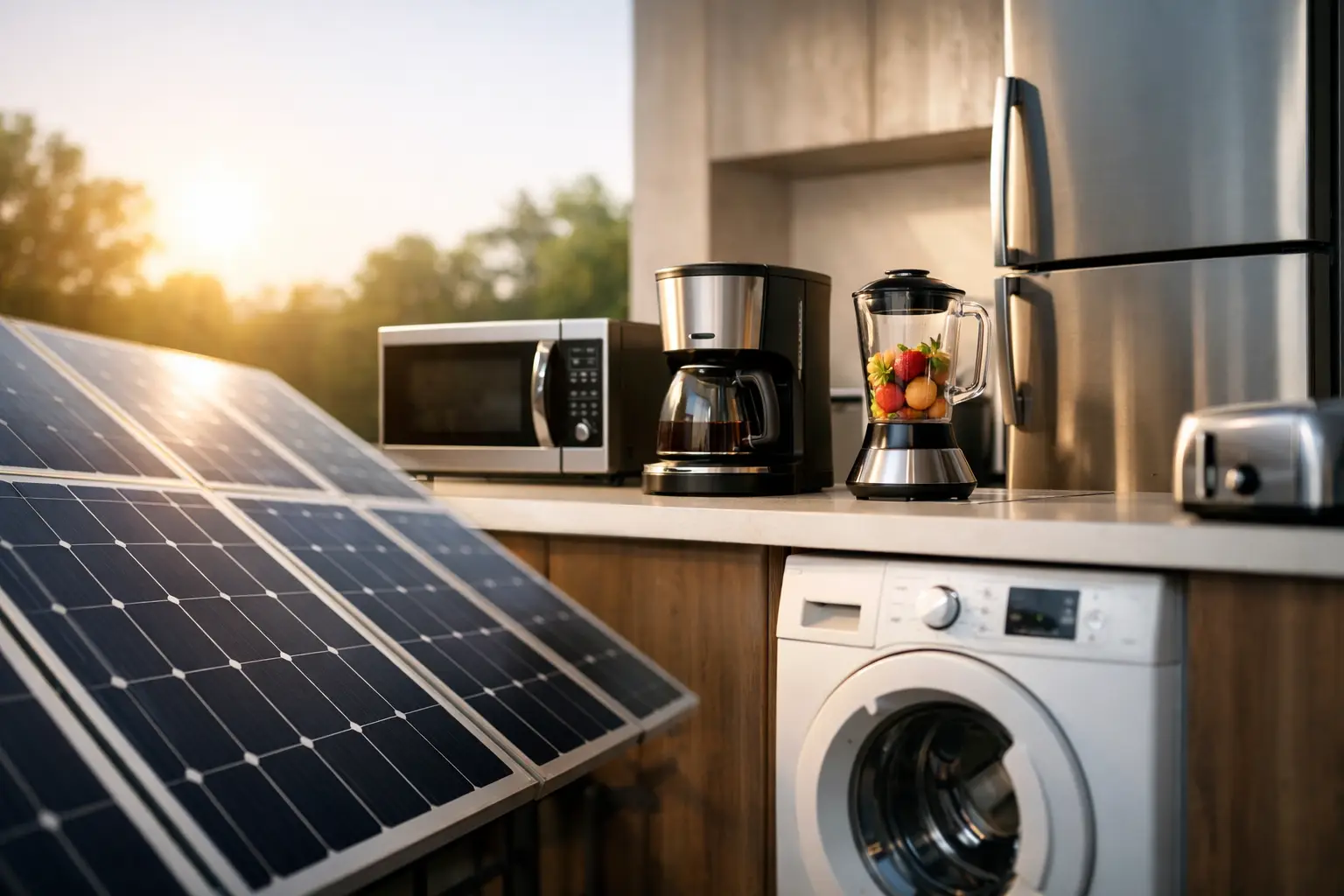
Small kitchen appliances can also work well, but timing matters. A blender or coffee grinder runs for short bursts, so even if it draws decent power, it may not consume much energy overall. A microwave can be similar – high draw, short runtime. That is very different from an appliance like a space heater, which may draw a lot of power continuously.
Fans, portable induction cooktops used briefly, efficient washing machines, and entertainment devices often fit comfortably into a well-sized system. Many modern tiny homes and cabins are built around exactly this kind of energy profile: efficient basics, short-use convenience appliances, and fewer wasteful loads.
Appliances that usually fit solar better
Appliances with motors or heating elements can be fine if they are used strategically, but not all of them are equal. A laptop is easy. A toaster is possible. A hair dryer is doable in some setups, but it can be a rude surprise if your inverter or battery bank is undersized.
A useful way to think about it is this: low and steady is easy, short and intense is manageable with the right equipment, and high-demand for long periods is where solar gets expensive fast.
Appliances that demand more planning
Air conditioners, electric water heaters, clothes dryers, electric ovens, and resistance space heaters are the usual pressure points. They are not impossible. They just require far more panel capacity, larger batteries, and a stronger inverter. For many people, that trade-off does not align with the simplicity they actually want.
A more intentional off-grid setup often uses alternatives. Propane for water heating or cooking, wood for supplemental heat, better insulation, shaded design, and energy-efficient appliances can reduce electrical demand without sacrificing comfort.
The three things that decide whether solar can run your appliances
The answer comes down to wattage, runtime, and surge power.
Wattage is how much power an appliance needs while operating. Runtime is how long you use it. Surge power matters because some appliances, especially those with compressors or motors, need extra power for a moment when they start.
A 60-watt laptop charger used for three hours is a light load. A 1,500-watt space heater used for the same time is an entirely different category. Even if your panels can produce enough energy over the course of a sunny day, your inverter still has to handle the heater’s real-time power demand, and your batteries have to carry that load when the sun drops.
This is why solar sizing should start with your lifestyle, not with a generic kit. A weekend cabin owner who wants a fridge, lights, and music has different needs than a family living full-time in a tiny home with a well pump and work-from-home setup.
How to estimate if your appliances will work on solar
Start by checking the wattage label on the appliances you care about most. Then estimate how many hours per day each one will run. Multiply watts by hours to get watt-hours.
If a mini fridge averages 80 watts over 10 hours of actual runtime across a day, that is about 800 watt-hours. If your laptop uses 60 watts for 4 hours, that adds 240 watt-hours. Add your lights, fan, router, and anything else you want to use.
This total gives you a rough daily energy need. Then compare it against the energy your solar panels can produce and your batteries can store. You will also want some breathing room for cloudy days, inefficiencies, and future additions. A system that only works on paper tends to feel fragile in real life.
If you are new to this, the easiest mistake is focusing only on panel wattage. Panels matter, but batteries and inverter capacity matter just as much. Plenty of people buy enough panel power and still cannot run what they want because their inverter cannot handle startup surges or their battery bank is too small for evening use.
Can solar power run appliances overnight?
Yes, but at that point your battery bank is doing the heavy lifting. Solar panels do the charging during daylight hours. Batteries carry the load after sunset, early in the morning, and during bad weather.
That means overnight use is less about how many panels you have and more about how much stored energy you have available. A fridge, a CPAP machine, lights, and device charging overnight are common battery uses. Running a portable AC all night is possible in some systems, but it is one of the fastest ways to discover how expensive comfort can get when it is powered electrically.
For off-grid living that feels calm instead of constantly managed, battery capacity is often where it makes sense to invest. It gives you freedom, not just power.
A better question than “can solar power run appliances”
The better question is: which appliances matter most to the way you want to live?
That shift changes everything. If your vision of independence includes good coffee, cold food, warm lighting, a fan, a speaker, and enough charging power to work or unwind, solar can support that beautifully. If your goal is to recreate a conventional suburban energy profile in a remote location, it can still be done, but the system stops being simple and starts becoming infrastructure-heavy.
The most satisfying setups are usually the ones built around priorities. Comfort first. Waste second. That is where modern off-grid living feels less like sacrifice and more like design.
Building a solar setup that feels effortless
A reliable system starts with energy-efficient appliances. It continues with realistic expectations about seasonal sunlight, weather, and daily habits. And it gets much better when loads are staggered instead of stacked. Running the blender, microwave, and hair dryer at different times is easier on your system than expecting them to behave like they are plugged into an endless grid.
This is also where quality matters. Better batteries, dependable inverters, and efficient appliances reduce friction. They make the experience feel quieter, steadier, and more aligned with why many people choose off-grid living in the first place.
For buyers stepping into this lifestyle, the goal is not technical perfection. It is confidence. You want a setup that supports your space and your rhythm without forcing you to think about power every hour of the day. That is why thoughtful planning beats overspending on random components every time.
At Off The Grid Store, that mindset is central to the entire category. The best gear is not the flashiest option. It is the option that gives you dependable freedom.
Solar can absolutely run appliances. The real win is choosing a system and a set of appliances that support the life you actually want to lead. When your power setup matches your priorities, independence starts to feel natural.