The first night off grid tells the truth fast. If your lights are low, your water runs short, or your setup feels more stressful than freeing, you notice it immediately. That is why the real question behind what do you need for off grid living is not just what to buy. It is what creates a life that feels calm, capable, and sustainable day after day.
For most people, off-grid living is not about rejecting comfort. It is about choosing independence with intention. A well-built setup gives you quiet, control, and resilience without making every basic task harder than it needs to be. Whether you are outfitting a tiny home, a weekend cabin, or a full-time retreat, the essentials stay remarkably consistent.
What do you need for off grid living first?
Start with the systems that protect your baseline quality of life: shelter, power, water, sanitation, climate control, and food storage. Everything else matters, but those six categories decide whether your space feels livable.
The mistake many people make is starting with gear instead of lifestyle. A beautiful solar setup will not save a space with poor insulation. A high-end water filter will not fix weak water access. Off-grid success usually comes from balance, not from overbuilding one category while ignoring another.
Shelter that works with your environment
Your structure shapes every other decision. A tiny home in the desert, a wooded cabin in the Pacific Northwest, and a mobile trailer in the Southwest all have different needs. Before you think about upgrades, think about exposure, insulation, ventilation, and durability.
A good off-grid shelter should hold temperature well, manage moisture, and support your core systems without constant maintenance. If your roof cannot handle solar, your layout cannot support storage, or your windows turn every season into a battle, daily life gets expensive in both time and energy.
This is where comfort becomes practical. Better insulation means less power demand. Smarter ventilation improves air quality and reduces mold risk. Durable materials reduce the number of repairs you have to solve without easy access to contractors or big-box stores.
Reliable off-grid power
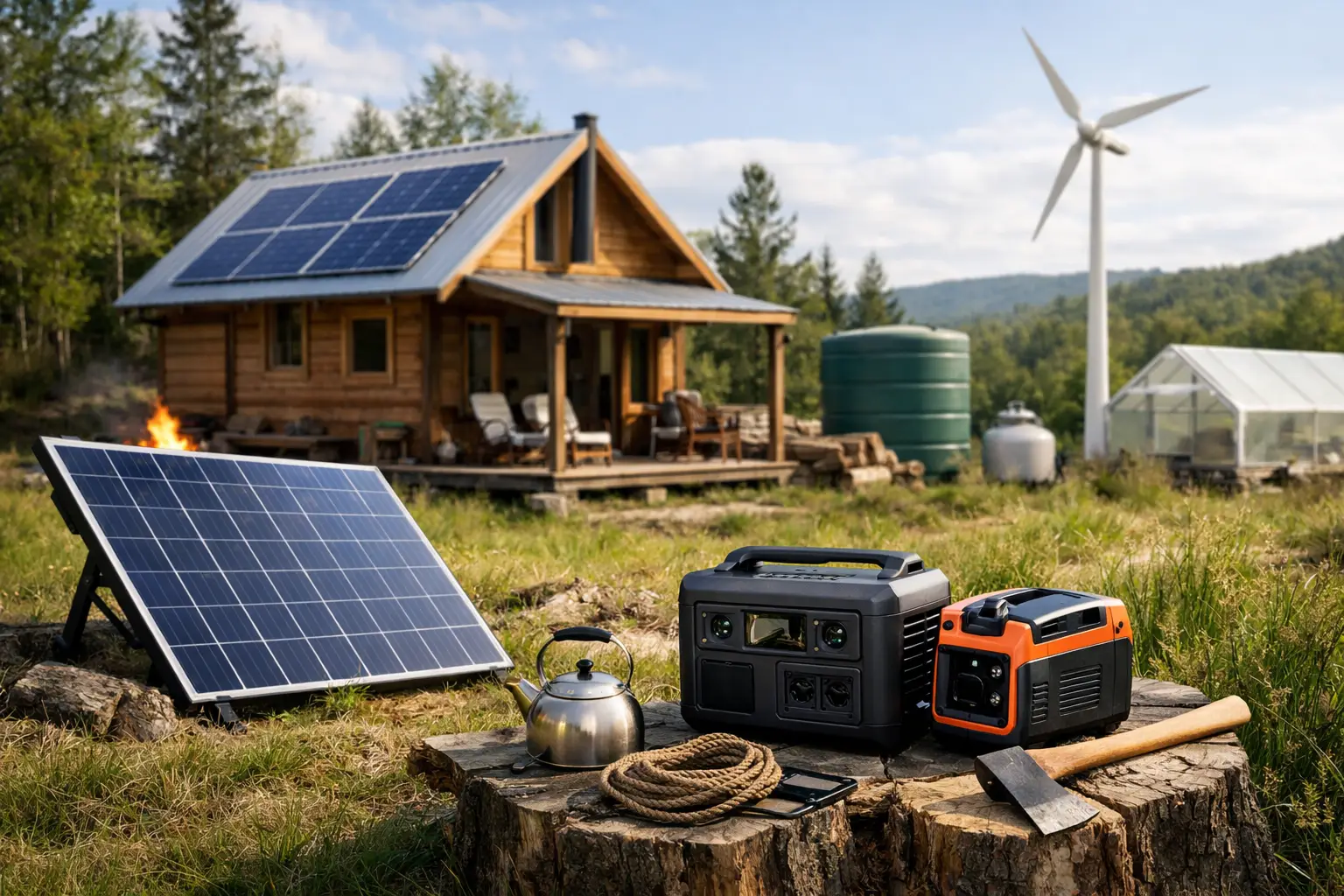
If you ask what do you need for off grid living in one phrase, power independence is usually near the top. For most modern setups, that means solar paired with battery storage. It is quiet, scalable, and well suited to cabins, tiny homes, vans, and backup-ready properties.
The right system depends on your actual usage. If you only need lights, device charging, a water pump, and a small fridge, your setup can stay relatively lean. If you want air conditioning, induction cooking, laundry, or full-time remote work, your power needs rise quickly.
This is why energy planning matters more than panel shopping. Start by understanding your loads. How many watt-hours do you use in a day? What needs to run continuously? What can be timed for sunny hours? Once you know your habits, sizing a system gets much easier.
A generator can still play a role, especially as backup during cloudy stretches or high-demand seasons. But for many lifestyle-driven off-grid builds, the goal is to reduce generator dependence, not normalize it.
Water is the system you cannot improvise
Power problems are annoying. Water problems shut everything down.
A functional off-grid setup needs both water supply and water treatment. That supply might come from a well, rain catchment, hauled water, or a combination depending on location and local regulations. The treatment side usually includes filtration, safe storage, and sometimes purification for drinking water.
You also need to think beyond drinking. Cooking, bathing, dishes, laundry, and cleaning all add up. Even minimalist households use more water than they expect at first. That does not mean you need excess. It means you need a realistic plan.
Storage is where resilience lives. If weather shifts, delivery delays happen, or your primary source goes offline, reserve capacity gives you room to adapt. For many people, a simple, well-protected storage setup does more for peace of mind than a complicated collection system ever will.
Sanitation and waste management
This is the category people tend to avoid until they cannot. Off-grid living needs a clear plan for both human waste and gray water. Depending on your site, that could mean a septic system, composting toilet, incinerating toilet, or another approved solution.
There is no universal best option. Septic can feel familiar and low-effort once installed, but it requires land suitability and upfront investment. Composting toilets appeal to small-space and mobile setups, but they work best when owners are comfortable with routine maintenance and proper use. Gray water systems can reduce strain on freshwater use, but they must be designed responsibly.
Good sanitation is not glamorous, but it is part of what makes off-grid life feel clean, modern, and sustainable rather than improvised.
Heating, cooling, and staying comfortable
Many people imagine off-grid living as a power question. In reality, it is often a climate question.
If your space gets too cold at night, too hot by afternoon, or too damp in shoulder seasons, comfort disappears fast. That is why climate control deserves attention early. Wood stoves, propane heaters, mini splits, fans, passive shading, thermal curtains, and strategic airflow all have a place depending on your region and system capacity.
The smartest approach usually combines active and passive solutions. Seal gaps, insulate well, and manage sun exposure first. Then size your heating and cooling equipment around a structure that is already working with you instead of against you.
This is one of the biggest trade-offs in off-grid design. People want residential comfort with minimal energy use, and that is possible to a point. But it takes planning. A poorly insulated cabin with a large AC demand will always be more expensive and harder to power than a compact, climate-smart space.
Food storage, cooking, and daily function
A beautiful location feels less beautiful when basic meals become complicated. Food systems matter because they affect how easy it is to stay off grid for more than a weekend.
At minimum, most setups need reliable refrigeration, dry food storage, and a practical cooking method. That might be propane, solar-supported electric, wood, or a mix. The best setup depends on your power budget and how often you cook.
A small, efficient fridge often makes more sense than a residential-size model in an off-grid home. Dry goods storage should protect against moisture, pests, and temperature swings. If your location is remote, build in enough capacity that you are not forced into constant resupply runs.
This is also where intentional living becomes tangible. Simpler kitchens often create better routines. Fewer appliances, smarter storage, and durable tools can make a small space feel more functional, not less.
Lighting, connectivity, and security
Off-grid does not have to mean disconnected from every modern convenience. It means being selective.
Efficient LED lighting is an easy win because it improves daily life without putting heavy strain on your system. Connectivity is more personal. Some people want full remote-work capability. Others want enough signal for weather updates, navigation, and emergencies. There is no wrong answer, but there should be a deliberate one.
Security matters too, especially for second homes, cabins, and part-time properties. Good locks, exterior lighting, simple monitoring tools, and clear site awareness go a long way. You do not need to turn your retreat into a fortress. You do need to protect the investment you are building.
What you need for off grid living beyond gear
The less glamorous answer to what you need for off grid living is planning margin. Margin in power. Margin in water. Margin in budget. Margin in patience.
Off-grid systems work best when they are not constantly pushed to the limit. A little extra battery capacity, extra water storage, backup fuel, spare filters, and replacement parts can turn a stressful setback into a small inconvenience. The goal is not overconsumption. It is avoiding fragility.
You also need a mindset that values maintenance over emergency fixes. Pumps need checking. Batteries need monitoring. Filters need replacing. Roofs, seals, and wiring need periodic attention. The strongest setups are not always the most expensive. They are often the ones people understand well enough to maintain confidently.
If you are still in the planning stage, start smaller than your fantasy and more thoughtfully than your impulse. Build around how you actually live. A weekend cabin does not need the same system as a full-time family home. A design-conscious tiny home can still be deeply resilient. A modern off-grid space can look clean, feel comfortable, and support the kind of slower, more self-directed life many people are after.
That is the shift worth making. Off-grid living is not about proving how little you can live with. It is about creating a space where freedom feels dependable. If you build for that, the rest gets a lot clearer.