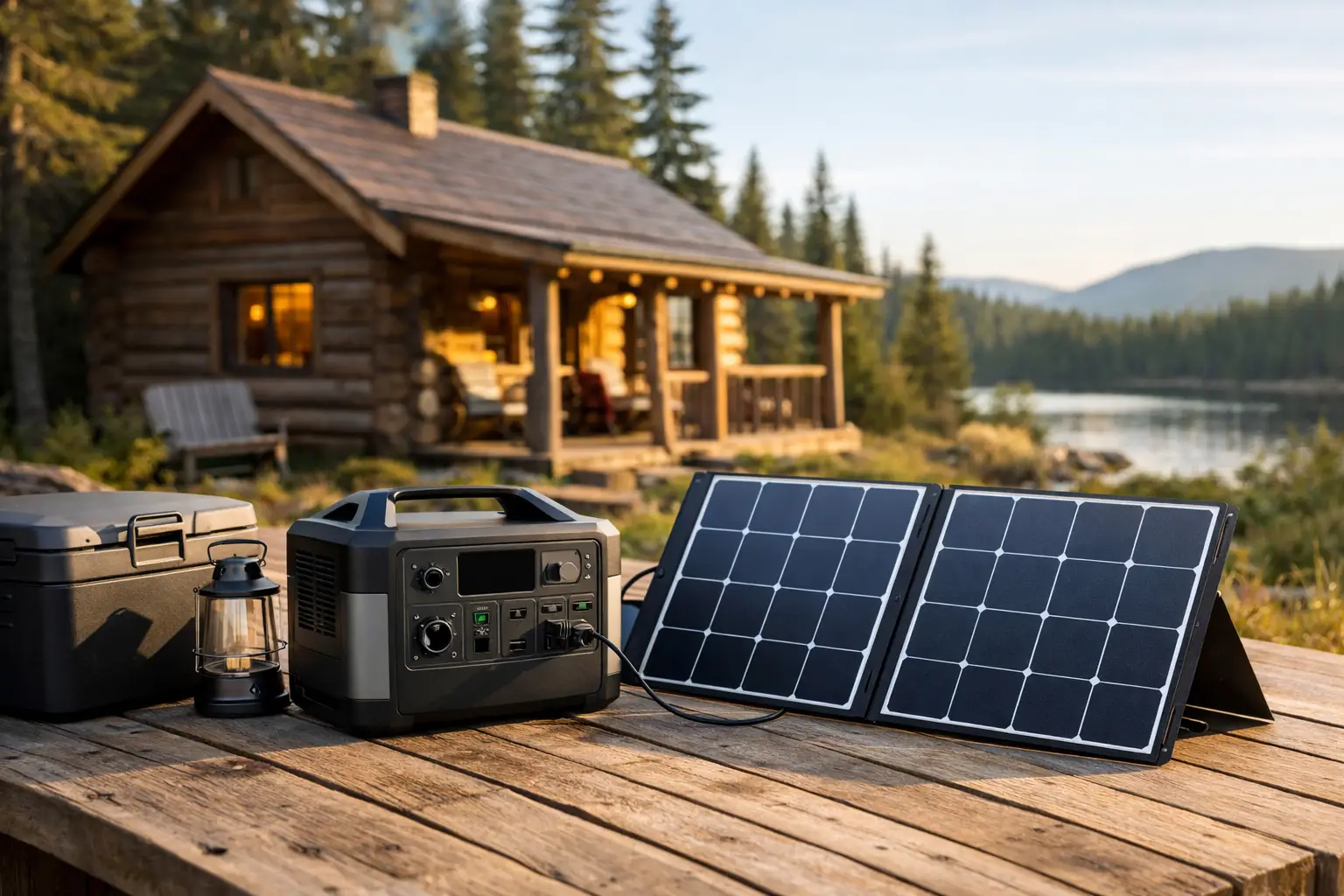
A cabin gets a lot quieter when the power source does, too. If you are looking for the best solar generator for cabin living, the right choice is rarely the biggest unit or the most expensive one. It is the system that fits how you actually use the space – whether that means a simple weekend retreat with lights and phone charging or a more comfortable setup with a fridge, coffee maker, fans, and backup power when weather turns.
For most cabin owners, the goal is not chasing extreme self-sufficiency. It is building a place that feels calm, capable, and easy to rely on. A good solar generator supports that feeling. It lets you power the essentials without the noise, fuel storage, maintenance, and constant interruptions that come with gas generators.
What makes the best solar generator for cabin setups?
The answer starts with usage, not marketing claims. A solar generator for a cabin needs enough battery capacity to cover your real daily load, enough output to run the appliances you care about, and enough solar input to recharge in a reasonable time. If one of those three is out of balance, the system feels frustrating fast.
Battery capacity, usually measured in watt-hours, tells you how much energy you can store. Inverter output, measured in watts, tells you what the unit can run at one time. Solar input, also measured in watts, tells you how quickly you can refill the battery from panels. Cabin buyers often focus on capacity first, but output and charging speed matter just as much.
A 2,000Wh unit sounds impressive until you realize it may not run your induction cooktop and microwave together. On the other hand, a high-output unit with a smaller battery can handle demanding appliances for only a short window. The best fit is usually a balanced system sized around your actual habits.
Start with your cabin power style
Cabins tend to fall into three broad categories. The first is the low-demand weekend cabin. This setup usually includes LED lighting, phone charging, a speaker, maybe a laptop, and occasional use of a small fan or portable cooler. In that case, a compact or mid-size solar generator can be enough, especially if you are visiting for a night or two and get decent sun.
The second is the comfort-first cabin. This is where most people land. You want lights, device charging, a real refrigerator, maybe Wi-Fi, a coffee maker in the morning, and enough reserve to stay comfortable through cloudy weather. Here, a mid-size to large solar generator usually makes more sense, often paired with a strong solar panel array.
The third is the near-full-time or highly equipped cabin. If you are running power tools, a water pump, an electric kettle, a projector, multiple appliances, or extended refrigeration, you are moving beyond casual backup and into the territory of a larger expandable system. At that point, the best solar generator for cabin life may look more like a modular power station with extra batteries rather than an all-in-one portable box.
How much capacity do you really need?
This is where a lot of cabin setups go wrong. People underestimate how much energy refrigeration, heating devices, and convenience appliances consume over a full day.
If your cabin routine is simple, 500Wh to 1,500Wh can work. That is enough for lights, charging, and lighter electronics. Once you add a portable fridge or full-size energy-efficient refrigerator, your daily demand can jump significantly. A comfortable weekend cabin often lands in the 1,500Wh to 3,000Wh range, especially if you want margin instead of constantly watching the battery percentage.
If your cabin is a regular retreat and you want it to feel effortless, more storage usually feels better. Not because you need to live extravagantly, but because battery anxiety takes away from the whole point of being there. A larger unit gives you room for weather changes, longer stays, and those little moments of comfort that make the space feel finished.
That said, bigger is not always better. A massive power station can cost far more, weigh a lot, and take longer to recharge if you do not have enough panel capacity. Oversizing without the solar input to support it can leave you with expensive stored potential that is slow to recover.
The features that matter most
For cabin use, battery chemistry matters. Lithium iron phosphate batteries are generally the stronger choice. They last longer, handle repeated charging better, and are a better fit for people who plan to use the system often over several years. If you are building a reliable retreat rather than buying a gadget for occasional tailgating, that longer lifespan is worth paying attention to.
Port selection matters, too, but probably less than you think. AC outlets are the priority for most cabins, followed by USB-C and standard USB ports for personal devices. A regulated 12V car port can be useful for portable fridges and some cabin accessories. The key is having the outlets you will actually use in the places you need them.
Charging flexibility is another major factor. The best cabin systems can charge from solar, wall power, and often a vehicle. Wall charging is useful before a trip. Solar charging is what gives you independence once you arrive. Fast solar input becomes especially valuable if your cabin sits in a wooded area or you only get a shorter window of direct light.
Weather and portability also deserve a quick reality check. Many solar generators are portable in the technical sense, but not pleasant to carry far. If your parking area is not close to the cabin, weight and handle design matter. If the unit will stay in one place, portability becomes less important than battery life, expandability, and ease of setup.
Best solar generator for cabin buyers: choose by use case
If your cabin is mostly for quiet weekends, choose a smaller unit with enough headroom for comfort. You do not need a huge system to power lights, charge devices, run a fan, and support a few evening essentials. In this scenario, silent operation and quick setup matter more than maximum output.
If your cabin is where you go to reset without giving up modern basics, a mid-size unit is often the sweet spot. This is the category that works well for most people. It can handle a fridge, lights, coffee prep, device charging, and some overlap between appliances without turning power management into a chore.
If your cabin is a serious second living space, look for expandability first. Extra battery support, stronger inverter output, and high solar input will matter more than compact design. You are not just buying backup power at that point. You are building a small energy system.
This is also where brand trust matters. The best option is not simply the one with the most dramatic headline specs. Good support, clear warranties, realistic charging claims, and a stable app or display can make daily use much better. That is especially true for off-grid living, where reliability feels personal.
Don’t forget the solar panels
A solar generator without enough panel input is only half a solution. Cabin owners sometimes buy a capable power station and pair it with too little solar, which creates a cycle of partial charging and limited independence.
Panel size should match how long you stay, how much energy you use, and how much sun your site actually gets. A weekend cabin with modest consumption can get by with a lighter panel setup. A cabin with refrigeration and daily use usually needs a more serious array. Shade changes everything, so be honest about tree cover, seasonality, and weather patterns.
Portable folding panels are convenient and easy to store, but fixed panels often make more sense if your cabin has a stable layout and regular use. Portable panels are flexible. Fixed panels are usually better for consistency. It depends on whether your setup is mobile, seasonal, or more permanent.
Common mistakes to avoid
One mistake is buying for emergency fantasies instead of daily reality. If your actual goal is a better weekend escape, prioritize usability and recharge speed over extreme output.
Another is ignoring surge power. Some appliances draw a lot more wattage when starting up than when running. Refrigerators, pumps, and tools can trip a system that looks sufficient on paper.
A third is forgetting cold weather. Battery performance can drop in low temperatures, and some units have charging limitations in freezing conditions. If your cabin gets winter use, make sure the system is rated for it and think through where the unit will be stored.
Finally, do not underestimate ease of use. A cabin power system should reduce friction, not add another layer of troubleshooting. Clear displays, intuitive controls, and straightforward setup go a long way.
A smarter way to buy
The best solar generator for cabin life is the one that matches your rhythm. Start with what you want your time there to feel like. Quiet mornings with coffee and music. Reliable refrigeration. Lights that just work. Enough reserve to stay another day when you do not feel like heading back.
That mindset leads to better buying decisions than chasing the biggest number on a spec sheet. And if you are building your setup through a trusted source like Off The Grid Store, the right system becomes more than a product choice. It becomes part of a more intentional way to live – simpler, quieter, and fully your own.
Choose a system that gives you room to exhale, not one that keeps asking for your attention.