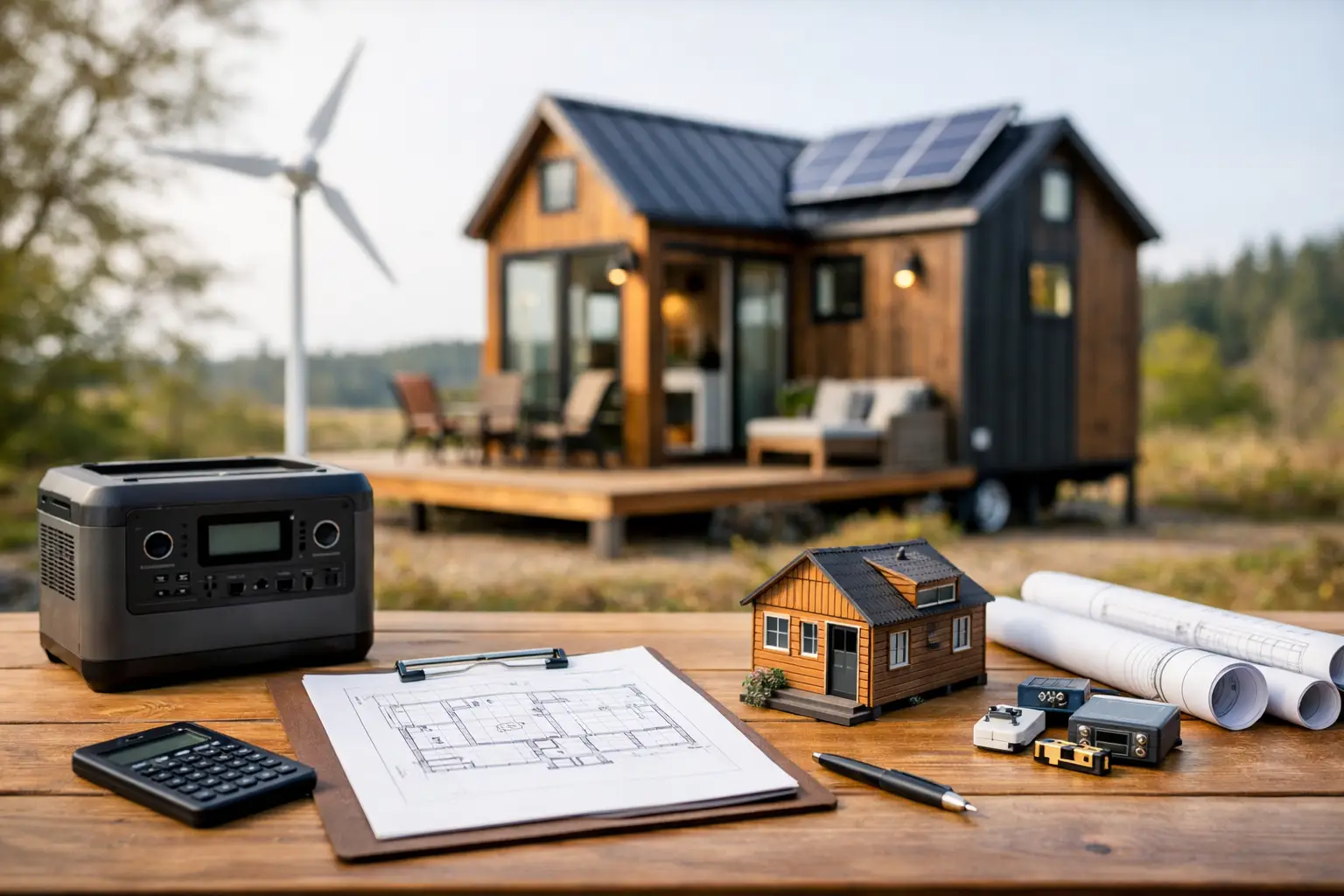
A beautiful tiny home can still feel frustrating if the power plan is an afterthought. The difference between calm, self-directed living and constant battery anxiety usually comes down to one thing: a smart tiny home power planning guide that starts with your real habits, not a fantasy version of off-grid life.
For most people, power planning is not about chasing the biggest solar array or the biggest battery bank. It is about building enough capacity for the life you actually want to live. That might mean quiet mornings with coffee and music, a reliable laptop setup for part-time remote work, or a weekend cabin that keeps lights, refrigeration, and water systems running without drama. The right system feels steady and intentional.
Start your tiny home power planning guide with lifestyle, not gear
Before you compare batteries, panels, or inverters, define how the home will be used. A full-time tiny home has very different demands than a weekend retreat. A mobile setup also behaves differently than a fixed tiny house on land, especially if roof space is limited or parking conditions change your solar exposure.
Think in terms of daily rhythms. Do you cook with electricity or propane? Will you run air conditioning in a hot climate, or are you designing around passive cooling and fans? Are you charging tools, cameras, e-bikes, or just phones and a laptop? Every one of those choices shapes the electrical system more than product specs alone.
This is where many builds get expensive. People often overspend on power because they are trying to cover every possible future scenario. A better approach is to identify your non-negotiables first, then separate comfort upgrades from true essentials. Refrigeration, water pumping, lights, ventilation, and device charging usually sit in the first category. Space heating, electric cooking, and air conditioning can quickly move a system into a much larger budget.
Calculate your daily energy use honestly
The most practical part of any tiny home power planning guide is load estimation. That means figuring out how much energy your devices use in a normal day, measured in watt-hours.
Start with the appliances and systems you will use regularly. A fridge may cycle on and off all day. LED lights might use very little individually, but they still belong in the plan. Water pumps, routers, laptop chargers, fans, composting toilet fans, and vent hoods all add up. If you use a coffee maker, blender, toaster oven, or induction cooktop, those matter too, especially because high-watt appliances affect inverter sizing.
Be realistic about runtime. A 60-watt laptop charger used for three hours consumes far less than a 1,500-watt induction burner used for even a short period. This is why tiny home electrical planning is often less about how many devices you have and more about which devices create big spikes.
Once you total your likely daily use, add a buffer. Real life is not perfectly efficient. Batteries lose some energy in conversion, weather can reduce solar production, and people almost always end up charging a few more things than expected. A modest cushion helps the system feel reliable instead of delicate.
Battery size determines how your home feels
Battery storage is where comfort and resilience meet. In a tiny home, the battery bank is what gets you through cloudy weather, overnight use, and those days when your routines stretch longer than planned.
A small battery setup can work beautifully for minimal weekend use. But full-time living usually benefits from more autonomy. If your battery bank is too small, you will think about power all the time. That mental load is the opposite of the lifestyle most people are building toward.
Lithium batteries are often the preferred choice for modern tiny homes because they offer usable capacity, long cycle life, and less maintenance than older lead-acid systems. They also support a cleaner, more design-conscious setup in compact spaces. The trade-off is higher upfront cost. For many buyers, that higher initial spend makes sense because it improves daily usability and reduces long-term friction.
A helpful benchmark is to size battery storage around how much energy you want available without sunlight. Some people are comfortable with one day of backup. Others want two or three, especially in shaded locations or winter climates. There is no universal answer here. It depends on your weather, your habits, and how much inconvenience you are willing to tolerate.
Solar array size is about recovery, not just generation
People often focus on battery capacity first, but your solar array determines how quickly the system recovers. If the battery is the reserve tank, the panels are the refill strategy.
A tiny home with limited roof space may not be able to mount enough solar to support an all-electric lifestyle year-round. That is not a failure. It just means the system should be designed around realistic solar harvest, seasonal changes, and backup options.
Sun exposure matters as much as panel wattage. Trees, panel angle, parking orientation, and winter daylight hours can all reduce output. A home in Arizona and a cabin in the Pacific Northwest need very different expectations, even if they use the same equipment.
This is why a mixed-energy approach often makes sense. Many tiny homeowners use solar for core electrical needs while relying on propane or wood for heating, hot water, or cooking. That choice is not less committed to off-grid living. It is often the smarter and more efficient path in a compact home.
Inverter and system design choices matter more than they look
An inverter converts battery power into the kind of electricity most household appliances use. If it is undersized, key appliances may not run properly. If it is oversized, you may spend more than necessary and introduce inefficiency.
The right inverter depends on your largest simultaneous loads, not just your daily energy total. A fridge starting up while an induction cooktop and coffee maker are running creates a different demand than lights and device chargers alone. Surge capacity matters here, especially for anything with a motor or compressor.
You also need to think about system voltage, charging components, and future expansion. A well-planned system leaves room for growth without forcing you to replace major parts too soon. That said, future-proofing has limits. Buying far beyond your current needs can tie up budget that would be better spent on insulation, efficient appliances, or better ventilation, all of which can reduce power demand in the first place.
Efficiency is the quiet hero of tiny home power planning
The easiest watt to manage is the one you never have to generate. Efficiency may not feel exciting, but it has a direct impact on how affordable and stress-free your setup becomes.
Choose appliances designed for compact or off-grid use where possible. Prioritize LED lighting, efficient refrigeration, good insulation, and low-draw ventilation. If you are selecting between two products that serve the same purpose, the lower-energy option can save money across your entire system because it may reduce how much battery and solar capacity you need.
Heating and cooling deserve special attention. Electric resistance heat can overwhelm a small off-grid system quickly. Air conditioning can do the same in summer. Design decisions like shade, window placement, insulation, ceiling fans, and cross-ventilation are not just comfort upgrades. They are power strategy.
For buyers building a refined, comfortable off-grid lifestyle, this is often the best place to spend carefully. Better design reduces dependence on oversized gear.
Build for your version of freedom
The most successful setups are not the ones with the biggest specs. They are the ones that match the owner’s priorities. If your goal is a quiet weekend reset, your system can stay simple. If you want long-term independence with modern comforts, your plan needs more capacity and more margin.
A thoughtful tiny home power planning guide helps you avoid two common mistakes: underbuilding and constantly compensating, or overbuilding and paying for complexity you do not need. The right middle ground feels calm. Your lights work. Your essentials stay powered. Your home supports your pace instead of interrupting it.
That is the real promise of off-grid living when it is done well. Not scarcity. Not survival. Just a home that gives you more control over how you live, when you unplug, and what kind of comfort you choose to keep.