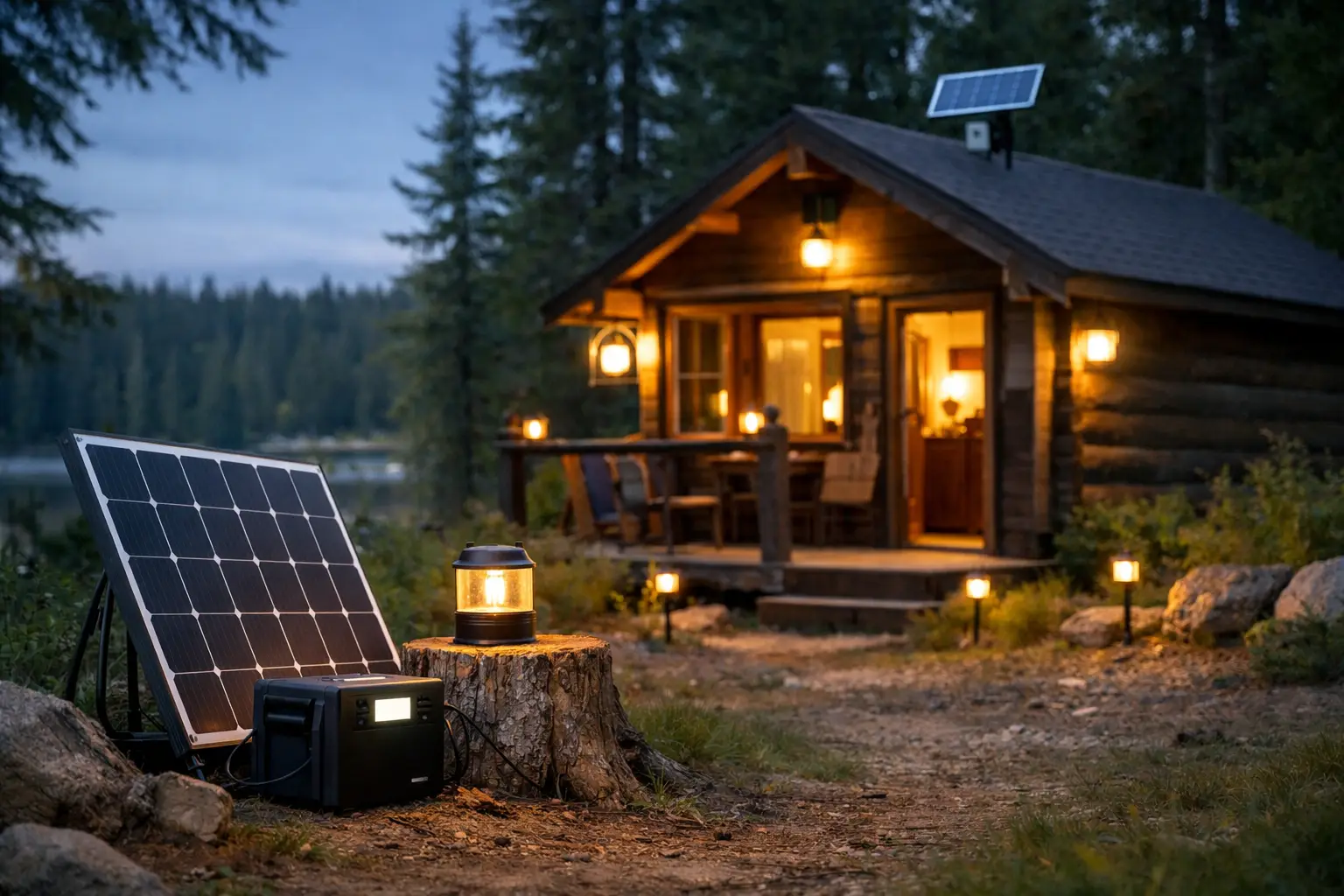
A small cabin changes after sunset. What felt simple and open during the day can turn dim, cramped, or oddly stressful if the lighting is wrong. The best small cabin solar lighting ideas solve more than visibility – they shape how the space feels, how much battery you use, and how easy it is to enjoy off-grid time without constantly managing power.
If you want a cabin that feels calm, efficient, and ready for real use, lighting deserves more thought than a single overhead fixture and a lantern on the shelf. In a compact off-grid space, every light should earn its place.
What makes cabin lighting work off-grid
Solar lighting in a small cabin is less about adding more fixtures and more about building layers. You need enough light for cooking, reading, and moving around safely, but you also want to protect battery capacity for cloudy days and longer stays. That means choosing low-draw fixtures, placing them intentionally, and deciding where bright task lighting matters more than ambient glow.
This is where many cabin setups go sideways. People either under-light the space and end up with a gloomy interior, or they over-light it and burn through stored power faster than expected. The smarter approach is to match light output to how you actually live in the cabin.
Warm color temperatures usually feel better in retreat-style spaces. Cool white light can make a small cabin feel clinical, especially if the interior uses wood, warm textiles, or natural finishes. But there are exceptions. A cooler or neutral light often works better over a prep counter or utility area where visibility matters most.
Small cabin solar lighting ideas for a better layout
1. Use one central ceiling light, but keep it modest
A single overhead light in the main living area is useful, but it should not carry the whole room. In a small cabin, an oversized ceiling fixture can create harsh shadows and waste power by flooding areas that do not need full brightness.
A compact LED ceiling light with a warm output is usually enough for general use. Think of it as the base layer. It should help you orient yourself and move through the room comfortably, not turn the cabin into a garage.
2. Put task lights where decisions happen
The best lighting investment is often not the prettiest fixture. It is the light above the sink, beside the bed, near the reading chair, or under the cabinet where you prep food. These are the spots where poor lighting gets annoying fast.
Solar-supported cabins benefit from focused task lighting because it gives you brightness exactly where needed without forcing you to power the whole room. A small directional wall light by the bed, a low-draw puck light in the kitchenette, and a reading lamp in the corner can do more than a bigger central fixture.
3. Add under-cabinet lighting in the kitchen
This is one of the most practical small cabin solar lighting ideas because kitchens tend to be shadow-heavy in tight spaces. Upper shelves or cabinets can block your ceiling light, leaving the counter darker than expected.
A slim LED strip under the cabinet solves that problem with very little energy draw. It makes cooking easier, helps the cabin feel more finished, and adds a clean modern look that fits a design-conscious off-grid space.
4. Use wall sconces instead of extra floor lamps
Floor space is limited in most cabins, and cords or lamp bases can make the room feel cluttered. Wall-mounted lighting keeps surfaces open and circulation easier.
A pair of simple sconces can frame a bed, warm up a dining nook, or bring balance to a small living area. They also tend to distribute light more comfortably at eye level. If your cabin is truly compact, this can feel much more natural than relying on one bright overhead source.
5. Install low-level night lighting
Cabins are dark in a different way than city homes. That is part of the appeal, but it also means midnight trips to the bathroom or stepping down a ladder can get risky.
Soft low-level lights near the floor, under a bench, or along a stair edge make a big difference. These do not need much brightness. They just need to define the path. Motion-activated options are especially useful because they preserve power and make the cabin feel intuitive at night.
Lighting by zone, not by room
One of the easiest upgrades in a solar cabin is to stop thinking in standard house terms. In a small footprint, rooms often overlap. A kitchenette may share space with the dining area and lounge. A loft may double as a sleeping zone and reading nook.
That is why zoning matters. Instead of one switch controlling everything, think in use cases. You want the option to light only the bed area, only the kitchen counter, or only the entry. This gives you more control over energy use and creates a more relaxed atmosphere.
6. Make the entry feel intentional
The entry is often overlooked, but it shapes the entire arrival experience. A small solar-powered wall light outside the door and a soft light just inside the entrance help the cabin feel grounded and welcoming.
This is not only about looks. It makes it easier to unlock the door, drop your gear, and settle in after dark without blasting every interior fixture. For weekend cabins and retreat spaces, that softer transition matters.
7. Choose bedside lighting that does not disturb the whole cabin
If your cabin is shared, or your sleeping area is visible from the main room, bedside lighting should stay localized. A warm wall-mounted reading light or small rechargeable lamp lets one person wind down without turning the whole space on.
This is one of those details that makes a cabin feel more comfortable over time. Good off-grid design is often about reducing friction, not adding complexity.
How to keep solar lighting efficient
The right fixtures help, but system habits matter too. If your cabin runs on a modest solar setup, efficiency starts with understanding your battery reality. A weekend cabin with occasional use has more flexibility than a full-time off-grid home that needs to ride through poor weather.
LEDs are the clear standard. Beyond that, dimmers help more than many people realize. Being able to lower light levels at night reduces draw and improves mood at the same time. It is one of the simplest quality-of-life upgrades for a small cabin.
8. Use dimmable lights for evening flexibility
Bright light has its place, but evenings in a cabin usually feel better with less intensity. Dimmable fixtures let you shift from functional light during dinner cleanup to a softer glow once the day slows down.
This also helps preserve battery capacity. You may not need every fixture at full brightness, especially in a small interior where reflected light from wood walls and light-colored surfaces can go a long way.
9. Mix hardwired solar lights with rechargeable backup options
A fully hardwired setup feels clean and dependable, but rechargeable lanterns and table lamps still deserve a place. They are useful during maintenance, cloudy stretches, or outdoor evenings on the porch.
The trade-off is consistency. Rechargeable lights are flexible, but they can also create visual clutter if they become your main system. The strongest setup usually combines a stable core of installed lighting with one or two portable pieces for backup and atmosphere.
10. Light the porch like an extension of the cabin
A porch light should do more than help you find the door. In a small cabin, the porch often becomes extra living space for coffee, quiet conversation, or simply sitting still after sunset.
A warm exterior sconce, a compact overhead fixture, or a few subtle solar path lights can make that area usable without feeling overdone. Keep brightness restrained. Too much exterior light can flatten the night and take away the sense of retreat that made the cabin appealing in the first place.
A few trade-offs worth thinking through
Not every cabin needs the same setup. If your place is mostly a weekend escape, you can prioritize mood and simplicity. If it supports longer stays or remote work, function may come first in key areas like the kitchen, desk, and bath.
Cabin size matters, but layout matters more. A tall narrow cabin may need layered vertical lighting. A one-room cabin may benefit most from carefully separated zones. And if your solar capacity is limited, it is usually better to have fewer well-placed lights than too many fixtures that compete for power.
Style matters too. Modern off-grid living does not have to look improvised. Clean-lined sconces, warm LED strips, low-profile ceiling fixtures, and thoughtfully placed portable lamps can make a cabin feel intentional and refined. That balance of comfort and self-reliance is exactly what draws people to this lifestyle in the first place, and it is a standard Off The Grid Store understands well.
The best cabin lighting does not call attention to itself. It supports the evening, protects your power, and makes the space feel easy to live in. When your solar lights are placed with purpose, the cabin stays what it should be after dark – quiet, capable, and deeply restorative.