
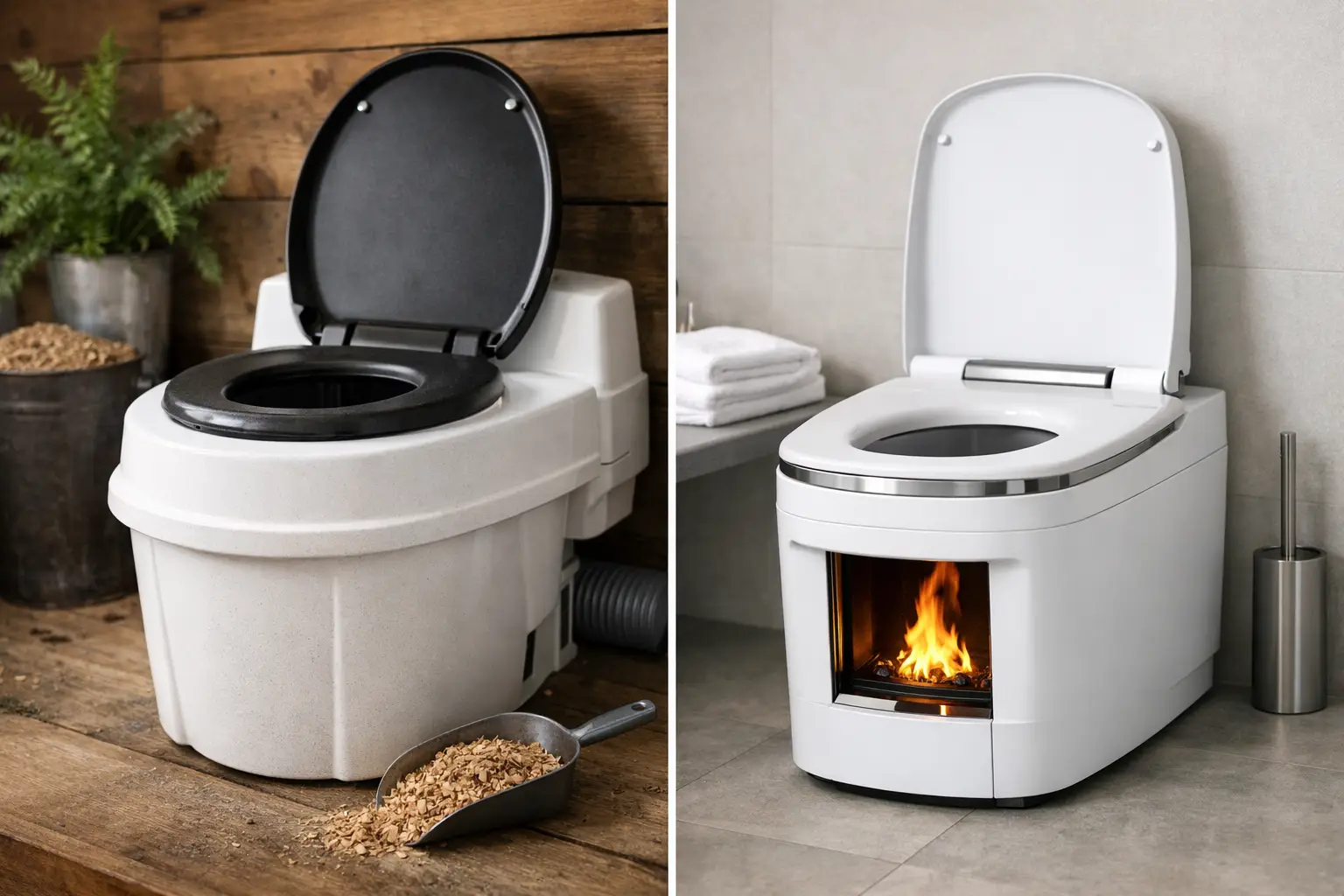
A toilet choice can shape your entire off-grid setup more than most people expect. When you compare composting toilet vs incinerating toilet options, you are really choosing between two different lifestyles – one built around low-energy simplicity, the other around push-button convenience with a bigger power or fuel demand.
For a tiny home, cabin, van, or weekend retreat, that difference matters. Your toilet affects solar sizing, daily routines, maintenance, odor control, and how comfortable the whole space feels. If you want an off-grid system that feels clean, modern, and easy to live with, the better choice depends less on hype and more on how you actually use your space.
Composting toilet vs incinerating toilet: the real difference
A composting toilet separates or manages waste so it can break down over time, usually with the help of airflow, a vent, and a dry medium such as coco coir or peat alternative. In most setups, liquids and solids are handled separately or at least managed to reduce moisture. The goal is not instant disposal. It is controlled decomposition with regular emptying.
An incinerating toilet takes a very different approach. Instead of storing waste for decomposition, it burns waste into sterile ash using electricity, propane, natural gas, or diesel depending on the model. The result is minimal residue and less hands-on handling of solids, but the process needs significant energy and proper venting.
That basic difference sets the tone for everything else. Composting toilets ask for more routine involvement but less power. Incinerating toilets ask for less direct contact with waste but more from your energy system and your budget.
Which one fits off-grid living better?
If your priority is energy independence, a composting toilet usually fits more naturally. It can run with little to no electricity beyond a small fan, and many people find that ideal for solar-ready cabins, tiny homes, and remote builds where every watt matters. It supports a simpler infrastructure and creates fewer demands on batteries, inverters, or fuel storage.
If your priority is a more familiar bathroom experience with minimal waste storage, an incinerating toilet can feel more refined. That appeal is real, especially for people who want a guest-friendly setup or who simply do not want to manage composting material. But in an off-grid environment, convenience is never free. You pay for it in energy use, appliance cost, and often installation complexity.
This is why there is no universal winner in the composting toilet vs incinerating toilet debate. The best choice depends on whether you want lower system demands or lower direct waste handling.
Power, fuel, and system demands
This is where many buyers make the wrong call. An incinerating toilet may sound like the cleaner, easier option until it is time to support it with real-world infrastructure.
Electric incinerating toilets can draw substantial power during burn cycles. That can be manageable in a grid-tied ADU or a cabin with a large, well-designed solar and battery system, but it is a bigger lift for leaner off-grid setups. If your goal is a lightweight, efficient system that supports weekends away or full-time tiny living without oversizing your electrical plan, that extra demand can become a deal breaker.
Propane or fuel-based incinerating toilets reduce electrical load but introduce another layer of dependence. You need fuel availability, storage, and attention to combustion safety and venting. For some people, that is still worth it. For others, it adds exactly the kind of complexity they were trying to leave behind.
Composting toilets are far less demanding. Most use a small fan for ventilation, and that draw is minor compared with an incineration cycle. If you are building a resilient off-grid system around solar, simplicity often wins.
Upfront cost and long-term value
Incinerating toilets usually cost more up front, sometimes significantly more. Installation can also be more involved depending on your venting needs, fuel hookup, or electrical requirements. Add consumable liners if the model requires them, plus ongoing energy or fuel use, and the long-term cost tends to stay higher.
Composting toilets are generally more affordable to buy and easier to integrate into small-space builds. They also avoid black water plumbing, septic expansion, and many of the hidden costs that come with conventional bathroom infrastructure. That said, they are not maintenance-free. You may need bulking material, replacement fans or parts over time, and a realistic willingness to empty and clean the unit regularly.
For many off-grid households, composting offers better value because it keeps the whole system lighter and more flexible. The toilet itself is only part of the equation. The supporting infrastructure matters just as much.
Odor, cleanliness, and day-to-day comfort
This is often the deciding factor, and it deserves a more honest answer than the usual marketing promise.
A well-designed composting toilet that is properly vented and correctly used should not smell bad. In fact, many people are surprised by how neutral it can be when liquids are managed well and the chamber stays dry. Most odor problems come from poor ventilation, too much moisture, or inconsistent maintenance.
An incinerating toilet can also offer a clean experience, especially because waste is reduced to ash rather than stored for long periods. But it is not odor-free in every moment. During burn cycles, some users notice a distinct exhaust smell outside, and the process can involve noise, heat, and waiting time. It feels cleaner in one sense, but not necessarily quieter or simpler.
Inside the bathroom, both options can work well when installed correctly. The difference is that composting requires a little more user awareness, while incinerating requires more patience with the machine itself.
Maintenance is different, not absent
People sometimes choose incinerating toilets because they assume they eliminate maintenance. That is only partly true. You will empty ash less often than you would empty a composting chamber, but you still need to monitor liners, burners, vents, and general system performance. If something fails, repairs can be more specialized.
Composting toilets ask for more regular interaction. You empty liquids if your system separates them, remove solids on a schedule based on use, and keep the composting environment balanced. For full-time living, that routine becomes part of normal life surprisingly quickly. It is less glamorous, but often more predictable.
There is a broader off-grid lesson here. The systems that support freedom usually work best when they are simple enough to understand and maintain yourself.
Best use cases for each option
When a composting toilet makes more sense
A composting toilet is usually the better fit for tiny homes, vans, simple cabins, and solar-powered retreats where energy efficiency matters. It also suits people who are comfortable being a little more hands-on in exchange for lower operating costs and fewer infrastructure demands.
It is especially strong for owners who value resilience. If you want a bathroom solution that keeps working without heavy power draw and supports a more self-directed setup, composting often aligns better with that goal.
When an incinerating toilet makes more sense
An incinerating toilet can be a smart choice for higher-end cabins, guest houses, or off-grid properties where comfort and reduced waste handling matter more than absolute efficiency. It can also work well in places where water access is limited but power or fuel is dependable.
If you host guests often, that convenience may carry real value. Some people simply prefer a more appliance-like experience, and there is nothing wrong with building for comfort if your infrastructure can support it.
What to ask before you choose
Before buying either system, think beyond the toilet itself. Ask how often the space will be used, whether it is full-time or seasonal, how much power your setup can spare, and how comfortable you are with routine maintenance. Also consider who else will use it. A solo cabin owner may be perfectly happy with a composting system, while a family with frequent guests may lean toward incineration if the budget allows.
Climate matters too. Cold-weather performance, ventilation paths, and installation constraints can all shape the user experience. So can your tolerance for noise, wait times, and physical upkeep.
The right off-grid choices are rarely about chasing the most advanced option. They are about choosing the system that fits your rhythms, your space, and the level of independence you actually want to live with.
At Off The Grid Store, that is the lens worth keeping. The best setup is the one that supports a quieter, more capable life without adding friction where you do not need it. Choose the toilet that makes your space feel easier to live in, and the rest of your off-grid build gets a lot simpler.