
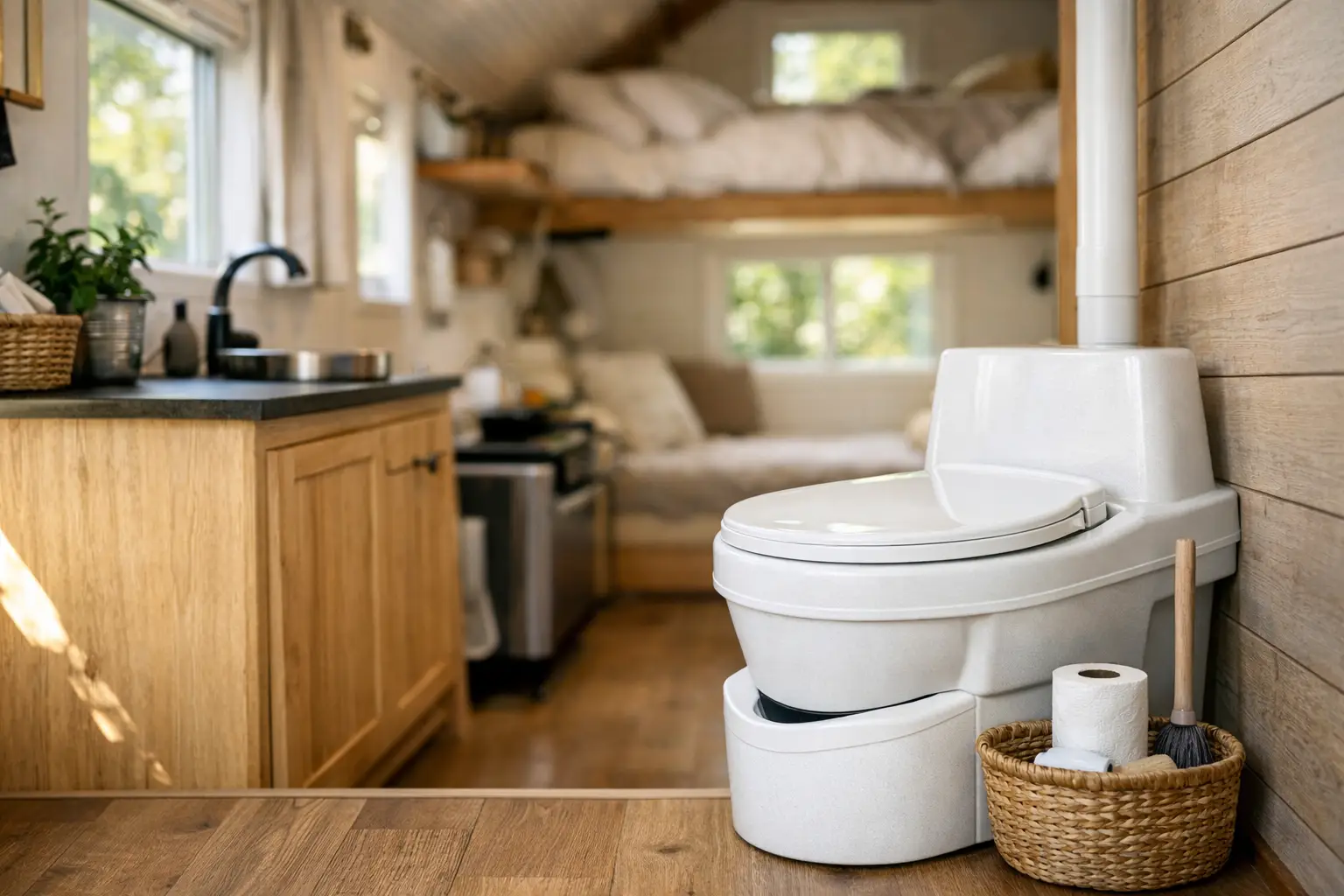
If you are building a tiny house, your toilet choice shapes more of daily life than most people expect. The best composting toilet for tiny house living is not just the one with the best specs. It is the one that fits your floor plan, your power setup, your cleaning tolerance, and the way you actually want to live.
That matters because tiny living only feels freeing when the essentials work quietly in the background. A composting toilet can give you real independence from sewer hookups, black tanks, and complicated plumbing, but only if you choose with clear eyes. Some are polished and low-maintenance. Some save money up front but ask more from you every week.
How to choose the best composting toilet for tiny house life
The first question is not brand. It is use case. A weekend retreat for one or two people has very different needs than a full-time tiny home with two adults and a dog underfoot. Capacity, fan power, emptying frequency, and physical size all become more noticeable when every square inch matters.
Urine separation is the feature that usually makes or breaks the experience. Most modern composting toilets for tiny homes separate liquids from solids, which cuts down odor and keeps the composting medium drier. In practice, that means less smell, easier maintenance, and a setup that feels closer to a normal bathroom routine.
Ventilation matters just as much. A good composting toilet uses a small fan and vent hose to move air outside. That fan often draws very little power, but in a solar-supported setup, even small loads deserve a look. If your system is minimal, check both voltage and daily consumption before you buy.
Then there is height and footprint. In a tiny house bathroom, one extra inch can affect knee room, door swing, or where a shower pan lands. A toilet that looks compact online can feel oversized once it is installed beside a vanity or under a window. Measurements are not a detail here. They are part of comfort.
The best composting toilet for tiny house owners depends on priorities
There is no single winner for everyone, but there are clear front-runners depending on what you value most.
If you want the easiest transition from a conventional toilet, premium self-contained models are usually the strongest fit. These units tend to offer better finishes, more refined urine diversion, and simpler emptying systems. They cost more, but for many tiny house owners, that extra cost buys peace of mind. When a bathroom is only a few steps from your kitchen and bed, good design is worth paying for.
Nature’s Head remains a common choice because it has a long track record, reliable ventilation, and a form factor that works in many small spaces. It is especially appealing for people who want something proven rather than flashy. The trade-off is that it is not the sleekest-looking option, and the crank-and-bin setup feels utilitarian.
Air Head often appeals to buyers who want a more compact footprint and flexible bottle positioning. In tighter bathrooms, that can make installation easier. Many users also like its build quality. The trade-off is price, and depending on your layout, its shape may work brilliantly or not at all.
C-Head tends to draw people who want a simpler, often more budget-conscious approach. It can be a practical fit for hands-on owners comfortable with a more manual feel. If you value straightforward function over polished aesthetics, it has a place. If you want a premium bathroom experience, it may feel more DIY than you want.
Separett-style urine-diverting toilets are also worth considering, especially for cabins or tiny homes where you want a more upright, residential seating position. Some models rely on a different waste-handling rhythm than classic composting toilets, so they are not always a direct apples-to-apples comparison. Still, for the right setup, they can feel cleaner and more comfortable day to day.
What actually matters after installation
Most people shop based on capacity and price, then discover that maintenance rhythm is what defines satisfaction. Emptying solids every few weeks may sound manageable, but the real question is whether that schedule fits your life. Full-time living, guests, and seasonal heat all change the pace.
The urine container deserves special attention. In many self-contained units, liquids need to be emptied far more often than solids. For one person, that may be a minor task. For two full-time occupants, it can become part of the daily or every-other-day routine. That is not a deal-breaker, but it should be an informed choice.
Odor control is usually excellent when the toilet is installed and used correctly. Most odor complaints come from poor venting, too much moisture, or unrealistic expectations about maintenance. Composting toilets are not magic. They are effective systems that reward proper setup.
This is also where material choice enters the picture. Coconut coir and peat moss are common composting mediums, and each has fans. Coir is often preferred by people looking for a cleaner, lighter option with a more modern sustainability profile. Peat can work well too, but some buyers avoid it for environmental reasons.
Cost, comfort, and the real value equation
A cheaper toilet is not always the lower-cost choice. If a bargain model creates frustration, smells off, or feels awkward in a small bathroom, you will pay for that every day in comfort. Tiny house living asks every object to earn its place.
Premium composting toilets usually justify their price in three areas: better ventilation, better separation of liquids and solids, and easier maintenance. Those improvements can sound minor on a product page, but in a tiny house they have an outsized effect. A bathroom that feels clean and simple supports the whole lifestyle.
That said, not everyone needs the top-end option. If your tiny house is a weekend basecamp, guest space, or seasonal cabin, a more basic model may be perfectly sensible. You may use it lightly enough that maintenance never becomes a burden. The right answer depends on frequency, not aspiration.
Common mistakes when choosing a composting toilet
The most common mistake is buying for the idea of tiny living instead of the reality of it. It is easy to imagine a minimalist setup and overlook how often the toilet will be used, who will use it, and how much patience everyone has for upkeep.
Another mistake is underestimating installation. Vent routing, electrical access for the fan, bottle removal clearance, and seat height all matter. A unit can be technically compatible with your build and still be annoying in practice.
Some buyers also assume every composting toilet is equally suited for full-time use. They are not. A beautifully marketed unit may still be better for occasional use than daily living. Look for a model that has a strong reputation specifically in tiny homes, RVs, or cabins with regular use.
A final mistake is treating aesthetics as shallow. In a conventional house, utility can hide in a larger room. In a tiny home, every fixture is part of the visual atmosphere. If you care about calm, intentional design, choose a unit that supports that feeling rather than interrupting it.
So which one is best?
For most full-time tiny house owners, the best composting toilet for tiny house living is usually a premium urine-diverting model with active venting, a comfortable seat height, and a maintenance process that feels realistic for two people. In many cases, that points buyers toward established names like Nature’s Head or Air Head, depending on layout and budget.
If you want the safest all-around choice, proven reliability matters more than novelty. If you have a very tight bathroom, compact dimensions may matter more than bin size. If budget is the key constraint, a simpler unit can still work well as long as you accept the trade-offs and match it to lighter use.
That is the heart of good off-grid design. The right product does not just function on paper. It supports the kind of life you are building – simpler, quieter, and more self-directed. Choose the toilet that makes your tiny house feel easier to live in, and the rest of the space starts to work better too.