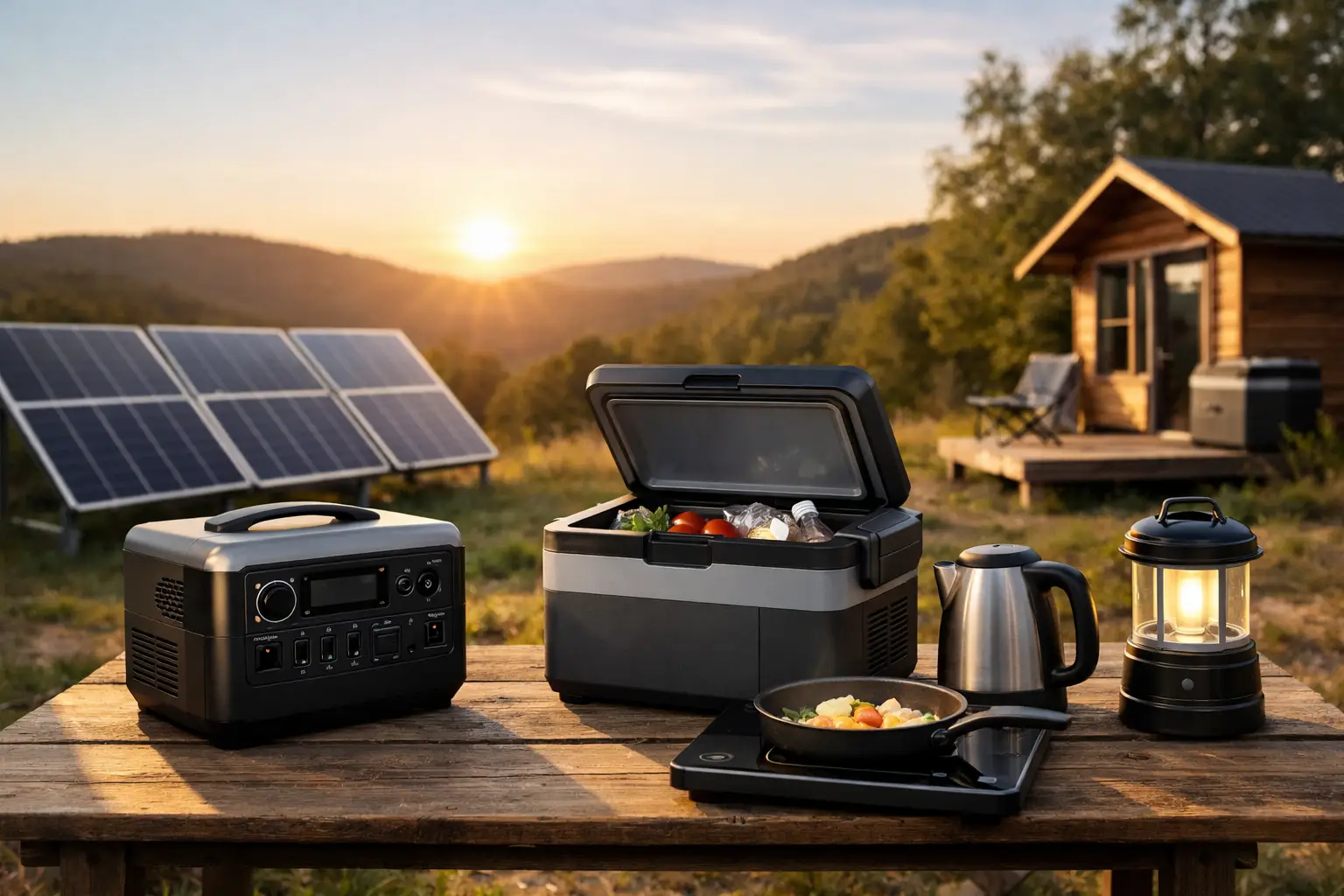
The difference between a frustrating off-grid setup and a calm, functional one often comes down to one thing: what you try to power. Solar appliances can make a cabin, tiny home, van, or weekend retreat feel genuinely livable, but only when they match the way you actually use energy. The goal is not to run a suburban house from a few panels. The goal is to build a space that feels free, capable, and easy to live in.
That mindset changes everything. Instead of asking, “Can solar do it all?” the better question is, “Which appliances give me the most comfort with the least strain on my system?” For most people, that is where off-grid life starts to feel less like compromise and more like intention.
What solar appliances really are
Solar appliances are devices designed to run efficiently on solar-generated electricity or, in some cases, use solar power directly. Some connect to a larger battery and inverter setup, while others are built for smaller standalone systems. What matters most is not the label on the box. It is the appliance’s actual energy demand, startup surge, duty cycle, and whether it fits your daily rhythm.
This is where many new buyers get tripped up. A product can be marketed as solar-friendly and still be a poor fit for a modest off-grid system. On the other hand, a well-built low-watt appliance with smart usage habits can perform beautifully for years. Efficiency matters, but so does honesty about how you live.
Why solar appliances matter more than panel count
People tend to obsess over panel wattage first. Panels matter, of course, but appliance selection usually has a bigger effect on whether your system feels spacious or restrictive.
A high-drain appliance forces everything else to get bigger. That means more panels, more battery storage, a larger inverter, and more cost. It also means more pressure during cloudy stretches or winter months when production dips. Choosing efficient solar appliances early can reduce system size, simplify installation, and make daily life more predictable.
That predictability is a major part of the appeal. Off-grid living works best when your setup feels quiet and steady, not like a constant energy math problem. The right appliances create that sense of ease.
The best solar appliances to start with
If you are building an off-grid setup from scratch, some appliances deliver immediate value without overwhelming your power budget.
Lighting is the easy win. LED lights use very little energy, last a long time, and dramatically improve comfort in small spaces. This is one of the few upgrades with almost no downside.
Ventilation is another smart place to invest. Efficient fans, roof vents, and compact air circulation systems make cabins, vans, and tiny homes more comfortable in every season. In hot climates, moving air well can reduce the need for heavier cooling solutions.
Refrigeration deserves careful attention because it often runs all day. A 12V fridge or an energy-efficient compact refrigerator can be one of the best solar appliance investments you make, especially if you live off-grid for more than occasional weekends. This is not the place to buy casually. Small efficiency differences add up fast over 24 hours.
Water pumps are also highly practical for off-grid use. Whether you are pulling from storage tanks, moving gray water, or pressurizing a simple sink and shower setup, a reliable low-draw pump adds a surprising amount of comfort.
Then there are the smaller daily-use items that shape the feel of the space: device chargers, routers for limited connectivity, a compact blender, a coffee maker, or a low-watt electric kettle. These are not always essential, but they are often the products that make a self-powered environment feel modern rather than bare-bones.
Solar appliances that need more caution
Some appliances are possible on solar, but only with planning. Others tend to create more hassle than freedom unless your system is large.
Space heating is the classic example. Electric heaters consume a tremendous amount of power, and even efficient models can drain batteries quickly. For most serious off-grid setups, it makes more sense to use non-electric heating options and reserve solar power for lighting, refrigeration, pumps, and electronics.
Air conditioning sits in a similar category. It can be done, especially with efficient mini-split systems and a substantial battery bank, but it is not a casual add-on. Climate, insulation, shading, and building design matter just as much as the appliance itself. In many cases, reducing heat gain is the smarter first move.
Cooking is more nuanced. Induction cooktops are efficient compared to traditional electric resistance cooking, but they still require meaningful power. If you cook often and want an all-electric setup, your system should be designed around that choice from the beginning. For many people, a hybrid approach works better: solar for refrigeration and everyday electrical loads, with propane or another alternative for heavier cooking needs.
Hair dryers, toasters, microwaves, and other short-burst high-watt appliances are not necessarily off-limits. The question is whether your inverter can handle the surge and whether your battery bank can support the use without creating stress elsewhere. Sometimes the answer is yes. Sometimes the better answer is simply to choose a lower-draw alternative.
How to choose solar appliances without overspending
The smartest way to shop is to work backward from your lifestyle. A weekend cabin has very different demands than a full-time tiny home. A family retreat used in summer only does not need the same system design as a year-round mountain setup.
Start with what you want to do every single day. Keep food cold. Charge phones and laptops. Run lights at night. Power a fan. Move water. Those are foundational comforts. Build around them first.
Then look at the actual wattage and estimated daily watt-hours for each appliance. If you only check the product category and not the energy profile, you are shopping blind. Two appliances that appear similar can have dramatically different impacts on your system.
It also helps to distinguish between continuous loads and occasional loads. A low-watt appliance that runs all day may matter more than a high-watt appliance used for three minutes. Refrigerators, routers, and fans often shape daily consumption more than people expect.
Finally, leave margin. Real life includes cloudy days, battery aging, seasonal shifts, and moments when guests plug in more than expected. A system that looks perfect on paper can feel tight in practice if you build it with no breathing room.
Matching solar appliances to real-life setups
For a weekend cabin, simplicity usually wins. Focus on lighting, a compact fridge, charging, water pumping, and good ventilation. This covers the essentials while keeping the system manageable and quiet.
For a tiny home, the appliance mix often needs more depth. Daily living may call for refrigeration, stronger ventilation, kitchen support, reliable water systems, and workspace power for laptops or internet equipment. Here, efficiency is less about roughing it and more about preserving comfort without constant compromise.
For van life or mobile setups, weight, footprint, and battery capacity become even more important. The best solar appliances in that environment are compact, durable, and predictable. Multi-use products often outperform larger single-purpose ones.
For retreat spaces designed around intentional disconnection, restraint can be part of the appeal. Not every comfort needs to be electric. A well-chosen set of solar appliances can support peace and autonomy without recreating the noise of a fully wired suburban routine.
The quiet luxury of getting it right
There is a reason well-planned off-grid spaces feel so satisfying. They are not powered by excess. They are powered by clarity.
The right solar appliances create a kind of quiet luxury. Cold food, warm light, moving air, charged essentials, clean water – these are simple things, but they shape your entire experience of a place. When your setup supports those needs reliably, you stop thinking about the system and start enjoying the life it makes possible.
That is also why buying bigger is not always buying better. Oversized gear can add cost and complexity without improving your day-to-day life. The more useful approach is curation. Choose appliances that respect your energy budget and support the way you want to live.
At Off The Grid Store, that philosophy is what makes self-powered living feel accessible. Not stripped down. Not extreme. Just intentional, capable, and ready for the kind of freedom that still feels comfortable on Monday morning.
If you are building your setup now, choose the appliances that earn their place. The best off-grid systems are not defined by how much they can power, but by how naturally they let you live.