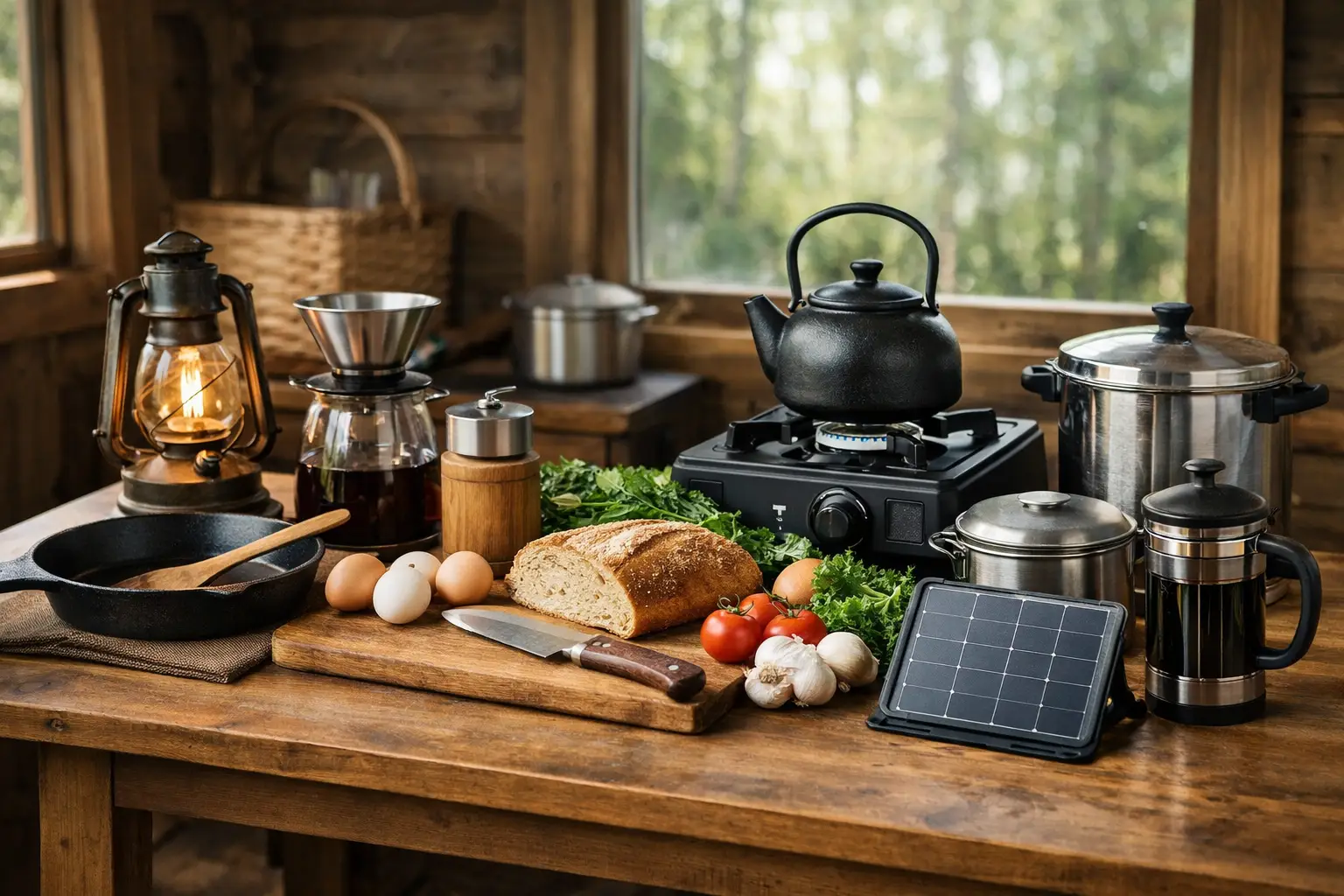
A beautiful off-grid kitchen is not defined by how little it has. It is defined by how well each piece earns its place. The right off grid kitchen essentials make daily life feel lighter, calmer, and more capable, whether you are setting up a tiny home, outfitting a weekend cabin, or refining a full-time solar-powered retreat.
The mistake most people make is treating an off-grid kitchen like either a stripped-down campsite or a standard suburban kitchen with a few workarounds. Neither approach holds up well. A good off-grid setup should feel intentional. It should support real meals, easy cleanup, reliable food storage, and a sense of comfort without wasting power, water, or space.
What off grid kitchen essentials really need to do
Every item in an off-grid kitchen has to solve more than one problem. It should save energy, reduce clutter, simplify maintenance, or adapt to small-space living. Ideally, it does several at once.
That means your kitchen choices should be guided by function first, then by finish, footprint, and flexibility. A compact appliance that sips power is often more valuable than a larger one with extra features you rarely use. A manual tool that works every time may be more useful than a plug-in version that adds another demand on your battery bank.
This is where modern off-grid living feels different from the old survivalist stereotype. You are not giving up comfort. You are choosing tools that support freedom without unnecessary dependence.
The 12 off grid kitchen essentials worth prioritizing
1. A reliable off-grid cooking source
Your stove is the center of the kitchen, so start there. For many setups, that means propane because it is dependable, efficient, and familiar. It works especially well for cabins, tiny homes, and backup cooking during low-solar periods.
If your system is designed for higher electrical loads, an induction cooktop can be a smart choice. It is clean, fast, and well-suited to modern small spaces. The trade-off is power demand. Induction is great when your solar, battery, and inverter capacity can support it. If not, propane gives you more margin.
2. A water-saving sink setup
Off-grid kitchens live or die by water management. A sink is not just a sink when every gallon counts. Choose a setup that makes it easy to wash produce, rinse dishes, and keep surfaces clean without excess use.
A deep single-basin sink often works better than a divided one in a compact kitchen. It handles large pots, reduces splash, and leaves more room around it. Pair it with a high-efficiency faucet or foot pump depending on your water system. If your goal is simplicity, less plumbing can mean fewer failure points.
3. A dependable refrigeration plan
Food storage changes everything. Once refrigeration is stable, your off-grid kitchen becomes more flexible, more comfortable, and easier to use every day.
A 12V fridge is often one of the best investments in an off-grid setup because it is built for efficient operation and consistent cooling. For occasional use, a high-performance cooler may be enough. For full-time living, a dedicated fridge is usually the more practical long-term move. It costs more upfront, but it reduces hassle and food waste.
4. Durable cookware that works across heat sources
Cookware matters more off-grid because you cannot afford equipment that only works in one narrow scenario. Choose pieces that perform well on propane, open flame, or induction if needed.
A small set of high-quality pots and pans is usually better than a crowded cabinet full of mediocre ones. Think durable, easy to clean, and sized for the meals you actually make. Cast iron is excellent for heat retention and versatility, but it is heavy and takes a little care. Stainless steel is lighter and easier for daily use. The right choice depends on whether your kitchen leans more cabin-rugged or compact-modern.
5. Manual prep tools that do not rely on power
Even in a well-equipped kitchen, manual tools are what keep things steady. A sharp chef’s knife, cutting board, hand grinder, manual can opener, and sturdy measuring tools bring consistency without adding electrical load.
These are not backup items. They are core tools. If your battery is low, your inverter is offline, or you simply want a quieter rhythm, manual prep gear lets the kitchen keep moving. There is a certain confidence in knowing dinner does not depend on a button.
6. Smart food storage containers
Dry goods are the backbone of off-grid cooking. Grains, beans, coffee, spices, baking staples, and snacks all need protection from moisture, pests, and unnecessary mess.
Clear, stackable containers help you see what you have, reduce waste, and make compact cabinets work harder. This is one of the simplest upgrades you can make, and one of the most effective. A kitchen feels calmer when ingredients are organized, visible, and easy to access.
7. A low-waste dishwashing system
Cleanup should be simple, not a resource drain. In many off-grid kitchens, the best dishwashing setup includes a wash basin, a rinse method that uses controlled water flow, and a drying rack that fits your counter or wall space.
If you have a pressurized water system, you still want habits and tools that keep usage in check. If you are hauling water or relying on limited tank storage, efficiency becomes even more valuable. Small design choices matter here. A compact dish rack, biodegradable soap, and easy-to-clean surfaces can save time every single day.
8. A practical lighting setup
Kitchen lighting is often overlooked until you are chopping vegetables in a dim corner after sunset. Good lighting improves safety, comfort, and the overall feel of the space.
LED lighting is the clear choice for off-grid use because it draws very little power and offers strong output. Under-cabinet lighting is especially useful in compact kitchens where overhead fixtures can leave shadows. This is one of those essentials that quietly upgrades the whole experience.
9. Multi-use small appliances
Not every appliance belongs in an off-grid kitchen, but the right ones absolutely can. The key is choosing multi-use tools that justify their energy draw and storage footprint.
An electric kettle, compact blender, or toaster oven may be worth it in some setups, especially if your system is designed around regular use and daytime solar production. But appliance creep is real. Before adding anything, ask whether it saves enough time or effort to earn its place. In smaller kitchens, restraint usually creates a better result than abundance.
10. Ventilation that protects comfort
Cooking in a tight space without proper ventilation quickly turns into heat, moisture, and lingering odors. That is uncomfortable in any kitchen, but it is especially noticeable in cabins and tiny homes.
A vent hood, operable window, or well-placed fan can make a major difference. The best solution depends on your layout and power setup. If you cook often with propane, ventilation becomes less of a nice-to-have and more of a baseline requirement.
11. Compact backup power for kitchen basics
An off-grid kitchen does not need endless electricity, but it does need resilience. A portable power station or well-planned battery backup can help cover essentials like lighting, device charging, and small appliance use during cloudy stretches or travel.
This matters even more if your kitchen supports a mobile lifestyle. Weekend escapes, van-based setups, and remote guest cabins all benefit from flexible backup power. It gives you options without forcing you into an oversized system.
12. Storage that keeps counters clear
Clutter drains small spaces fast. In an off-grid kitchen, it also makes cooking less efficient and cleanup more frustrating.
The best storage solutions use vertical space, hidden compartments, and thoughtful zoning. Keep daily-use items within reach and occasional tools tucked away. Open shelving can look beautiful, but only if you are disciplined about what stays visible. Closed storage is often better when you want the space to feel calm and clean.
Building your off-grid kitchen around how you actually live
The most successful kitchens are shaped by routine, not fantasy. If you cook simple one-pan meals, your priorities will look different from someone who bakes often or hosts guests at a remote cabin. If you live off-grid full time, durability and daily ease matter more than novelty. If your space is for weekend resets, portability and low maintenance may take the lead.
That is why there is no single perfect list of off grid kitchen essentials for everyone. Your setup should reflect your power source, water access, storage limits, and the kind of life you want the kitchen to support.
At Off The Grid Store, that balance matters. The goal is not to fill a space with gear. It is to create a kitchen that feels grounded, capable, and easy to live with.
A well-built off-grid kitchen changes more than meal prep. It changes the pace of the day. It gives you fewer points of friction, more confidence in your routines, and a space that supports the kind of independence you were looking for in the first place.