
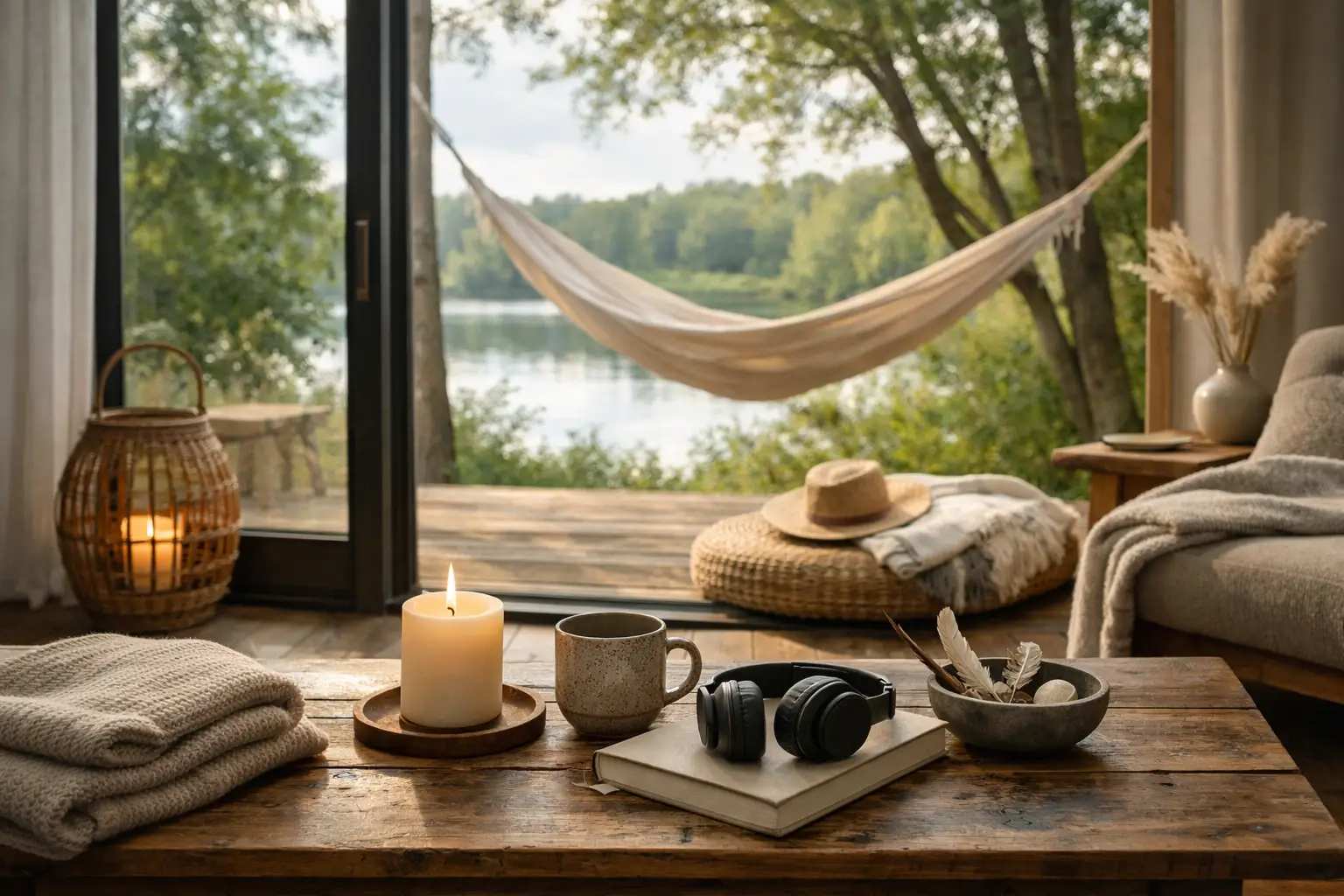
The problem usually is not that home feels uncomfortable. It is that home never fully powers down. The notifications keep coming, the charger stays within reach, and even a quiet room can still feel mentally switched on. If you are figuring out how to create an unplugged home retreat, the goal is not to pretend modern life does not exist. It is to build a space that gives your mind and body fewer demands, less noise, and more room to reset.
An unplugged retreat at home should feel intentional, not improvised. That matters because most digital detox attempts fail for a simple reason: the space itself still encourages the habits you are trying to interrupt. If your room is set up for scrolling, streaming, and multitasking, you will keep doing exactly that. A retreat works when the environment makes a different choice feel natural.
What an unplugged home retreat really needs
A good retreat space is not empty. It is edited. There is a difference. You do not need bare walls, a floor cushion, and a dramatic personal vow to never touch a screen again. You need comfort, function, and a clear reduction in inputs.
That usually starts with three things: less digital friction, better sensory cues, and a stronger sense of self-sufficiency. Less digital friction means your devices are not visually central or physically convenient. Better sensory cues means the room signals calm through lighting, texture, sound, and layout. Self-sufficiency means the space can still support you without relying on constant power, connectivity, or entertainment.
For some people, this is one room. For others, it is a backyard studio, a guest room, a cabin corner, or a tiny home setup. The square footage matters less than the rules of the space.
How to create an unplugged home retreat without making it feel austere
Start by choosing a clear zone. The biggest mistake is trying to make your entire home unplugged overnight. That sounds admirable, but it often creates resistance. A better move is to claim one defined space and make it work exceptionally well.
A bedroom is an obvious option, but not always the best one if you already associate it with TV, work, or poor sleep habits. A reading nook, enclosed porch, spare room, or even a well-designed corner can be easier to reset because it has fewer existing routines attached to it. The right space is the one you can protect.
Once you choose the zone, remove the cues that keep you mentally tethered. Chargers on display, visible cords, blinking lights, a laptop on a side table, and a television mounted at eye level all tell your brain to stay available. You do not need to get rid of everything, but you do need to decide what belongs elsewhere.
Then bring in the elements that make staying there appealing. This is where many people go wrong. They strip the room down, but forget to replace convenience with comfort. If the unplugged space feels like punishment, you will leave it. A good chair, a supportive daybed, warm blankets, natural materials, and soft task lighting do more for a digital detox than willpower alone.
Build the room around analog habits
The easiest way to spend less time on screens is to make other activities easier to start. Your retreat should invite a few simple analog habits without turning into a staged lifestyle photo.
Keep books where you can reach them. Set out a journal you actually like using. Add a small speaker only if you plan to use downloaded audio intentionally rather than endless streaming. Board games, sketch supplies, a tea setup, a deck of cards, or a simple craft station can all work if they fit how you genuinely relax.
Be honest with yourself here. If you never meditate, do not build the room around meditation accessories. If you unwind by reading mystery novels and drinking coffee at 6 a.m., design for that. The retreat has to reflect your real rhythm, not an idealized one.
Light changes everything
If you want your space to feel separate from the rest of the house, lighting is one of the fastest ways to do it. Overhead lighting tends to keep a room alert and functional. A retreat needs a gentler hierarchy.
Use warm, layered light at different heights. A reading lamp near a chair, a soft bedside lamp, lantern-style lighting, or low ambient illumination creates a slower atmosphere. Candlelight can help, though it is not always practical depending on children, pets, or small-space ventilation. Battery-powered or solar-charged lanterns can give you the same mood with more flexibility.
Natural light matters too. During the day, keep window areas open and breathable. Sheer curtains, filtered sunlight, and a clear view outside help the nervous system settle in ways a screen never will. If privacy is a concern, use window treatments that soften rather than fully shut down the space.
Add a measure of off-grid resilience
Part of what makes a home retreat truly restorative is the feeling that it can keep functioning quietly and independently. That does not mean turning your house into a survival setup. It means choosing a few systems or tools that reduce dependence on the constant hum of the grid.
Portable solar lighting, rechargeable lanterns, compact power stations, low-draw fans, and small-scale water or cooking solutions can make a retreat space feel more capable and grounded. In a cabin, tiny home, or backyard structure, those upgrades are often practical. In a suburban house, they can still create a stronger sense of autonomy.
There is also a psychological benefit. When a space feels prepared, it feels calmer. You are not there to test your limits. You are there to enjoy a quieter way of living for a few hours, a weekend, or longer.
This is one reason the unplugged lifestyle keeps gaining traction beyond the off-grid niche. People are not only looking for less screen time. They are looking for environments that feel stable, intentional, and less dependent on constant input. Off The Grid Store speaks to that shift well because it treats independence as a design choice, not an extreme identity.
Protect the retreat with simple rules
A beautiful room will not help much if your habits follow you inside unchanged. Your retreat needs a few operating rules, and they should be realistic enough to keep.
Maybe phones stay outside the room after 8 p.m. Maybe the retreat is for weekends until noon. Maybe laptops are never used there unless there is an actual emergency. Maybe it becomes your low-power space during storms, slow mornings, or post-travel recovery days.
The exact rules depend on your household. If you live alone, you have more control. If you have kids, roommates, or a partner with different routines, your boundaries need to be clearer and more flexible at the same time. A full no-device rule may not be practical. A no-scroll, no-work, no-TV rule might be.
What matters is consistency. A retreat becomes effective when your brain trusts what happens there.
Make comfort non-negotiable
People stay unplugged longer when the space feels better than the alternative. That sounds obvious, but it is worth stressing. If the couch in the living room is more comfortable than your retreat chair, you will migrate back to the TV. If your unplugged room is too hot, too dim, or too sparse, the phone will start looking useful again.
Prioritize temperature, seating, sound, and touch. A quiet fan, quality bedding, soft rugs, supportive cushions, and a room that smells clean and natural all shape the experience. If you live in a small space, dual-purpose pieces matter. A storage bench can hide devices. A fold-down table can hold books and tea. A compact lantern can serve as both backup light and daily atmosphere.
This is where design and practicality stop competing. The best unplugged spaces do not look improvised. They feel considered.
Let the retreat evolve with your life
Learning how to create an unplugged home retreat is less about finishing a room and more about setting a standard. Your needs will change with the season, your work schedule, and the kind of rest you actually need. Winter may call for heavier textiles and deeper evening light. Summer may shift the retreat outdoors or toward screened porches, open windows, and solar-charged essentials.
Pay attention to what makes you linger and what makes you leave. If the room keeps pulling you back, you are on the right track. If it feels beautiful but unused, adjust it. Remove more digital cues. Add more comfort. Simplify the setup. Keep only what supports the life you want to live inside that space.
A home retreat does not need to be dramatic to change your days. It only needs to make disconnection feel normal, attractive, and easy enough to repeat. Start with one space, give it a clear purpose, and let that small pocket of quiet prove something useful: peace is often less about escaping home and more about finally designing home to let you exhale.