
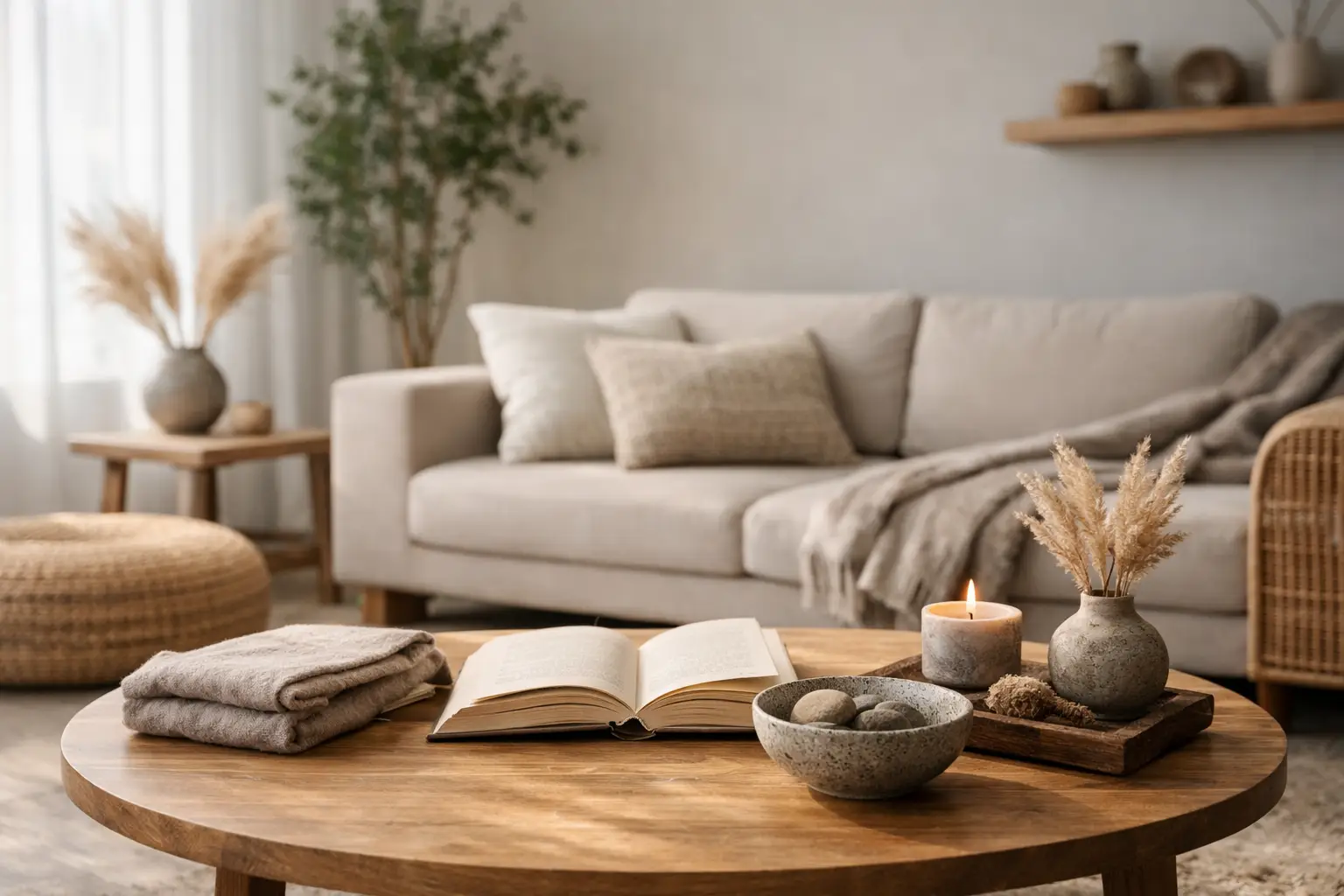
You can feel when a room is still asking something from you. A TV faces the couch like a command. Cables creep across the floor. Chargers collect on every side table. Even when nothing is turned on, the space stays mentally noisy. If you’re figuring out how to design an unplugged living space, the goal is not to make your home feel empty or strict. It’s to create a room that lets your attention settle.
That shift starts with a simple idea: design for what you want to do there, not for what you want to avoid. An unplugged room should make reading, talking, resting, and thinking feel easier than scrolling. It should support comfort and clarity without looking rustic, improvised, or anti-modern. The best versions feel intentional, polished, and quietly liberating.
Start with behavior, not decor
Most people begin with aesthetics – neutral throws, baskets, soft lighting, maybe a record player. Those can help, but they are not the foundation. The real design question is this: what habits will this room invite?
If your living space still centers on a screen, the room will keep pulling you back to passive consumption. If seating is scattered without purpose, conversation won’t happen naturally. If every surface becomes a charging station, digital life will spill right back in. Designing an unplugged space means choosing a primary use and letting the room reflect it.
For one household, that might be slow mornings with coffee and a book. For another, it might be evening conversation, board games, journaling, or simply a calm place to decompress after work. There is no single ideal. What matters is that the room supports a lower-noise rhythm and makes that rhythm feel desirable.
How to design an unplugged living space that still feels modern
A lot of people hesitate here because they picture unplugged living as sparse, inconvenient, or vaguely performative. It doesn’t have to be. A well-designed unplugged room can feel warmer and more refined than a media-heavy one because every object earns its place.
Start with layout. Put the focus on human use rather than device placement. Arrange seating toward each other, toward a window, or around a coffee table instead of orienting everything toward a blank wall where a TV would normally go. If you do keep a screen elsewhere in the home, this room can serve as a clear contrast – a place with a different pace.
Material choice matters just as much. Natural textures like wood, linen, wool, cotton, leather, and stone absorb some of the visual coldness that electronics tend to introduce. They also age well, which is useful in spaces meant to support slower living rather than constant upgrading. You do not need a cabin aesthetic. Clean lines, thoughtful storage, and a restrained palette can feel contemporary while still grounded.
Lighting is where many unplugged spaces either work or fail. Overhead lighting alone makes a room feel exposed and transactional. Layered light changes that. Use table lamps, wall sconces, reading lights, and warm bulbs to create zones. That way the room remains functional after dark without pushing you back toward bright screens for stimulation.
Create friction for devices and ease for everything else
Good design guides behavior through convenience. If your phone charger is always within reach and your book is across the house, the room has already made a decision for you.
One of the most effective ways to design an unplugged living space is to build small amounts of friction around devices. That might mean storing chargers in a drawer instead of leaving them out, using a basket near the entry for phones during certain hours, or keeping outlets visually quiet rather than central to the room. The point is not punishment. The point is to make digital use less automatic.
At the same time, make offline activities effortless. Keep throws where people actually sit. Place books, magazines, sketchpads, cards, or simple analog games within easy reach. Add a side table large enough for tea, a notebook, and a lamp. Include storage that makes cleanup easy so the room can reset quickly. When non-digital choices are visible and convenient, they stop feeling like effort.
This balance is especially important in small homes, cabins, and tiny spaces where one room often has to do everything. Total separation may not be realistic. In that case, use subtle zoning. A reading chair with its own lamp creates a distinct purpose even in a compact footprint. A bench by the window can become a no-phone morning spot. A storage cabinet can hide tech when it’s not in use so the room visually returns to calm.
Let comfort do the heavy lifting
People do not unplug because a room looks good. They unplug because it feels better to be there.
Comfort is often underestimated in intentional spaces. If the sofa is stiff, the chair has no place to set a drink, or the room is too dim to read in, people drift back to their devices. Physical ease is part of what makes disconnection sustainable.
Focus on the basics first. Supportive seating matters more than decorative accents. A rug can soften acoustics and make the room feel settled. Window treatments can reduce glare during the day and add privacy at night. If your climate allows, fresh airflow from operable windows can do more for the atmosphere than another styled shelf ever will.
Sound deserves attention too. An unplugged room should not feel dead, but it should feel quieter than the rest of life. Soft materials help absorb echo. In some homes, that might mean curtains and upholstered furniture. In others, it could mean a wool rug, fabric shades, or a few well-placed cushions. If outside noise is an issue, heavier textiles or simple weather sealing can make a noticeable difference.
Choose fewer objects, but better ones
An unplugged living space works best when it is edited. Not empty, just clear.
Visual clutter keeps the mind slightly activated. Too many decorative objects, too many cords, too many competing functions – all of it adds low-level stress. A calmer room usually has fewer things on display and more intention behind what remains.
That does not mean everything should be hidden. It means visible items should contribute to the experience of the room. A stack of books, a ceramic lamp, a well-made blanket, a durable tray, a plant with real presence – these support use and mood at the same time. They make the room feel lived in without making it feel busy.
This is where quality often matters more than quantity. One solid side table is better than three unstable surfaces. One excellent chair can define an entire corner. A few pieces with warmth and function will usually outlast trend-driven decor that clutters the space without improving it.
Design around power with intention
For many people, unplugged does not mean powerless. It means selective.
That distinction matters, especially for cabins, solar-ready homes, weekend retreats, and compact off-grid setups. You may still want lighting, a speaker, an e-reader, or a small appliance nearby. The goal is not to reject modern comfort. It is to keep power use aligned with purpose.
If your space runs on limited energy, this mindset becomes even more useful. Choose low-draw lighting, rechargeable essentials, and multi-use pieces that reduce clutter. Keep electrical needs consolidated rather than scattered around the room. When power is present but not dominant, the space feels more independent and less demanding.
This is one reason so many people are drawn to intentional off-grid design in the first place. It asks a better question than more conventional interiors do: what do you actually need to feel at home? Off The Grid Store speaks to that shift well because it treats self-powered living as design-forward and practical, not extreme.
Make the room easier to return to
Even a beautiful unplugged room can fail if it is hard to maintain. The best spaces invite you back because they reset easily.
That means storage should be simple and close to where things are used. Blankets need a clear home. Books should have a shelf or basket. Matches, candles, games, and notebooks should not migrate into random piles. A room that takes twenty minutes to tidy becomes one more thing on your list. A room that resets in two minutes keeps its promise.
It also helps to leave a little emptiness. Not every corner needs to be filled. Not every wall needs a statement. Space itself is part of the function. It gives the room breathing room, and by extension, gives you some too.
An unplugged living space is less about restriction than permission. Permission to sit without performing productivity. Permission to talk without a screen in the background. Permission to use your home as a source of restoration instead of more input. Design it well, and the room starts teaching that rhythm on its own.