A tiny house can feel beautifully simple right up until you start asking where the power will come from. That is where a solid solar ready tiny house guide matters. If you want real independence, not just the look of it, your home needs to be planned around energy from the start.
The good news is that going solar-ready does not mean turning your build into an engineering project that takes over your life. It means making smart decisions early so your tiny house can support solar easily, cleanly, and without expensive rework later. For most people, that is the difference between a tiny home that feels freeing and one that feels like a compromise.
What solar-ready actually means
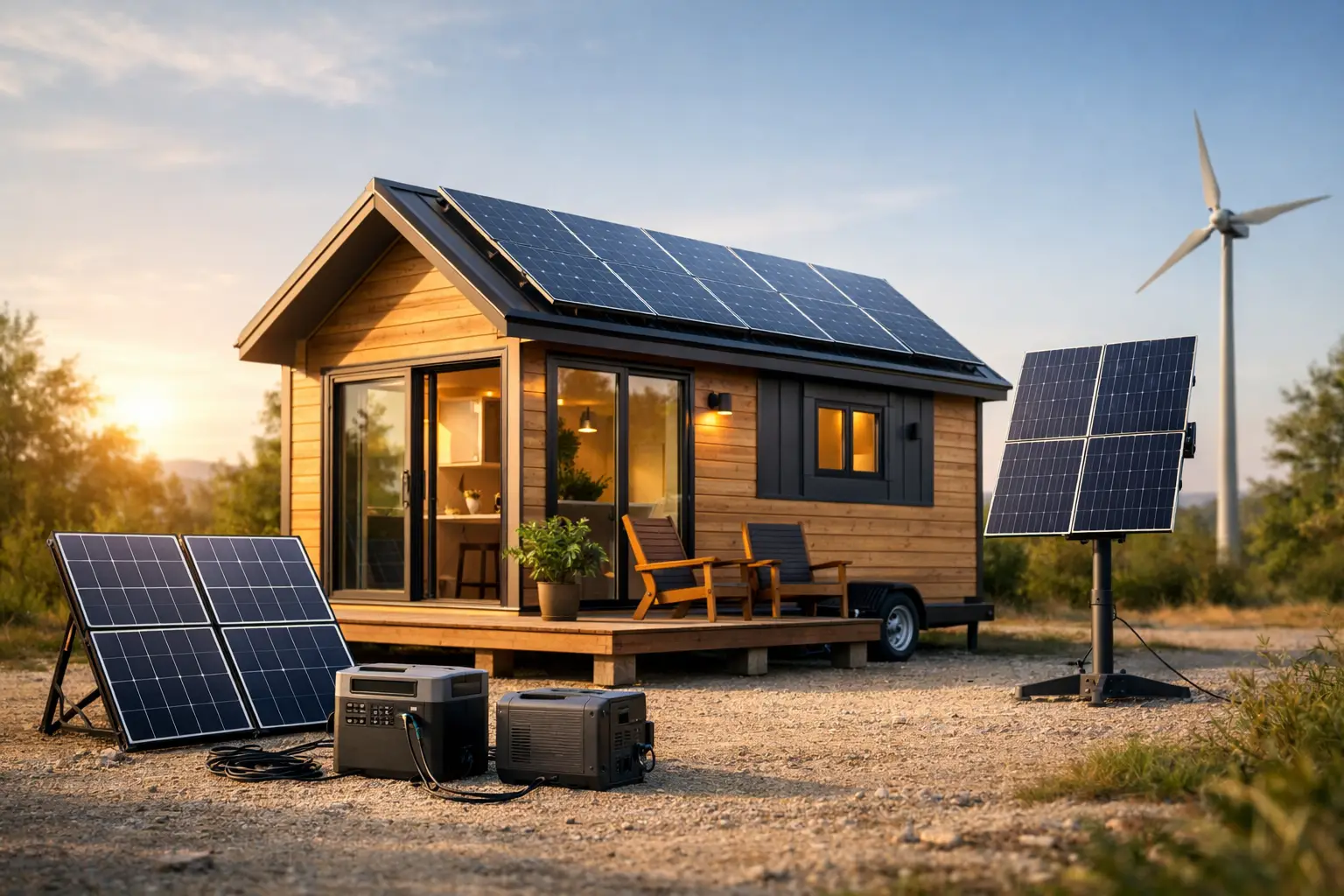
A solar-ready tiny house is not always a fully solar-powered tiny house. That distinction matters. Solar-ready means the structure, wiring, and core systems are designed so panels, batteries, charge components, and backup power can be added with minimal disruption.
In practice, that usually means you have a dedicated space for batteries and inverter equipment, pre-planned wire runs from roof to power center, enough roof capacity for a useful solar array, and an electrical system that can work with off-grid components rather than fight them. It is a design mindset as much as a feature set.
If you are still deciding whether you want full off-grid capability or a hybrid setup with grid or generator backup, solar-ready is often the smartest place to start. It gives you flexibility without forcing every decision upfront.
Start with your lifestyle, not the panels
The most common mistake in any solar ready tiny house guide is starting with wattage charts before looking at real life. Your energy system should match how you plan to live.
A weekend retreat has very different needs than a full-time tiny home. If you are powering lights, charging devices, running a vent fan, and keeping a small fridge cold for two or three days at a time, your system can stay relatively modest. If you are working remotely, using air conditioning, relying on an induction cooktop, or heating water electrically, the equation changes quickly.
This is where restraint helps. Tiny living works best when your energy choices are intentional. Propane appliances, wood heat, or high-efficiency DC options can dramatically reduce the size and cost of your solar setup. That does not make the home less modern. It makes it more resilient.
The solar-ready tiny house guide to load planning
Before you think about panel count, estimate your daily energy use. Not perfectly – just honestly. Add up the devices and systems you expect to run in a normal day, how many hours they will operate, and whether they create brief surges when turning on.
Refrigeration, water pumps, fans, internet gear, and lighting are usually manageable. Space heating, electric water heaters, and air conditioning are where small systems get stressed. Hair dryers, microwaves, coffee makers, and portable induction burners can also create short but significant demand.
The goal is not to eliminate comfort. It is to understand which comforts are easy to support with solar and which ones may require a larger battery bank, more roof area, or backup generation. If your numbers feel high, that is not failure. It is useful clarity.
Roof design matters more than most people expect
In a tiny house, roof space is limited, and every inch counts. Dormers, skylights, vents, racks, and aesthetic rooflines can all reduce usable solar area. A roof that looks great in a rendering may be frustrating once you try to fit a practical array on it.
Simple rooflines tend to be the most solar-friendly. A clean section with minimal shading gives you more options for panel placement and maintenance. Roof pitch also matters. In many US climates, you can still make solar work on a range of pitches, but orientation and seasonal sun exposure should be considered early.
Trees are another trade-off. A tiny house tucked into the woods feels ideal until you realize your roof gets only a few strong hours of sun. If your site is shaded, ground-mounted panels may be worth considering, but that requires more planning and site control.
Build in the wiring before walls go up
One of the smartest solar-ready moves is simple: run conduit and wiring paths before insulation and interior finishes are complete. Even if you are not installing the full system yet, pre-wiring saves labor, protects your walls from future cuts, and keeps the final result clean.
That usually includes a route from the roof to the location where your charge controller, inverter, disconnects, and batteries will live. It can also include planning for shore power input, generator backup, and transfer switching if your setup may evolve over time.
This part is not glamorous, but it is where future flexibility is won. Clean infrastructure gives you options later, whether you stay minimalist or upgrade into a more capable power system.
Make space for the power center
Solar hardware needs a home. In a tiny house, that can be a challenge because every cabinet and storage zone already feels spoken for. Still, batteries and inverter equipment should never feel like an afterthought.
A well-planned power center needs ventilation, accessibility, protection from extreme temperatures, and enough clearance for safe installation and service. Lithium batteries have made compact systems much more practical, but they still require thoughtful placement. Cramming everything into an awkward corner might save a few inches now and create ongoing frustration later.
If you are designing from scratch, dedicate a specific utility zone. It can be modest, but it should be intentional. That one choice makes the whole home feel more refined and more dependable.
Choose appliances like an off-grid realist
A tiny house does not need to feel stripped down, but solar rewards efficient design. High-efficiency refrigerators, LED lighting, vent fans, and low-draw water pumps stretch your battery capacity without asking much from you day to day.
Heating and cooling deserve extra attention. Mini-splits are far more efficient than many people expect, but in a very small solar setup they can still be a major load. Electric resistance heat is usually hard to justify off-grid unless your system is unusually large. Water heating is similar. Many tiny homeowners use propane or on-demand alternatives because they free up solar capacity for everything else.
This is one of those it-depends decisions. If your tiny house is parked in a sunny climate and built with a larger battery bank, you may be able to support more electric comfort. If your home is mobile, shaded, or used in winter, a mixed-energy approach is often the smarter path.
Battery storage is about margin, not just capacity
People often focus on how much battery storage they can afford. A better question is how much margin they want. Margin is what keeps the house comfortable through cloudy weather, heavier-than-usual use, and the small unpredictabilities of daily life.
A system that works only under ideal conditions can feel stressful. A system with some breathing room feels calm. That matters more than many first-time builders realize.
If your goal is weekend freedom, a smaller battery bank may be enough. If your goal is full-time independence or remote work, extra storage often pays for itself in convenience alone. It reduces the need to constantly monitor use or rely on backup power at the wrong time.
Plan for mobility, weather, and maintenance
Not every tiny house lives the same life. A house on wheels brings additional considerations, especially around panel mounting, wind exposure, weight, and travel vibration. Fixed cabins and foundation-based tiny homes usually have more flexibility and fewer moving constraints.
Weather also changes system performance. Snow cover, extreme heat, and short winter days all affect production. That does not mean solar is not viable. It means sizing should reflect real conditions, not best-case assumptions.
Maintenance is another practical detail. Can you safely access the panels for cleaning? Can you reach shutoffs and inspect equipment without emptying half your storage? The best systems are not only efficient. They are easy to live with.
When solar-ready is enough for now
There is no rule that says your tiny house must be fully off-grid on day one. For many people, a solar-ready approach is the most practical route. You can build the infrastructure now, use shore power or a simple hybrid setup at first, and expand as your budget, confidence, or lifestyle shifts.
That path often leads to better decisions because you are sizing the system based on actual use rather than guesswork. Once you have lived in the space, you know what you truly need.
For a lot of buyers, that is the sweet spot. Independence does not have to be immediate to be real. It just needs to be built on purpose.
A better tiny house starts with better energy planning
Solar-readiness is not a bonus feature for a tiny house. It is part of what makes small-space living feel calm, capable, and future-proof. When the roof, wiring, storage, and appliances are planned around energy from the beginning, the house works better every day.
That is the real value of taking this seriously. You are not just preparing for panels. You are building a home that supports more freedom, less friction, and a quieter kind of comfort. If that is the life you are after, start with the systems that make it possible.