A quiet cabin stops feeling peaceful the second the power setup starts fighting your plans. Maybe the lights dim when the fridge kicks on. Maybe your battery bank is drained by sunrise. Maybe you wanted a simple retreat, but your off grid cabin power setup now feels more complicated than the life you were trying to leave behind.
The good news is that most cabin power problems come from sizing and expectations, not from the idea itself. A well-planned system can run lighting, refrigeration, water pumping, device charging, and a few comfort upgrades without turning your cabin into a science project. The key is building around how you actually use the space.
What an off grid cabin power setup really needs to do
Before you think about panels, batteries, or inverters, get clear on the job. A weekend cabin used two nights a month needs a very different system than a four-season retreat with internet, a mini fridge, and a water pump. The mistake is buying parts first and defining lifestyle second.
For most modern cabin owners, power falls into three categories. The first is essential loads like lights, phone charging, a small fridge, vent fans, and water access. The second is comfort loads such as a coffee maker, laptop, TV, or small kitchen appliances. The third is occasional heavy use – things like power tools, a microwave, a toaster, or a space heater.
That last category is where budgets get stretched. Heating and cooking with electricity in an off-grid setting is possible, but it gets expensive fast because those loads are huge. In many cabins, the smartest setup uses electricity for convenience and propane or wood for high-draw tasks. That balance keeps the system cleaner, simpler, and more affordable.
Start with energy use, not equipment
The cleanest way to design an off grid cabin power setup is to estimate daily watt-hours. That sounds technical, but the process is straightforward. Look at what you want to run, how many watts each item uses, and how long it runs each day.
A few LED lights might barely register. A laptop and phone charging are manageable. A refrigerator, pressure pump, or Starlink-style internet setup can change the picture quickly. You do not need perfect precision on day one, but you do need an honest picture.
If your daily use is light, you may only need a modest solar array and battery bank. If you expect residential-style comfort in a remote cabin, your system has to be built accordingly. There is no shame in wanting comfort. The real issue is pretending comfort runs on a minimalist system.
A practical rule is to separate what must run every day from what can wait. That one move gives you more control than any premium component. It also helps you decide whether you need a full-time solar system, a smaller battery-based setup with generator backup, or a hybrid of both.
The four core parts of the system
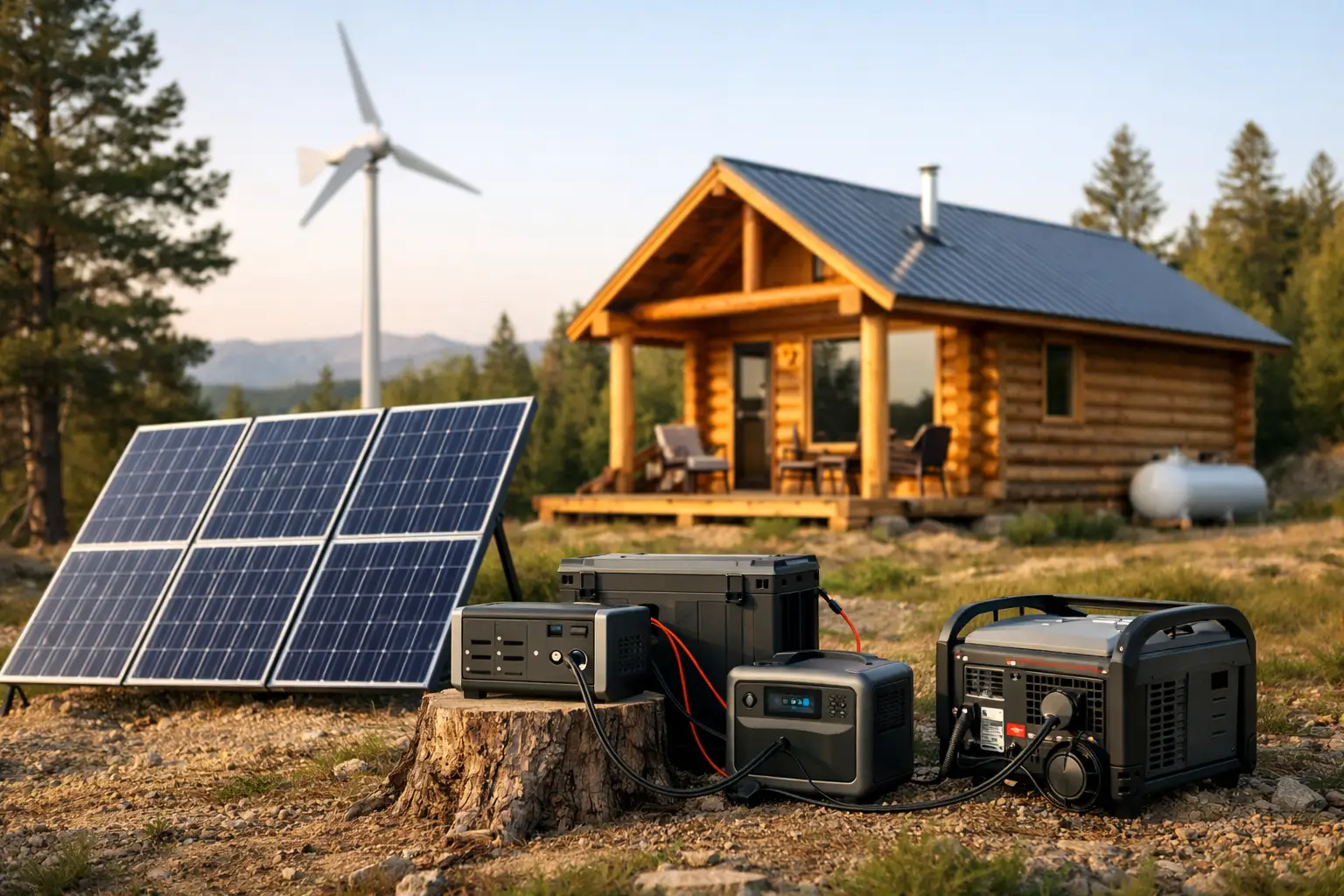
Every cabin power system is built around the same foundation: generation, storage, conversion, and backup. Once you understand those roles, the whole setup gets easier to reason through.
Solar panels: your primary input
Solar is the default choice for most cabins because it is quiet, low-maintenance, and fits the off-grid lifestyle better than constant generator use. Panels recharge your batteries during daylight hours, and with the right sizing, they can keep up with regular cabin needs for much of the year.
The catch is that solar production depends on roof angle, shading, season, and geography. A summer-only cabin in a sunny region may perform beautifully with a compact array. A wooded property in winter is a different story. If your cabin gets limited winter sun, you may need more panel capacity than expected or a secondary charging method.
Battery bank: your buffer and backbone
Your batteries store power for nighttime and cloudy days. In practice, this is the part of the system that determines how relaxed off-grid life feels. A cabin with enough battery storage feels stable. One with too little feels like a constant negotiation.
Lithium batteries have become the preferred choice for many modern cabins because they are efficient, compact, and easier to live with than older lead-acid systems. They cost more upfront, but they typically offer better usable capacity and less maintenance. Lead-acid can still work for budget-conscious setups, but it asks more from the owner in terms of care, ventilation, and depth-of-discharge discipline.
Inverter: from stored power to usable power
If you want to run standard household AC appliances, you need an inverter. It converts DC battery power into the AC electricity your cabin uses for outlets and common devices.
Sizing matters here. Too small, and the inverter will struggle with startup surges from appliances like fridges or pumps. Too large, and you may spend more than necessary while losing efficiency at light loads. Pure sine wave inverters are usually the right move for cabins because they are gentler on electronics and more reliable for mixed modern use.
Backup charging: your insurance policy
A backup generator or alternate charging source is not a failure of the off-grid concept. It is a resilience tool. During storms, heavy use weekends, or low-sun seasons, backup charging keeps the system practical.
For some cabins, that backup only runs a few times a year. For others, especially in dense forest or northern climates, it is part of the normal seasonal rhythm. The right answer depends on location, weather, and how much uncertainty you are willing to tolerate.
How to size an off grid cabin power setup without overbuilding
There is a sweet spot between underpowered and excessive. A lot of first-time buyers miss it in one of two ways. They either build too small and become frustrated immediately, or they overspend on a system designed for a much larger home.
Start by deciding how many days of autonomy you want. In plain terms, how long should the cabin function without strong solar input? A weekend retreat might be comfortable with less storage if it can fully recharge between visits. A full-time or shoulder-season cabin usually needs more battery reserve.
Then look at your peak power moments, not just your daily average. If the fridge compressor starts while the well pump is running and someone uses the blender, can the inverter handle it? These short bursts matter.
It also helps to think in phases. Many people do not need their forever system on day one. A modular setup lets you start with essentials and expand later as your routines become clearer. That approach protects your budget and keeps the system aligned with real use rather than wishful planning.
Common cabin loads that change everything
A few choices have an outsized impact on system size.
Refrigeration is one. A high-efficiency DC fridge or modern Energy Star unit can be completely reasonable off-grid. An old spare garage fridge is not. Water systems are another. Gravity-fed water is simple, but a pressure pump adds convenience and electrical demand. Internet access is similar. If your cabin doubles as a remote workspace, connectivity becomes a serious daily load, not a minor extra.
Climate control is the biggest fork in the road. Running electric resistance heat from solar and batteries is rarely the elegant answer people hope for. It usually makes more sense to heat with wood or propane and use electricity for fans, controls, lighting, and small comforts. For cooling, efficient fans are easy. Air conditioning is possible, but it pushes the system into a much larger class.
Design choices that make daily life easier
The best power systems do not just work on paper. They reduce friction.
That means putting your battery and inverter in a protected, accessible location. It means choosing monitoring you can read without an engineering degree. It means labeling circuits clearly and keeping critical loads separate from convenience loads, so a heavy-use mistake does not take out your whole cabin.
It also means accepting that intentional living is not the same as deprivation. You do not need to sit in the dark to prove your commitment to off-grid life. You need a setup that supports the way you want to feel when you arrive – calm, capable, and not dependent on a noisy generator to make coffee.
This is where a lifestyle-first mindset matters. Off The Grid Store speaks to people who want independence with comfort, and that balance is exactly what a smart cabin system should deliver. Not maximalism. Not survival theater. Just well-chosen power that fits the life you are building.
When simple is smarter than bigger
If your cabin is mainly for weekends, keep that truth in the design. You may not need a large whole-cabin system if your main priorities are lights, charging, a small fridge, and music on the porch. On the other hand, if the cabin is your work retreat or a semi-full-time home, build for consistency from the start.
There is no universal best off grid cabin power setup. There is only the setup that matches your climate, habits, budget, and comfort standard. The most successful cabins are not the ones with the most hardware. They are the ones where every component has a clear purpose.
Build for the life you want to live there, not the fantasy version of someone else’s cabin. That is usually where real freedom starts.