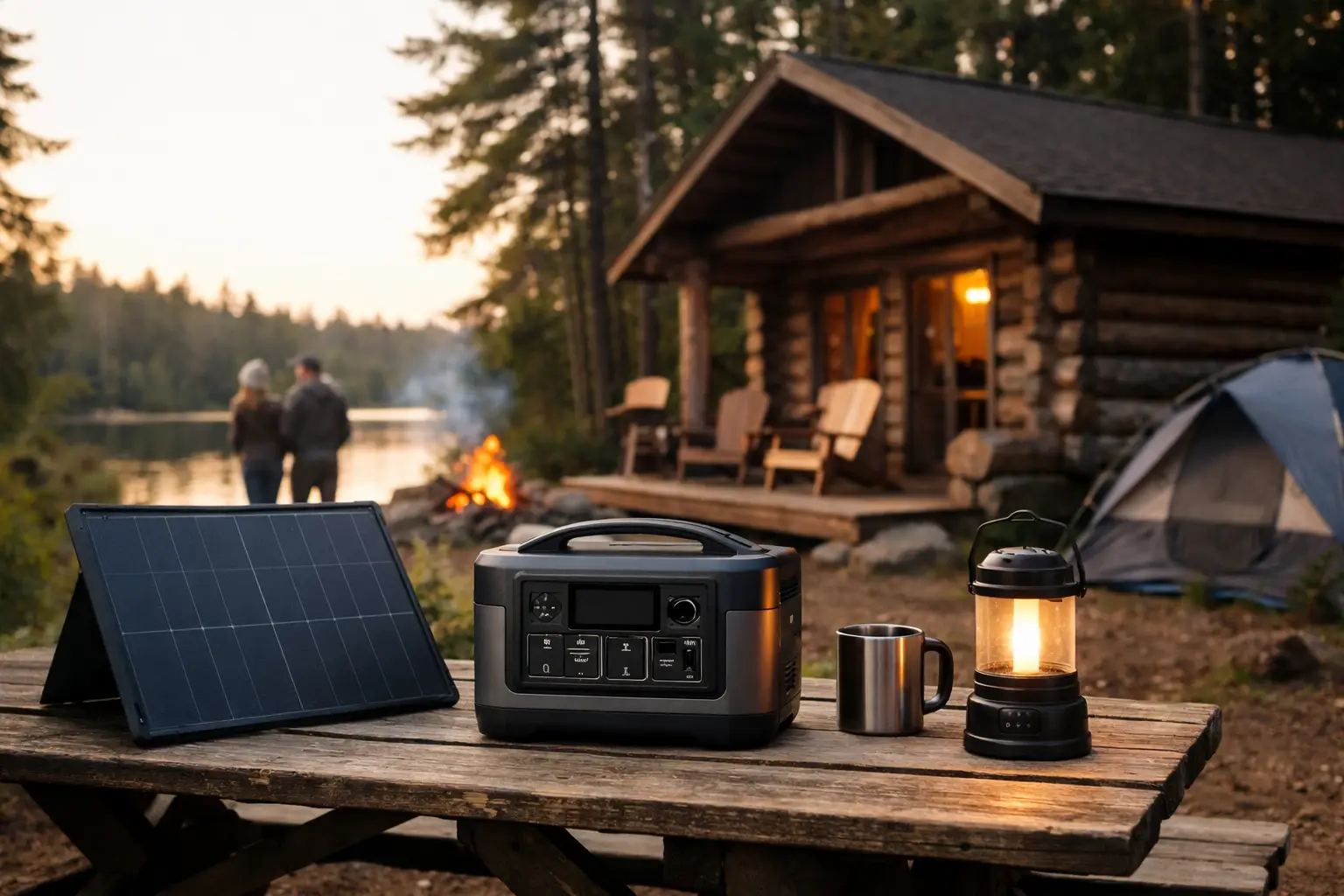
Friday night at the cabin feels different when the lights come on without a generator rumble in the background. If you are looking for portable power for weekend camping cabin use, the goal is not to recreate your full house. It is to support the rituals that make a short escape feel calm, comfortable, and fully your own.
That usually means a simple, quiet system that handles the basics well. Phone charging matters. So do lights, a fan, maybe a compact coffee maker, and enough reserve to get through a rainy morning without fuss. The best setup is the one that gives you freedom without turning every weekend into a power management project.
What portable power for weekend camping cabin really needs to do
A weekend cabin has a different rhythm than a full-time off-grid home. You are not building around daily heavy loads, and you probably do not need a large fixed battery bank just to enjoy two nights away. Most people want dependable power for comfort, safety, and a few familiar conveniences.
That is why portable power stations make so much sense here. They are clean, quiet, easy to move, and far more approachable than piecing together a DIY system from scratch. For a modern cabin owner or weekend camper, that simplicity matters. You want to arrive, set down your bag, and settle in. You do not want to troubleshoot wiring by flashlight.
Still, portable does not mean one-size-fits-all. The right unit depends on how you spend time at the cabin. A reading-and-reset weekend has very different power needs than a family trip with devices, speakers, cooking gear, and outdoor lights.
Start with your actual cabin habits
Before comparing battery sizes or output ratings, think about what you truly use over 48 to 72 hours. Most people overestimate some loads and underestimate others. A few small devices can add up, while one high-watt appliance can drain a battery surprisingly fast.
Lighting is usually the easy part. LED lanterns, string lights, and small cabin lights are efficient and affordable to run from a portable power station. Charging phones, headlamps, cameras, and tablets also takes relatively little energy, especially if you are not trying to stay online all weekend.
The bigger questions tend to be around comfort appliances. A fan for summer sleeping can be modest or demanding depending on the model. A heated blanket may use less power than a space heater and feel just as cozy for shoulder-season trips. A compact electric kettle or coffee maker can be manageable if used briefly, while a hot plate or full-size microwave may push a smaller power station beyond its limits.
This is where intention matters. If your cabin time is about slowing down, you may not need to power every convenience from home. A good portable setup supports comfort without bringing back the noise and excess many people are trying to leave behind.
Choose battery capacity based on use, not marketing
Battery capacity is usually measured in watt-hours. In plain terms, that number tells you how much stored energy you have to work with. For portable power for weekend camping cabin trips, a small unit may cover lights and charging, but comfort starts to improve once you move into mid-capacity models.
For a very simple setup, around 300 to 500 watt-hours can cover device charging, LED lighting, and maybe a small fan. That works well for solo trips, minimalist cabins, or backup use. It is enough for people who want convenience, not full electrical living.
A more flexible range is often 700 to 1200 watt-hours. That gives you room for coffee in the morning, longer fan use, camera batteries, a laptop, better lighting, and some reserve if weather keeps you indoors. For many weekend cabins, this is the sweet spot. It feels capable without becoming bulky.
Once you get into 1500 watt-hours and above, you can support more ambitious use cases, but portability starts to change. These units are heavier, cost more, and make the most sense if your cabin needs occasional appliance support or you are sharing power across a family or group. More capacity is not automatically better if it means dragging around a system you do not enjoy using.
Output matters just as much as storage
A power station can have plenty of battery capacity and still fail at the moment you need it if the output is too low. That is because some appliances demand a high surge when they start, even if they do not run at that level continuously.
For cabin weekends, this is most relevant with coffee makers, kettles, mini fridges, blenders, and cooking devices. If you want to power anything with heat or a motor, check the running wattage and startup surge before you buy. A battery with a comfortable energy reserve but weak inverter output can feel surprisingly limited.
That said, there is no reason to pay for oversized output if your lifestyle does not require it. If your cabin setup is based on lighting, charging, music, and a fan, a lower-output station may be exactly right. Buy for your real habits, not for imagined emergencies that never happen.
Solar charging makes weekend freedom easier
If your cabin gets good sun, portable solar panels can turn a power station from a short-stay convenience into a much more independent system. This is especially useful if you arrive with a partially charged battery, stay longer than planned, or visit often enough that topping off between trips becomes a routine.
Solar also changes how power feels. Instead of treating energy like a shrinking resource all weekend, you gain the option to replenish during the day while you hike, read, cook, or do nothing at all. That is a better match for the pace of cabin life.
The trade-off is that solar performance depends on weather, panel placement, and season. A panel can work beautifully in summer and feel less impressive in late fall under trees or cloud cover. That does not make solar less valuable. It just means it works best as part of a balanced system, not as a promise of unlimited energy.
Quiet comfort beats generator culture
There is a reason so many people are moving toward battery-based portable power for weekend camping cabin stays. Silence changes the experience. You hear the wind, the fire, the rain on the roof. You sleep better. You talk more. The space feels more like a retreat and less like a workaround.
Generators still have a place, especially for heavy-duty needs, long outages, or larger off-grid systems. But for many weekend users, they solve the wrong problem. They bring fuel, maintenance, noise, and exhaust into a setting people choose specifically to feel lighter and less cluttered.
A good portable power station fits the modern version of off-grid life. It is practical, low-drama, and easy to live with. It supports comfort without pulling you back into always-on habits.
The best setup is often a simple one
For most cabins, the smartest system is not complicated. A mid-size power station, a foldable solar panel, efficient lights, and a handful of low-draw essentials can cover a surprising amount. Add a cooler instead of a power-hungry fridge, use propane for heat or cooking where appropriate, and reserve battery power for the things that most improve your experience.
That approach also leaves room to grow. You can start with a portable station for weekends, learn your real consumption patterns, and decide later if a larger solar-ready setup makes sense. That is a more confident path than overbuilding from day one.
Off The Grid Store speaks to people who want that kind of clarity – less noise, more independence, and gear that supports the lifestyle rather than complicating it. The right power setup should feel the same way.
What to prioritize before you buy
Look for a battery chemistry designed for long life, especially if you plan to use the unit often. Think about weight if you will carry it from your car to the cabin or move it between home and camp. Check the outlets you actually need, because a great battery is only useful if it fits your devices.
Charging speed is worth attention too. If you leave work Friday and want to top off quickly before the drive, fast AC charging can be genuinely helpful. If your cabin is warm in summer or cold in shoulder season, make sure the power station is rated for those conditions and understand any charging limitations in low temperatures.
Most of all, resist the urge to buy for extremes. Your weekend cabin is not a test of endurance. It is a place to reset, reconnect, and enjoy a little more self-reliance. Choose portable power that supports that feeling with enough capacity to be useful, enough simplicity to be inviting, and enough flexibility to grow with your routine.
A well-chosen power setup does more than keep devices alive. It protects the mood of the place, and that is often the real reason people go off-grid in the first place.