The wrong off-grid setup usually starts with good intentions and one bad assumption: that more gear means more freedom. In reality, the best systems feel quiet, reliable, and almost invisible. If you’re figuring out how to choose off grid gear, the goal is not to collect gadgets. It’s to build a setup that supports the way you actually want to live, whether that’s a weekend cabin, a solar-ready tiny home, or a simple place to unplug without giving up comfort.
Start with your version of off-grid
Off-grid living means very different things depending on where, how often, and why you’re using the space. A backcountry hunting cabin has different needs than a design-forward tiny home. A family using a weekend retreat every month will make different choices than someone preparing for full-time independent living.
That is why the first filter is lifestyle, not product category. Before you compare batteries, water filters, or camp stoves, get clear on your real use case. Ask yourself how many people will use the space, how long you’ll stay at a time, what season matters most, and which comforts are non-negotiable. Refrigeration, hot water, lighting, device charging, and climate control all affect what gear makes sense.
This step sounds simple, but it prevents the most common mistake in off-grid buying: purchasing for a fantasy version of the lifestyle. If your goal is calm weekends away from notifications, you likely need less than you think. If your goal is long-term resilience with modern comfort, you may need more system planning than impulse purchases.
How to choose off grid gear by priority
Once your use case is clear, choose gear in the order that protects comfort and function first. In most setups, that means starting with power, water, shelter support, food storage and cooking, then the smaller accessories that make the space feel finished.
Power comes first
Nearly every off-grid choice connects back to energy. Your lights, fridge, fans, pumps, internet backup, and charging stations all depend on a realistic power plan. That makes it hard to choose any major gear well until you understand what your system can support.
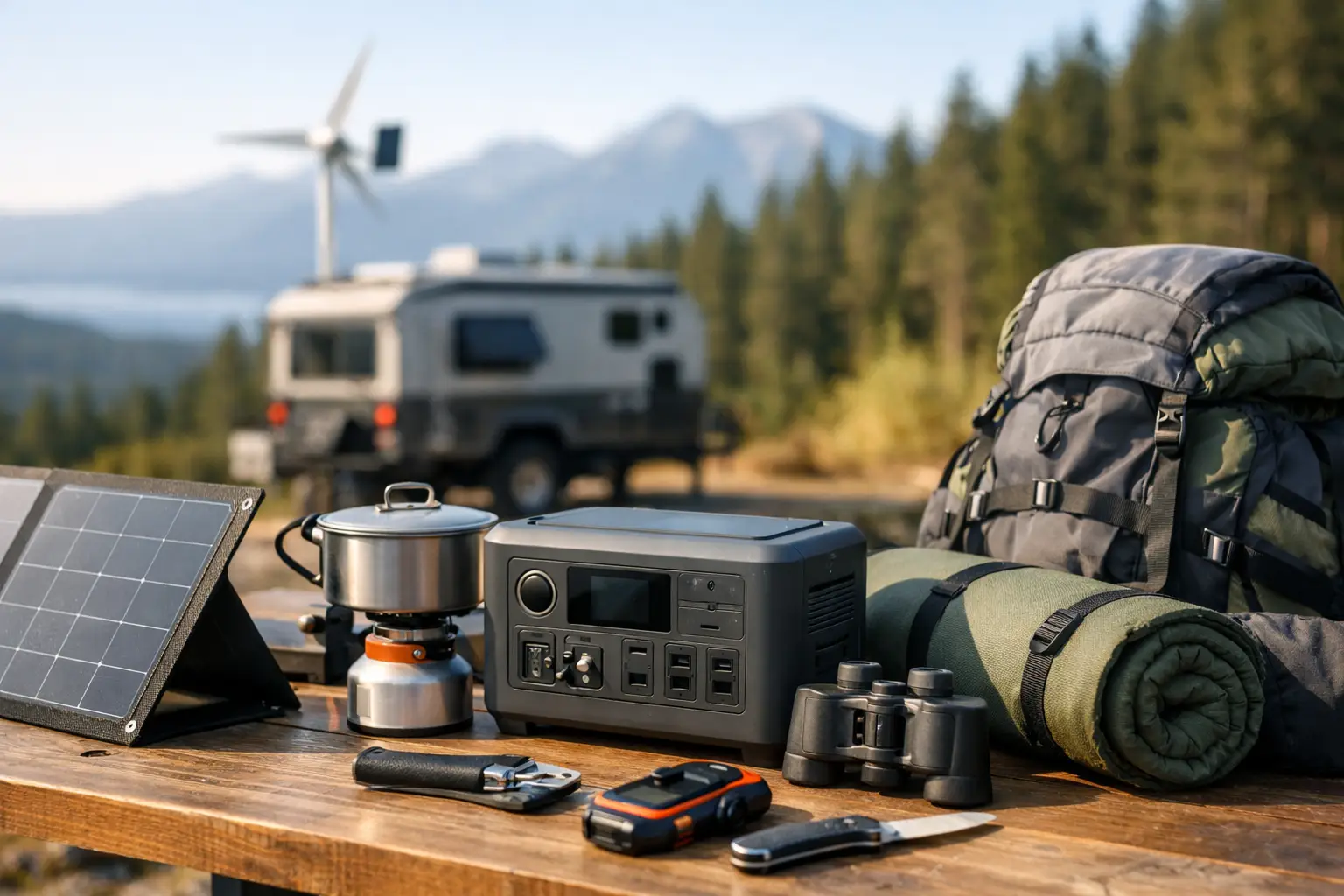
Start by thinking in daily habits, not raw specs. Do you want a few lights and phone charging, or do you also want a fridge, induction cooktop, and portable AC? The difference is huge. A compact solar generator may be perfect for weekend use, but feel frustrating in a full-time setup with heavy appliance demand.
It also helps to think beyond peak performance. A panel or battery may work beautifully in ideal weather, but your real experience depends on cloudy days, winter light, and how quickly you can recharge. The best off-grid gear is not just capable. It is forgiving.
Water should feel simple
Water systems get overlooked because they are less exciting than solar gear, but daily comfort depends on them. If hauling jugs feels fine for one-night trips, great. If you’re staying multiple days or hosting other people, that same setup can become annoying fast.
Good water gear depends on source and convenience. If you’re collecting rainwater or drawing from a natural source, filtration quality matters. If you’re bringing in water manually, storage design and portability matter more. A sleek container with a poor spout can become a daily irritation. A pump that saves your back may be more valuable than a larger tank.
This is where premium gear often earns its price. Better materials, easier cleaning, and thoughtful design make repetitive tasks feel lighter. Off-grid living works best when the basics don’t require constant workarounds.
Cooking and refrigeration shape the experience
People often underestimate how much food setup influences whether a place feels relaxing or inconvenient. The right cooking gear depends on how you actually eat. If you love simple one-pan meals, your needs are different from someone who wants espresso, cold storage, and full meal prep.
Portable stoves, propane systems, 12V fridges, coolers, and compact kitchen tools all have a place, but not every place. A powerful fridge is useful only if your energy system can support it. A beautiful cook station is less appealing if it takes too long to set up every time you arrive.
Choose for rhythm. If you want fast arrivals and easy mornings, favor gear that is ready quickly, stores cleanly, and handles repeated use without fuss. If your off-grid space is a longer-stay cabin or tiny home, built-in efficiency may matter more than portability.
Match gear to the environment, not just the idea
A lot of people shop for off-grid gear based on a mood board. The better approach is to shop for weather, terrain, and maintenance reality. Heat, cold, humidity, dust, elevation, and transportation limits all influence what will last.
A product that works well in mild climates may struggle in freezing temperatures. Lightweight gear may be perfect for mobility but less ideal for fixed locations that see hard seasonal wear. Materials matter more off-grid because replacement is rarely instant and failure is more disruptive.
Ask practical questions. Will this item stay outside? Can it handle moisture? Does it rattle loose on rough roads? Is it easy to repair or clean without specialized service? Good off-grid gear should support independence, not create fragile dependence on ideal conditions.
Buy fewer pieces, but buy better
One of the cleanest ways to decide how to choose off grid gear is to focus on systems instead of one-off products. A battery paired with compatible panels, practical storage, and realistic appliances is more valuable than a bigger battery chosen in isolation. A water setup with collection, purification, and dispensing thought through is better than a premium filter alone.
This mindset usually leads to fewer purchases and better outcomes. It also protects your budget. Off-grid buyers often overspend on visible hero products and underspend on the parts that make those products usable, such as mounts, cables, containers, backup charging options, or weather protection.
There is also a design advantage here. Off-grid spaces tend to be smaller, so every item affects visual calm as well as function. Gear that nests well, stores cleanly, and serves more than one purpose helps your space feel intentional instead of crowded.
Know where portability matters
Not every off-grid setup needs to be highly mobile, but many benefit from some flexibility. If you split time between a cabin, van, guest house, or outdoor work area, gear that moves with you can offer more value than fixed equipment.
That said, portability has trade-offs. Foldable and lightweight products are easier to transport, but sometimes less durable or lower capacity. Fixed systems can feel more stable and effortless once installed, but they require stronger upfront planning.
A good rule is to be honest about setup tolerance. If you don’t enjoy unpacking, assembling, and troubleshooting each trip, portable gear can lose its appeal quickly. Freedom is not just about movement. It’s also about ease.
Don’t let specs overpower usability
Technical details matter, but they are not the whole story. A product page can tell you wattage, storage volume, or charge time. It tells you less about noise, awkward handles, hard-to-read displays, or whether a latch becomes frustrating after a month.
Usability is what makes gear worth keeping. The more often you use something, the more small design flaws matter. This is especially true in off-grid living, where routines are more hands-on and there is less room for gear that creates friction.
Look for products that reduce decisions and repetitive effort. Intuitive controls, reliable materials, easy maintenance, and smart storage often make a bigger difference than one standout spec.
Leave room to grow
Your first setup does not need to be your forever setup. In fact, it probably should not be. The smartest approach is to build around your current needs while leaving room to expand as your lifestyle becomes more defined.
That may mean choosing a scalable power station, modular solar input, stackable water storage, or compact essentials before adding comfort upgrades. You learn a lot from real use. After a few trips or a season in a tiny home, your priorities usually become obvious.
This is where a curated retailer can save time. Brands like Off The Grid Store help narrow the field so you’re choosing between solutions that fit the lifestyle, not sorting through products built for completely different users.
What the right gear should feel like
The best off-grid gear does not constantly ask for your attention. It supports longer mornings, quieter evenings, and more confidence in your space. It helps you cook without hassle, keep the lights on, store water cleanly, and settle into a rhythm that feels lighter than everyday life.
So when you choose, don’t ask only what a product can do. Ask what it makes possible. The right setup should give you more time, less noise, and a stronger sense that your space is working with you, not against you.