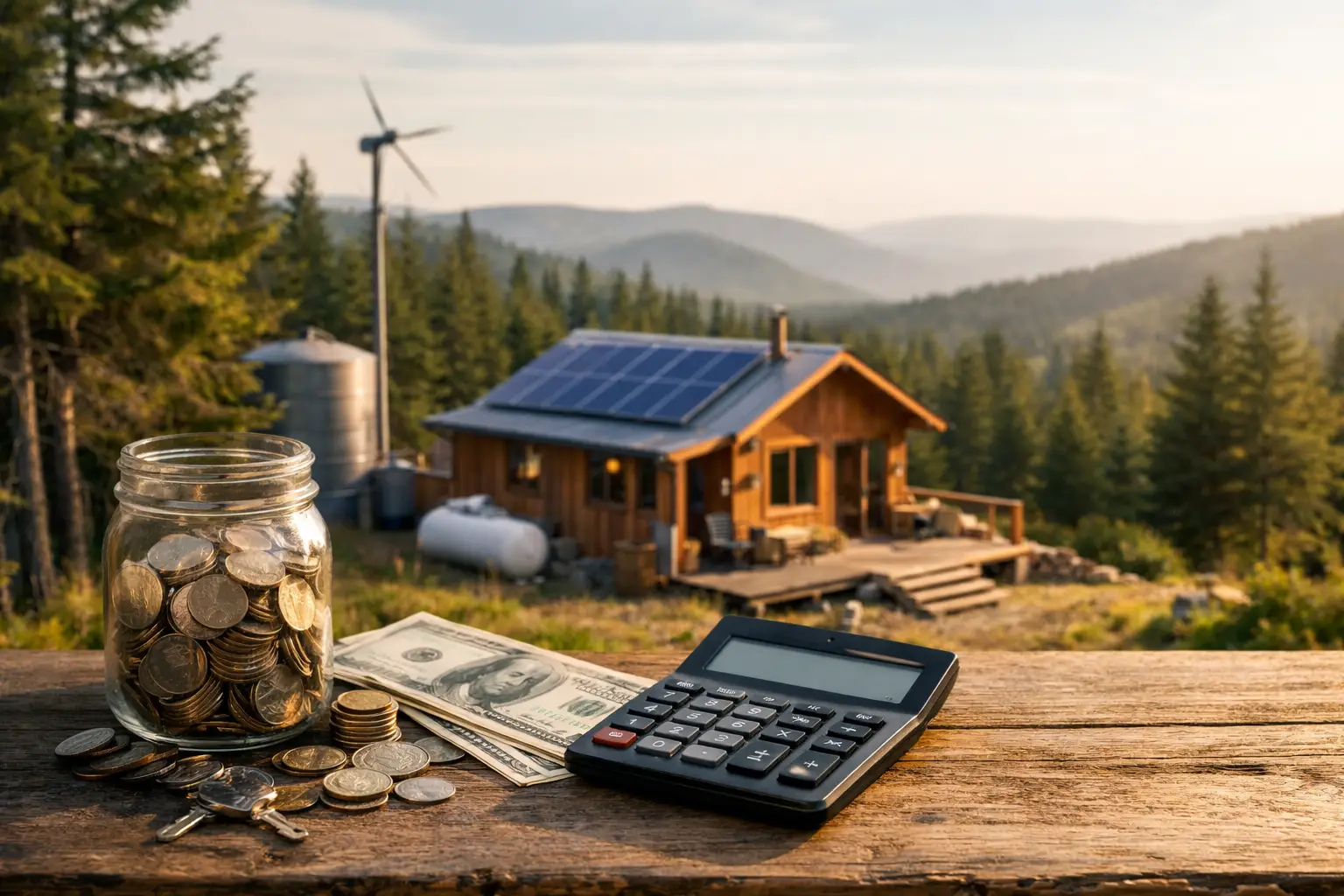
A quiet cabin morning can look wonderfully simple: coffee heating on a propane stove, sunlight reaching the solar panels, and no utility bill arriving at the end of the month. But is off grid living expensive? It can be, especially when independence is treated as a single purchase rather than a system built over time.
The honest answer is that off-grid living has a high range of possible costs. A seasonal retreat built around modest power needs may cost less than a conventional home renovation. A full-time, code-compliant house on raw land with solar storage, a well, septic, and year-round access can require a serious investment. The difference comes down to your location, level of comfort, and willingness to design around what you truly need.
Why Off-Grid Costs Are So Different
Off-grid living shifts expenses instead of making them disappear. Rather than paying utility companies monthly, you invest in equipment and infrastructure that produce or manage your own resources. Solar panels replace part of an electric bill. A rainwater system, well, or hauled-water setup replaces a water connection. Batteries provide power after sunset. A composting toilet may reduce the need for a septic system, depending on local rules.
That shift can feel expensive upfront because several major decisions arrive at once. Land, shelter, power, water, waste, heating, storage, and access all need a plan. Yet it also creates control. You can build a setup that reflects how you actually live instead of paying for capacity you rarely use.
A person using a compact cabin as a two-night escape has very different needs from a family living full time in a remote climate. The first may be comfortable with a small solar kit, a water tank, and a portable cooking setup. The second needs dependable winter heat, larger battery capacity, safe food storage, plumbing that will not freeze, and a backup plan for extended cloudy weather.
The Major Expenses of Living Off Grid
Land and access can set the whole budget
Land is often the biggest variable. Remote acreage can appear affordable until you account for legal access, road work, clearing, grading, surveys, soil tests, and permits. A low purchase price is not automatically a low total cost.
Before buying, understand the parcel’s zoning, building restrictions, flood risk, water rights, septic requirements, and road conditions in every season. Ask whether emergency vehicles, delivery trucks, and construction equipment can reach the site. If a property needs a new driveway, extensive excavation, or a bridge crossing, the budget can move quickly.
Land closer to towns and existing services usually costs more upfront but may reduce complexity later. It can also make a phased build more realistic, since you have easier access to materials, maintenance, and support.
Shelter is where lifestyle choices show up
A simple, well-insulated small cabin can be more affordable to heat, furnish, and power than a larger home. That does not mean tiny automatically means cheap. Custom builds, foundation work, high-quality windows, and code requirements can add up fast.
For some people, a travel trailer, converted van, or finished shed provides a lower-cost entry point while they learn the property. For others, a purpose-built tiny home offers better long-term comfort and a more intentional layout. The right choice is the one that matches your climate, timeline, and legal ability to occupy the structure.
Spend where it protects everyday comfort: insulation, weatherproofing, ventilation, durable roofing, and efficient windows. A beautiful interior cannot compensate for a space that is damp, drafty, or difficult to heat.
Solar is an investment, not just a panel count
A small solar setup for lights, device charging, and a few low-draw appliances may be relatively accessible. A full-home system capable of running air conditioning, electric cooking, well pumps, laundry equipment, and multiple workstations costs considerably more, particularly when batteries are included.
The key is to start with an energy audit. List what you use, how long you use it, and which items are nonnegotiable. Refrigeration, water pumps, internet equipment, medical devices, and heating controls deserve special attention. High-wattage appliances such as electric resistance heaters, dryers, and large air conditioners demand far more capacity than many new off-gridders expect.
A practical system often combines solar with efficient appliances, thoughtful habits, and backup power for unusual weather. That is not a compromise in comfort. It is good design. An induction cooktop, efficient refrigerator, LED lighting, and a power station for flexible use can make a smaller system feel far more capable.
Water and waste require a local plan
Water solutions range from simple to substantial. Hauling water into a cistern can work well for a weekend cabin. Rain catchment can supplement supply where allowed and properly designed. Drilling a well may offer greater independence but can be unpredictable in price and success, particularly in challenging terrain.
Waste systems are equally location-specific. A permitted septic system can be a major line item, while a composting toilet may lower installation needs in some settings. Local regulations decide what is legal, and a system that works beautifully on one property may not be permitted on another.
Do not treat these as glamorous purchases. They are foundational. Clean water, responsible wastewater management, and reliable sanitation are what make a remote place feel calm rather than improvised.
Ongoing costs still exist
Off-grid living can reduce recurring utility expenses, but it does not eliminate maintenance. Batteries eventually need replacement. Filters, propane, firewood, generator fuel, pump repairs, road maintenance, insurance, property taxes, and occasional equipment upgrades belong in the long-term plan.
Remote living can also carry a convenience cost. A forgotten fitting or failed inverter may mean a long drive, a shipping delay, or a service call with travel fees. Keeping essential spares and learning basic maintenance can save money and frustration.
Is Off Grid Living Expensive Compared With Staying Connected?
It depends on what you compare. If you already own a comfortable house with dependable utilities, building a fully independent system from scratch is rarely the cheapest immediate option. Grid power is often inexpensive to use once the connection is in place.
But grid connection is not always available or affordable. Extending power lines to a remote building site can cost tens of thousands of dollars or more, depending on distance and terrain. In that case, a well-designed solar and battery system may be the more sensible investment.
Off-grid living also has value beyond the monthly spreadsheet. It offers resilience during outages, more freedom in where you build, and a daily rhythm less dependent on external systems. Those benefits matter, but they should not be used to ignore the numbers. Independence feels best when it is financially sustainable.
How to Keep an Off-Grid Build Within Reach
The most reliable way to control cost is to build in phases. Start with the systems that make the property usable and safe, then expand as your real habits become clear. A weekend setup can reveal whether you need more battery storage, a larger water tank, or simply better insulation.
Avoid oversizing early. Many first-time buyers purchase more solar capacity than they need while overlooking easy efficiency gains. Reducing unnecessary loads can cost far less than adding panels and batteries. Choose appliances with intention, use propane or wood strategically where appropriate, and design storage so you can buy supplies thoughtfully rather than constantly replacing them.
It also helps to separate permanent infrastructure from portable gear. A quality power station, portable panels, water filtration, efficient lighting, and compact cooking equipment can serve you in a cabin, trailer, tent site, or future tiny home. These purchases let you build capability before every construction decision is final.
Finally, protect the budget with a contingency fund. Remote projects uncover surprises: rock where a trench was planned, a failed pump, a permit requirement, or a road damaged by heavy rain. A realistic reserve is not pessimism. It is part of building a life with confidence.
The Cost That Matters Most
Off-grid living is expensive when it is rushed, oversized, or built without respect for the land and local requirements. It becomes far more attainable when you define your version of comfort, reduce demand before adding equipment, and grow the system in deliberate stages.
The goal is not to prove you can live with less. It is to create a place that gives you more room to think, rest, travel, and choose your own rhythm. Start with one capable setup, learn what freedom looks like in your daily life, and let the next investment earn its place.
Leave a Reply