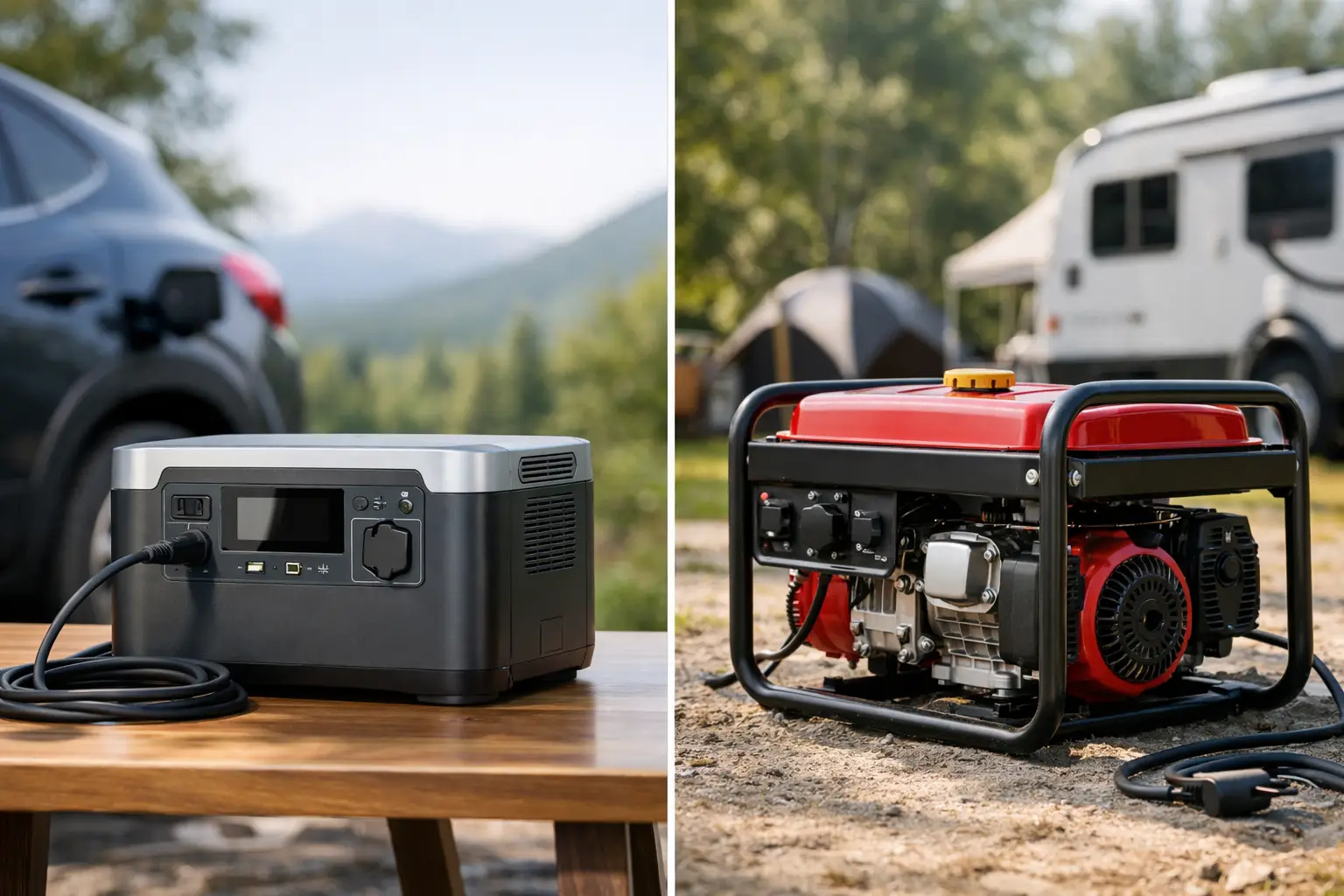
A quiet cabin morning changes the question. You are not only asking what can run a coffee maker or keep food cold. You are deciding what kind of retreat you want to create. In the portable battery vs gas generator decision, the right answer depends on your power needs, your tolerance for noise and fuel, and whether you want electricity to support a slower, more self-directed way of living.
A portable power station and a gas generator can both keep essential gear running away from the grid. They do it in very different ways. One stores electricity for clean, nearly silent use. The other creates electricity on demand by burning fuel. Neither is automatically better. The practical choice comes down to how long you need power, what you need to run, and how permanent your off-grid plans are.
Portable Battery vs Gas Generator: The Core Difference
A portable battery, often called a power station, stores electricity in an internal battery. You charge it from a wall outlet, vehicle outlet, solar panels, or a generator, then use its AC, USB, and DC outputs to power devices. It produces no exhaust at the point of use and operates quietly enough for a tent, tiny home, or cabin bedroom.
A gas generator converts gasoline, propane, or dual-fuel supply into electricity while it runs. As long as you have fuel and the generator is maintained, it can continue producing power. That makes it a strong option for extended outages, power-hungry tools, and situations where solar charging is limited.
The distinction matters because stored power has a finite capacity, while generated power has a fuel-dependent runtime. A battery station may be the more peaceful fit for a weekend escape. A generator may be the more practical choice when a storm takes out utility power for several days.
Choose a Portable Battery for Quiet, Everyday Freedom
Portable batteries are built for the moments when power should stay in the background. They are especially well suited to charging phones and cameras, powering laptops, running lights, keeping a CPAP operating overnight, and supporting a small fridge or cooler. Many can also handle appliances like a coffee maker, blender, projector, electric blanket, or compact microwave, provided the unit has enough output and capacity.
For cabins, vans, tent sites, and tiny homes, silence is a real benefit. You can charge gear before sunrise without filling the woods with engine noise. You can work remotely from a solar-supported retreat without the smell of fuel near your living space. And because there are no fumes, a battery can be used indoors when ventilation and placement requirements are followed.
Solar charging is where the battery approach becomes more independent. A properly sized panel setup can refill a power station during the day, then carry lighting, refrigeration, and personal electronics through the evening. It will not create unlimited power, especially during overcast weather or winter months, but it can greatly reduce your dependence on fuel runs and crowded campgrounds with electrical hookups.
Battery power also requires less routine maintenance. There is no oil to change, carburetor to clean, or stale fuel to manage. For people building a simpler relationship with energy, that ease has value.
Where Portable Batteries Have Limits
A battery station is not a substitute for every electrical demand. Capacity is measured in watt-hours, and that number determines how much energy you have available. A 1,000 watt-hour battery can theoretically run a 100-watt device for about 10 hours, though conversion losses and real-world conditions reduce that estimate.
High-draw appliances can drain a battery quickly. Electric space heaters, air conditioners, hot plates, full-size refrigerators, well pumps, and large power tools often require substantial output and use a great deal of energy over time. Some power stations can start these loads, but that does not mean they can run them for long.
Recharge time is another consideration. Wall charging may be fast on some models, while solar charging varies with panel wattage, sun angle, weather, and season. If you need dependable power through several cloudy days, you will need adequate battery capacity, a realistic solar plan, or a backup charging source.
Choose a Gas Generator for Heavy Loads and Long Outages
A gas generator makes sense when the job is larger than a battery bank can comfortably handle. It can run power tools during a build, support a sump pump during an outage, recharge batteries quickly, or keep a refrigerator and freezer operating when bad weather lingers. For a rural property without a complete solar system, it can be a reliable bridge between utility dependence and full energy independence.
Generators are rated by running watts and surge watts. Surge capacity matters because motors often need a higher burst of power to start. A fridge compressor, circular saw, or well pump may have a modest running draw but a significant startup demand. Selecting a generator based only on its maximum rating can lead to frustrating overloads, so calculate the devices you expect to run at the same time.
Fuel availability gives generators their staying power. With safely stored fuel, a generator can run for days in intervals, rather than being limited by what was charged before the outage. Propane is especially appealing for some off-grid properties because it stores longer than gasoline and may already serve a cooktop, heater, or water heater.
The Trade-Offs of Generator Power
A generator asks more of your routine. It needs fuel, periodic maintenance, and safe storage. Gasoline degrades, oil must be checked, and engines can become unreliable when they sit unused for too long. A generator that is only tested after an emergency is not a dependable backup plan.
Noise is the other major trade-off. Inverter generators are quieter and provide cleaner power for sensitive electronics than conventional models, but they are not silent. At a peaceful campsite or a compact cabin site, that sound can shape the entire atmosphere. Fuel exhaust also means generators must always run outdoors, well away from doors, windows, vents, and occupied areas. Never operate one in a garage, shed, tent, or enclosed porch, even if the door is open.
Start With Your Real Power Needs
The smartest purchase begins with a simple audit, not a product label. Look at each device’s wattage label, then estimate how many hours you will use it each day. Watts tell you the rate of power use. Watt-hours tell you the total energy required.
A 60-watt laptop used for five hours needs roughly 300 watt-hours. A 700-watt coffee maker used for 10 minutes uses far less energy than its wattage suggests, around 117 watt-hours. A 1,500-watt space heater used for six hours, however, needs about 9,000 watt-hours. That one comfort appliance can completely change the size and cost of your system.
Also separate essentials from conveniences. At a cabin during a short outage, essentials may be refrigeration, lights, a phone, a router, and medical equipment. At a remote workshop, essential loads may include tools and battery chargers. This clarity helps you avoid paying for oversized equipment or discovering too late that a compact battery cannot support an electric heating lifestyle.
The Best Setup Is Often Both
For many intentional off-grid spaces, the strongest answer is not portable battery or gas generator. It is a layered system.
Use a portable battery for daily power: lights, devices, small appliances, and overnight needs. Add solar panels to keep it topped up when conditions allow. Keep a quiet inverter generator as a backup for prolonged storms, heavy workdays, or fast battery recharging. This approach protects the calm of everyday life while giving you a practical reserve when nature does not cooperate.
A hybrid setup also lets you buy in stages. Start with the battery capacity that supports your weekend retreat, then add solar as your routine becomes clearer. If you later spend longer stretches at the cabin or transition into tiny-home living, a generator can provide confidence without forcing you to build an oversized solar system from day one.
Make Power Part of the Life You Want
Choose a portable battery when quiet, clean indoor-capable power and solar readiness matter most. Choose a gas generator when you need sustained output for larger loads, long emergencies, or demanding projects. Choose both when you want comfort without pretending weather, seasons, and real energy use do not exist.
At Off The Grid Store, we see power as more than a technical spec. It is the ability to keep what matters working while leaving more room for stillness, fresh air, and your own direction. Build for the way you actually live, then let your power system make that freedom feel easier to return to.
Leave a Reply